 English
 Tiếng Việt
From Dai Nam University to a Japanese company: The girl who missed her dream of studying abroad three times.


Having her visa rejected three times, Ta Thi Cuc's dream of studying in Japan was repeatedly dashed. Undeterred, she chose to study Japanese Language at Dai Nam University to prepare herself with knowledge, language skills, and professional expertise. Through an internship arranged by the university, Cuc was hired by a Japanese company while still a student and became a full-time employee after graduation.
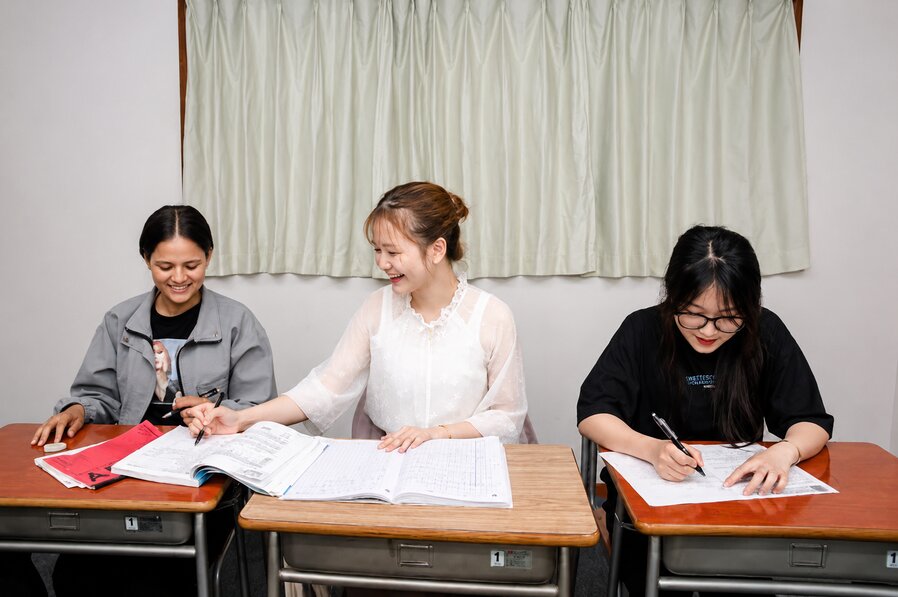
After three failed attempts to pursue her dream of studying abroad, Ta Thi Cuc chose to major in Japanese Language at Dai Nam University, gradually preparing herself to conquer the international work environment.
The dream didn't end after three missed opportunities.
Before becoming a student at Dai Nam University, Ta Thi Cuc dreamed of studying in Japan. However, her visa applications were unsuccessful three times. These repeated disappointments left her feeling disheartened and lost, but instead of waiting for an opportunity that might never come, Cuc decided to choose a different path: studying Japanese Language at Dai Nam University.
For Cúc, it wasn't about giving up on her dreams, but rather about starting a new journey with more thorough and solid preparation. From her first year, she clearly defined her academic goals and proactively sought opportunities for self-development by improving her Japanese language skills, participating in scientific research, public speaking competitions, extracurricular activities, and numerous practical experience programs.
Throughout her university years, Cúc consistently achieved outstanding results, winning first prize in a Japanese public speaking competition, third prize in a student scientific research competition, a JLPT N2 Japanese language proficiency certificate, and numerous scholarships. However, what is most valuable is not the awards themselves, but the training process that helped her gradually improve herself.
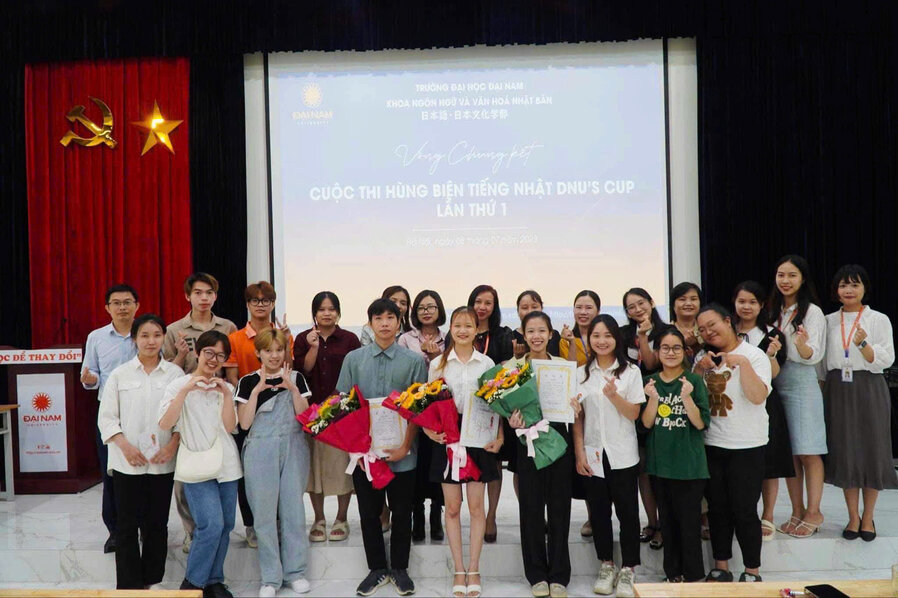
During her time at Dai Nam University, Ta Thi Cuc actively participated in scientific research, Japanese language public speaking competitions, and many experiential activities to comprehensively develop her abilities.
Through each competition, research project, and group activity, Cúc accumulated skills in presenting viewpoints, critical thinking, teamwork, and problem-solving. From a girl who was once confused after missed opportunities, she gradually became proactive, confident, and clearly defined the path she wanted to pursue.
"I used to think I wasn't destined to go to Japan. But when I entered Dai Nam University, I understood that even if I couldn't go through the study abroad route, I could still go to Japan through my abilities and serious preparation," Cuc shared.
Her years in university prepared Cúc with a completely different set of skills. It was no longer just a resume awaiting approval, but the real competence needed to enter an international work environment.
Internships open the door to employment in Japan.
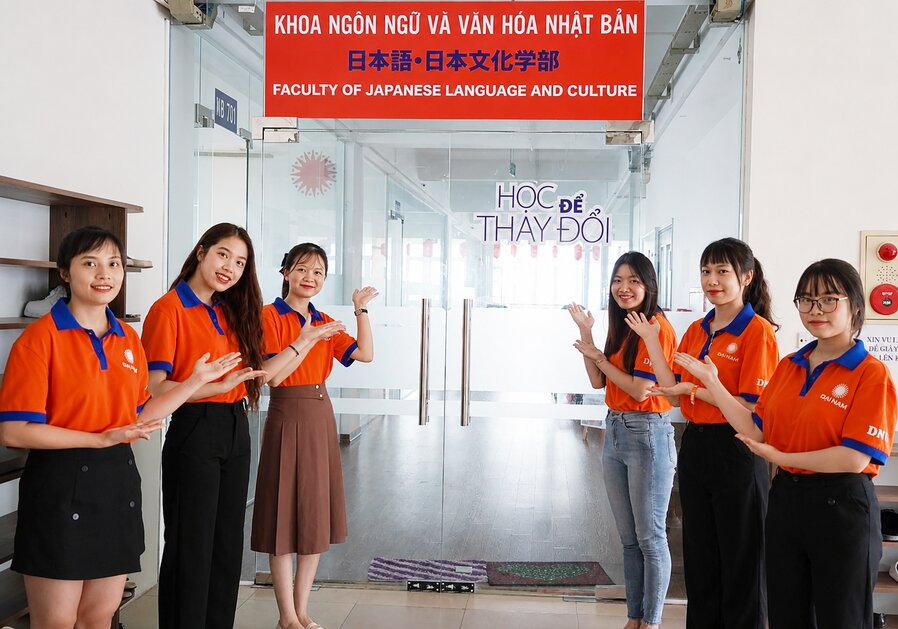
The internship program, organized by the Department of Japanese Language and Culture in collaboration with businesses, helps students gain early exposure to a real-world work environment and opens up many career opportunities in Japan.
A turning point in Ta Thi Cuc's journey came from an internship program in Japan, facilitated by the Faculty of Japanese Language and Culture, Dai Nam University, connecting her with businesses. From her academic environment, Cuc was able to directly enter a business environment, experiencing Japanese work culture, operational processes, and the specific professional requirements of the Japanese people.

Having completed her internship with outstanding results, Ta Thi Cuc was awarded a Naitei (job offer) by a Japanese company and became a full-time employee immediately after graduation.
During her internship at a hospitality company, she directly served international customers, coordinated with various departments, and handled daily work-related issues. The real-world environment required Cúc not only to be proficient in Japanese but also to demonstrate punctuality, responsibility, teamwork skills, and a serious attitude towards her work. Each workday was a day she proved her capabilities to the company.
During her internship, Cúc completed the Specified Skills Certificate in the hospitality industry and received a Naitei – an acceptance letter along with a job offer – from the company. After graduation, she officially became an employee of the Japanese company.

From the lecture halls of Dai Nam University to Japanese businesses, Ta Thi Cuc's journey is proof of the effectiveness of a training model that connects schools and businesses, with learners' competencies at its center.
Currently, Cúc works directly with international clients, collaborating with colleagues and following standard Japanese company procedures. According to her, foreign language skills are only one part of the job requirements.
"What helped me adapt and gain the trust of the company was not only my Japanese language skills, but also my sense of responsibility, discipline, ability to cooperate with colleagues, and handling of situations at work," Cúc said.
From an internship, the door to employment in Japan opened. What was once impossible through studying abroad finally became a reality in a different way: Cúc came to Japan based on her own abilities, which led to the company choosing her.
Dai Nam University not only teaches Japanese, but also helps students get selected by businesses.
According to Ms. Pham Thi Chien, Deputy Head of the Department of Japanese Language and Culture, Ta Thi Cuc's story clearly reflects the training direction that the Department and Dai Nam University are pursuing.
"We don't just train students to use Japanese. Our more important goal is to equip them with the necessary skills to study, work, and adapt to the Japanese environment so that when they face companies, they can be selected based on their own abilities," shared Ms. Pham Thi Chien, M.Sc.
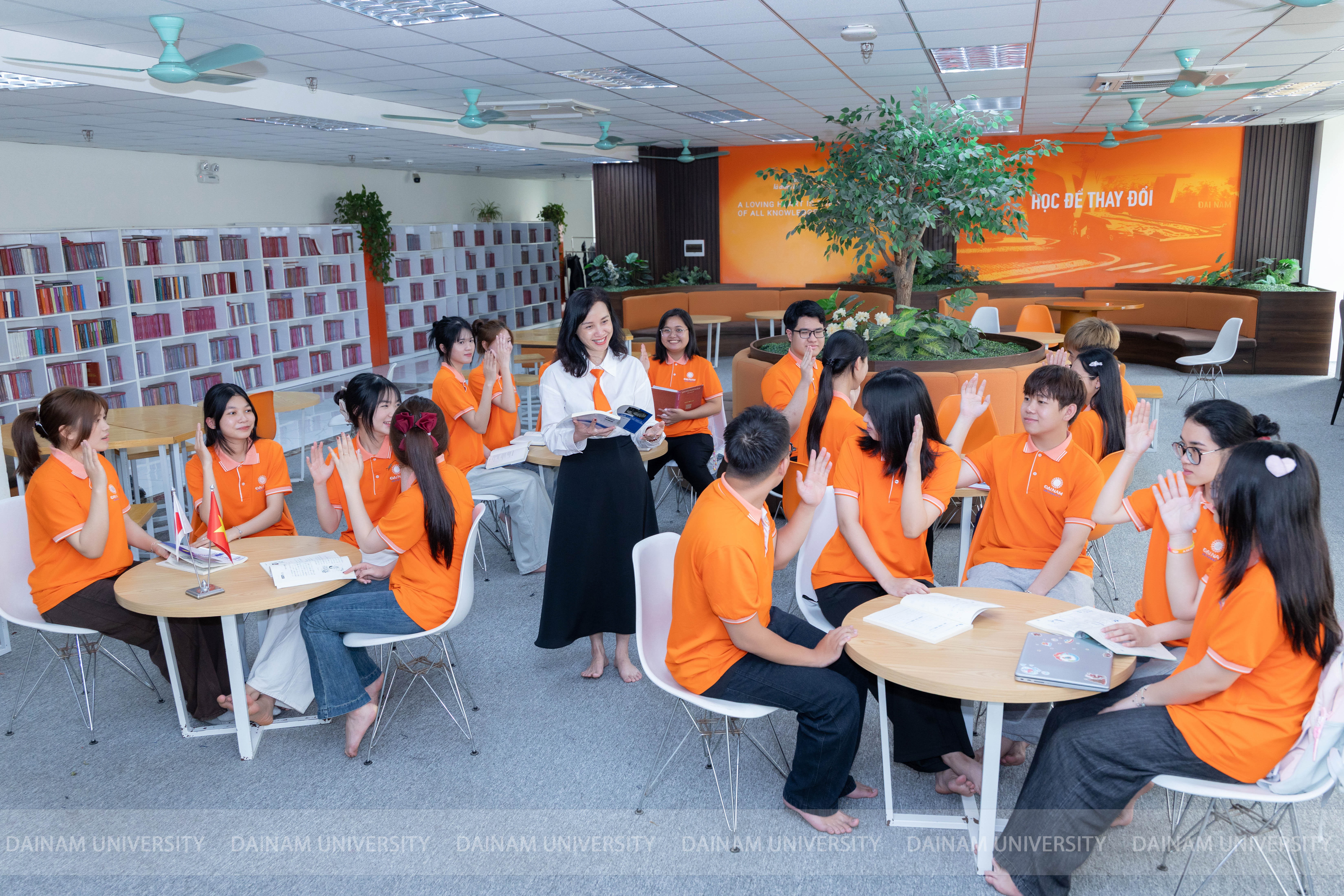
Following this orientation, the training process takes place not only in the classroom but is also extended through various experiential activities. Students are encouraged to participate in scientific research, academic competitions, Japanese language debates, extracurricular activities, cultural exchanges, and practical experience programs, as each activity contributes to the development of professional competence.

Scientific research helps students develop analytical thinking, the ability to ask questions and find solutions; public speaking competitions develop critical thinking, expression skills, and reflexes in Japanese; while group activities contribute to the formation of teamwork skills, a sense of responsibility, and proactiveness. In particular, internship programs at companies help students transform their learned knowledge into practical work skills.
Instead of waiting until graduation to enter the workforce, students have the opportunity to experience the work environment early, understand employer requirements, develop professional skills, and improve any lacking skills. This process allows businesses to directly observe, evaluate, and select students right from the internship period.

The Faculty of Japanese Language and Culture at Dai Nam University builds a training environment closely linked to practice, helping students comprehensively develop their foreign language skills, abilities, and capacity for international integration.
According to Ms. Pham Thi Chien, M.Sc., students majoring in Japanese Language currently have many job opportunities at Japanese companies in Vietnam in the fields of translation and interpretation, import-export, logistics, trade, tourism, education, or directly working in Japan. However, career opportunities are only truly abundant for those who are well-prepared in foreign languages, professional knowledge, vocational skills, and adaptability.
This is also the spirit of the educational philosophy "Unleash Your Identity - Illuminate Your Journey" that Dai Nam University is implementing: not training students according to a common model, but creating an environment for each student to identify their strengths, develop their abilities, and proactively choose a path that suits them.

The collaborative network with numerous Japanese businesses provides students of the Department of Japanese Language and Culture with opportunities for internships, international work experience, and expanded career prospects after graduation.
The story of Ta Thi Cuc is a clear illustration of that philosophy. What led her to Japan was not luck or a chance opportunity, but the result of a whole process of studying, training, experiencing, and preparing her abilities throughout her years at Dai Nam University.
Three missed opportunities to pursue her dream of studying abroad did not end Cúc's journey; on the contrary, they became the starting point for a new path, leading her from the lecture halls of Đại Nam University to a Japanese business based on her own abilities.
ADMISSION INFORMATION FOR JAPANESE LANGUAGE PROGRAM IN 2026 In 2026, Dai Nam University will enroll students in the Japanese Language major with 3 specializations:
Candidates can choose from four admission methods: 1. Admission will be based on the results of the 2026 high school graduation exam. 2. Admission is based on high school academic results. 3. Direct admission is based on the regulations of the Ministry of Education and Training. 4. Admission is based on the results of aptitude and thinking skills assessment exams. In addition to application-oriented training programs, students have access to experiential programs, internships at businesses, international semesters, partner business networks, scholarship policies, and job placement support. Detailed information about admissions is updated on the Dai Nam University admissions portal or via hotline 0961 595 599 and 0931 595 599. |
BTT




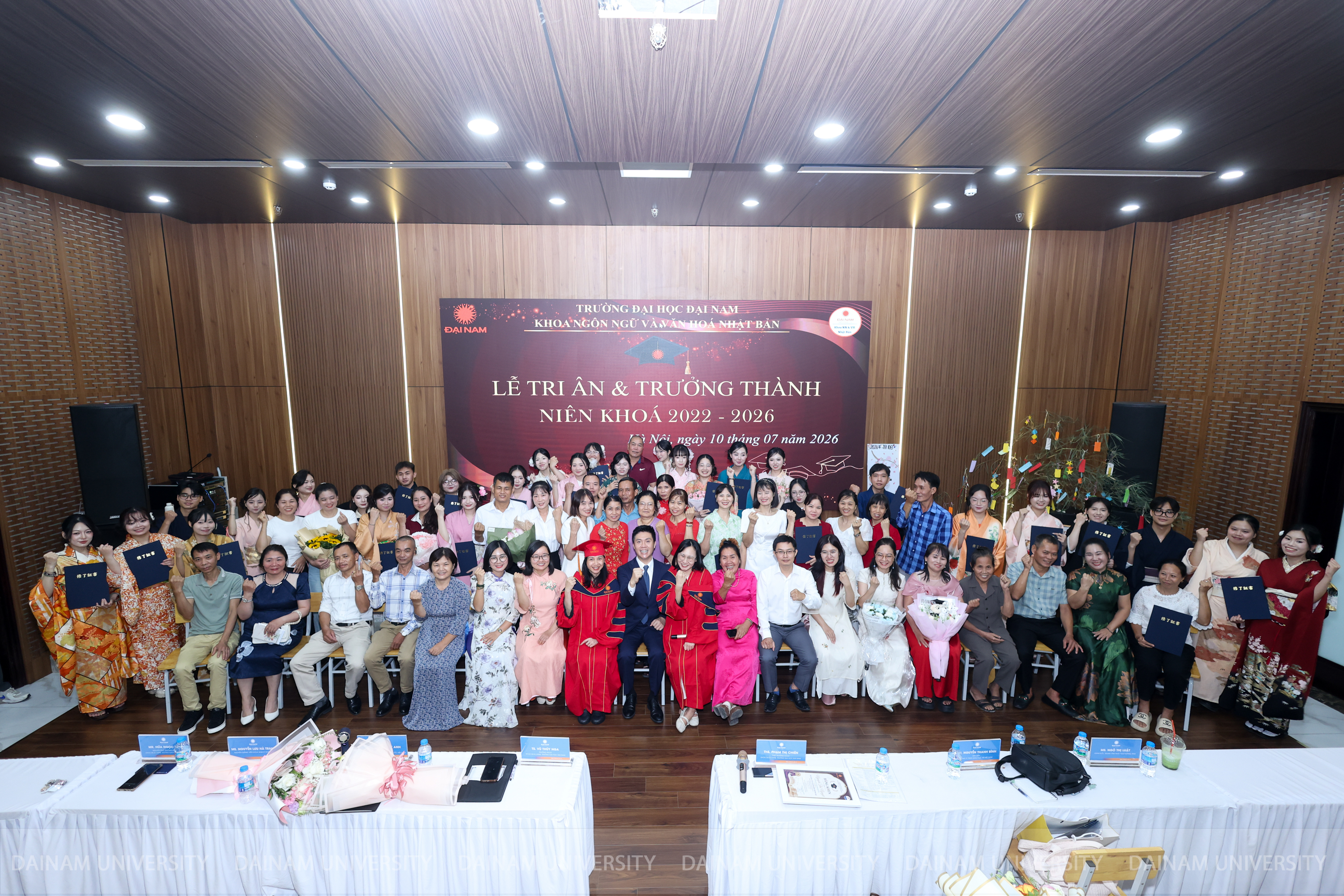



Register for admission consultation 2026
scholarships and tuition support worth up to 55 billion VND

scholarships and tuition support worth up to 55 billion VND

