 English
 Tiếng Việt
International Conference 2026: Connecting Vietnamese and Japanese Academia, Shaping the Future of Japanese Language Education in the Age of AI


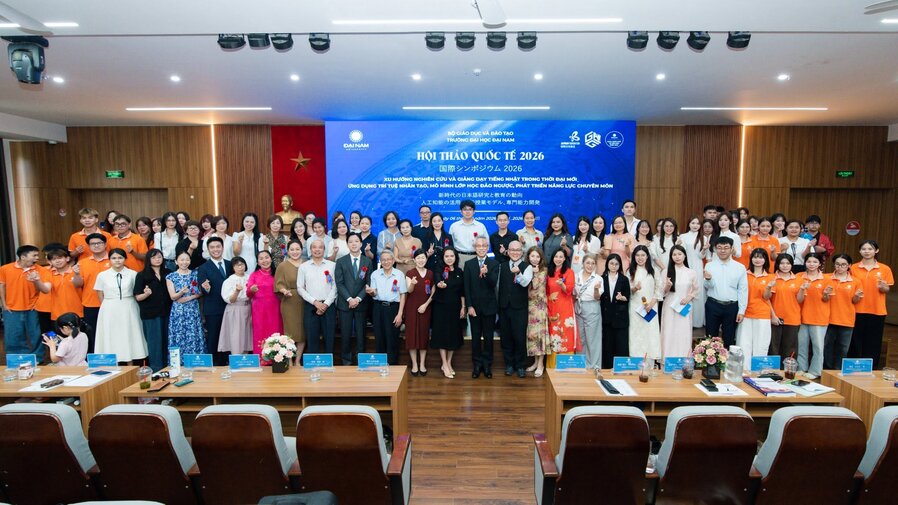
The Faculty of Japanese Language and Culture, Dai Nam University, recently successfully organized its annual International Conference 2026 with the theme: “Trends in Japanese Language Research and Teaching in the New Era - Application of Artificial Intelligence, Flipped Classroom Model, and Professional Competency Development” .
The workshop brought together prestigious professors, experts, researchers, and education administrators from Vietnam and Japan; representatives from the Japanese Embassy in Vietnam, the Japan Foundation, universities, research institutes, businesses, and Japanese language training centers both domestically and internationally.
Against the backdrop of artificial intelligence (AI) profoundly changing the way languages are taught and learned worldwide, the conference serves not only as a forum for exchanging research findings but also as an academic space for scientists to discuss core issues shaping the future of Japanese language education: the role of learners in the AI age, the transformation of teaching methods, new requirements for translation skills, and the link between university education and societal workforce needs…
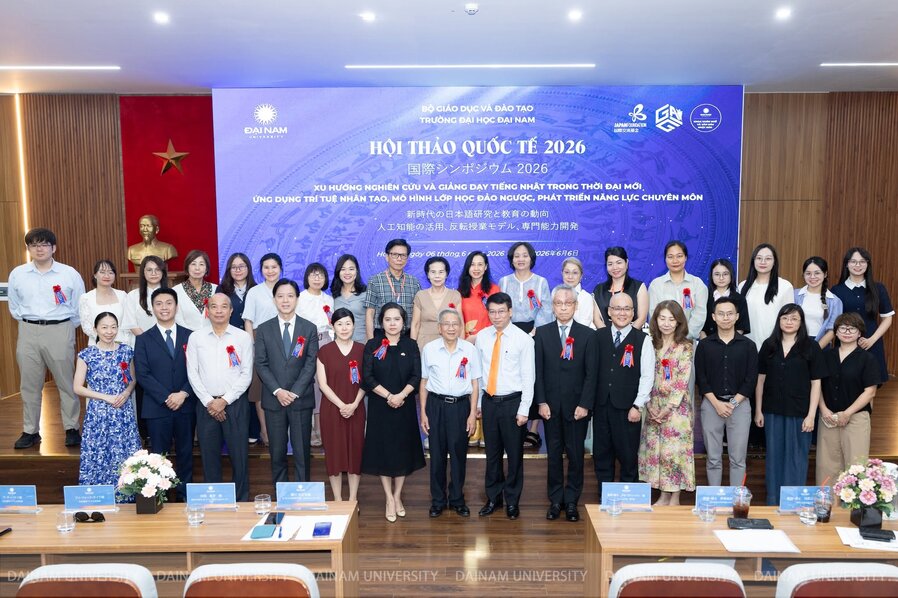
Affirming its position as a prestigious academic forum
As an annual academic event, the International Conference of the Department of Japanese Language and Culture has gradually established itself as a prestigious scientific forum in the field of Japanese language research and teaching in Vietnam.
Beyond simply presenting new research findings, the conference also contributes to connecting the Vietnamese and Japanese academic communities, promoting research cooperation, sharing training experiences, and disseminating advanced global educational trends to Japanese language training institutions in Vietnam.
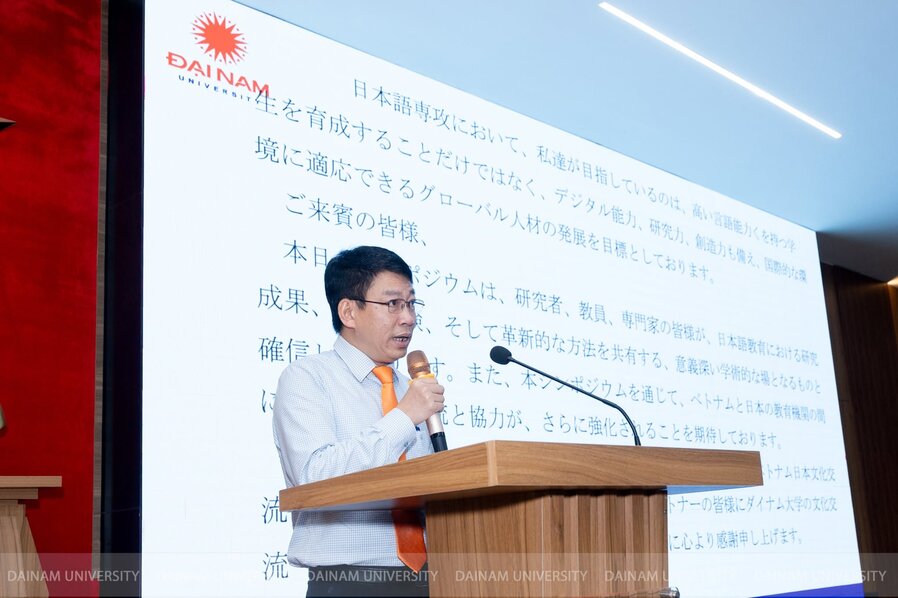
In his opening remarks at the workshop, Professor Dr. Dao Van Dong - Vice Rector of Dai Nam University - emphasized that the rapid development of artificial intelligence is posing both opportunities and challenges for higher education in general and language training in particular.
The professor argued that AI can help learners access knowledge faster and assist instructors in designing more effective learning materials, but it cannot replace the role of education in shaping learners' thinking, critical thinking skills, professional competence, and human values.
“In the context of digital transformation and increasingly deep international integration, training institutions need to constantly innovate their curricula, teaching methods and technologies, as well as scientific research activities. Today's conference is a testament to the effort to connect knowledge, connect scientists, and connect innovative ideas to improve the quality of training high-quality language human resources, including Japanese language, for society,” affirmed Professor Dr. Dao Van Dong.
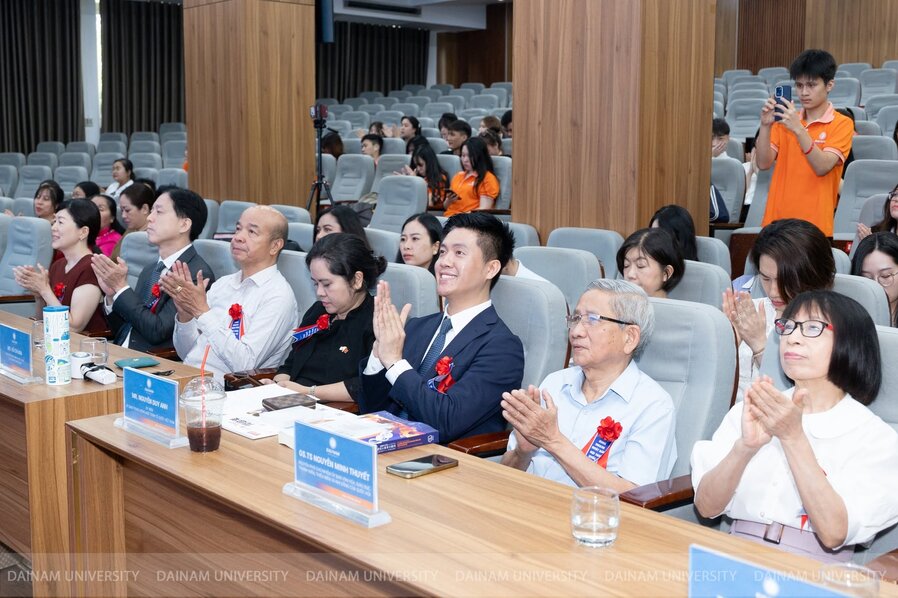
New academic perspectives on Japanese language education in the AI era.
A highlight of this year's conference was the two keynote speeches by leading Japanese scholars.
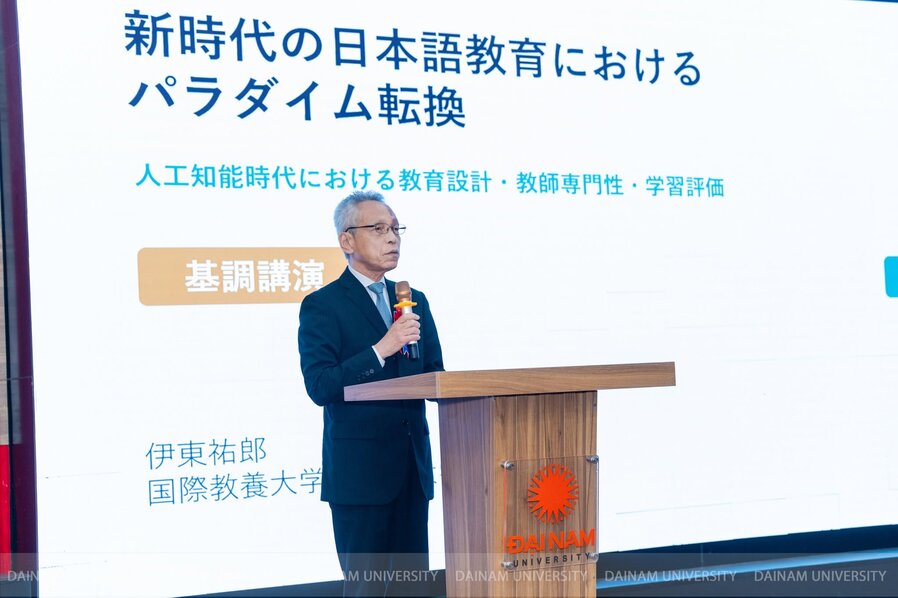
Professor Ito Sukero , former Vice President of Tokyo University of Foreign Studies and Professor at Akita International University, provided insightful analysis of language training trends in the context of AI generative technology's profound impact on global education.
Meanwhile, Professor Kawahara Kiyoshi , former President of the Japan Association of Translators and Interpreters, focused on analyzing the changes to the field of translation and interpreting training in the digital age.
According to Japanese experts, the emergence of AI does not diminish the roles of learners and teachers, but rather accelerates the transformation from a knowledge-transmission-based education model to a competency-based education model.
“AI will not replace teachers. AI will not replace learners either. What is important is that we know how to use AI to create new values in education,” Professor Ito Sukero emphasized.
This observation also became the overarching message of the entire conference.
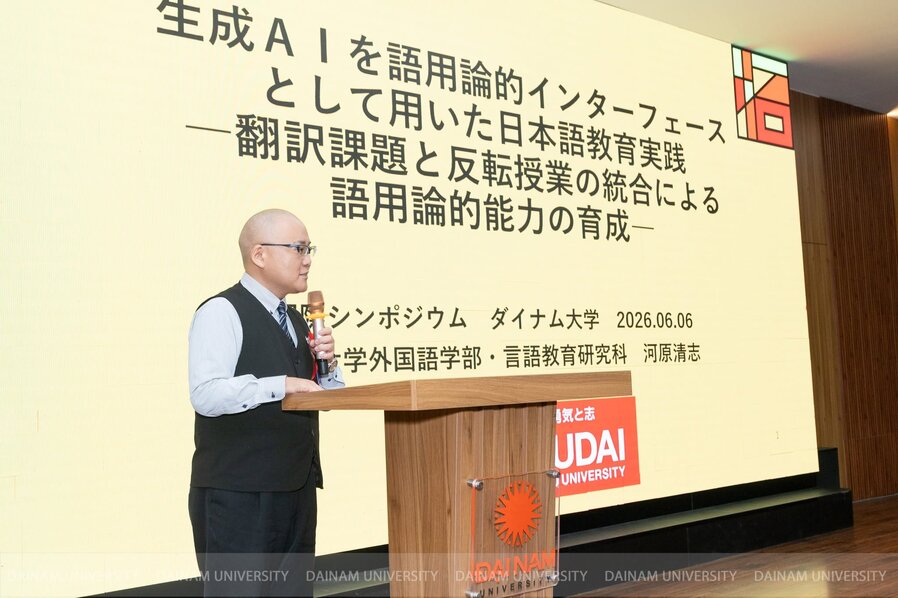
From knowledge-transmission education to competency-development education.
One of the outstanding academic values of this year's conference is the convergence of thinking between researchers from Vietnam and Japan.
Despite approaching the topic from different perspectives, the presentations all highlighted a common trend in modern language education: learners are no longer passive recipients of knowledge but become active creators of knowledge; teachers not only play the role of transmitting knowledge but also become designers of the learning environment, guiding thinking and developing competencies for learners.
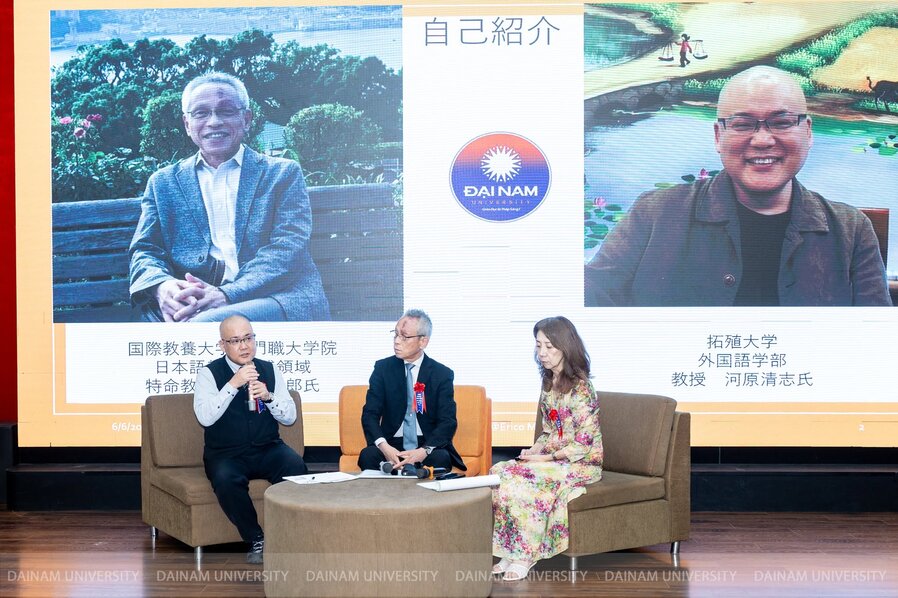
This shift is particularly significant in Japanese language training, as AI increasingly assists in translation, information retrieval, and content creation. Higher education should aim beyond simply equipping students with language skills; it should focus on developing their self-learning abilities, critical thinking, research skills, international collaboration skills, and the ability to use technology effectively and responsibly.
This is also the trend being pursued by many leading language training institutions in Japan and around the world.
These studies are related to the current practices of Japanese language education.
The conference featured nine selected scientific papers from numerous prestigious training and research institutions in Vietnam and Japan.
The research focuses on three major thematic groups that are shaping the future of Japanese language education.
In the group of studies focusing on learners, the authors concentrate on clarifying the roles of learning motivation, self-learning ability, sense of well-being, and international cooperation skills in the modern educational environment.
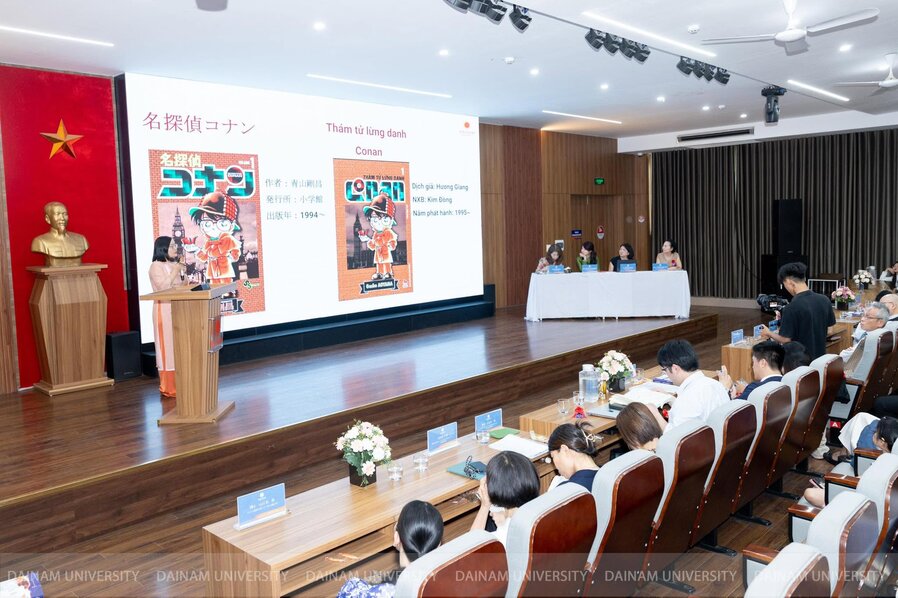
In the research group on AI and Japanese language training, presentations analyzed the potential application of technology in teaching, learner assessment, translation training, and connecting training programs with the human resource needs of Japanese businesses in Vietnam.
Meanwhile, research groups studying the future of Japanese language education are focusing on advanced training models such as flipped classrooms, learning blended with AI and business, and new assessment methods in the age of AI generation.
Notably, the majority of the studies presented stem from practical problems currently facing Japanese language education, rather than focusing solely on theoretical analysis. This demonstrates the increasingly close connection between scientific research and training practices and the needs of the labor market.
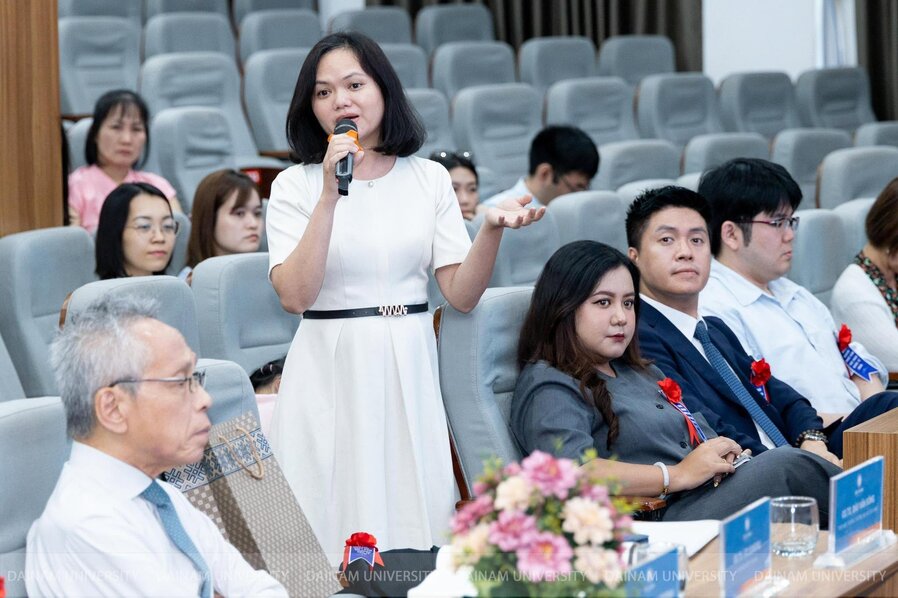
Opening up new avenues for cooperation in education between Vietnam and Japan.
At the conference, Professor Ito Sukero highly appreciated the academic quality of the presentations as well as the spirit of cooperation between educational institutions in Vietnam and Japan.
According to him, the issues discussed at the conference not only reflect new research trends in language education but also have high practical value for curriculum development, faculty development, and improving the quality of human resources in the future.
For students, the workshop provides an opportunity to directly connect with international experts, stay updated on the latest industry trends, and gain a better understanding of career requirements in the context of AI and digital transformation.
For faculty and educational institutions, this is an important forum to update knowledge, expand international academic cooperation, and seek innovative educational solutions based on scientific principles.
Against the backdrop of the rapidly developing Vietnam-Japan Comprehensive Strategic Partnership, the need for human resources proficient in Japanese, knowledgeable about Japanese culture, and adaptable to the digital environment is becoming increasingly urgent. The outcomes discussed at the 2026 International Conference not only contribute to promoting innovation in Japanese language education but also open up new avenues for cooperation in training, research, and human resource development between the two countries.
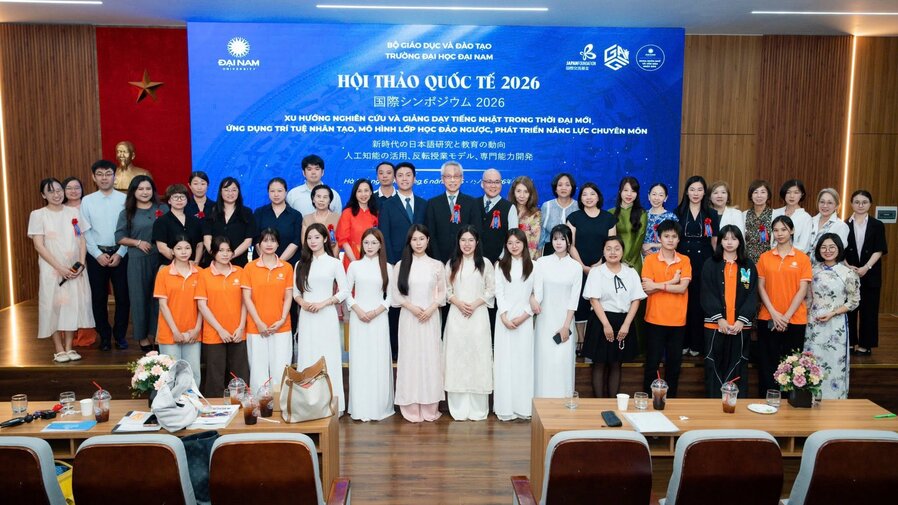
Concluding a day of serious, responsible, and academically valuable work, the 2026 International Conference once again affirmed the role of Dai Nam University in promoting scientific research, strengthening international cooperation, and contributing to the development of the Japanese Language major in Vietnam.
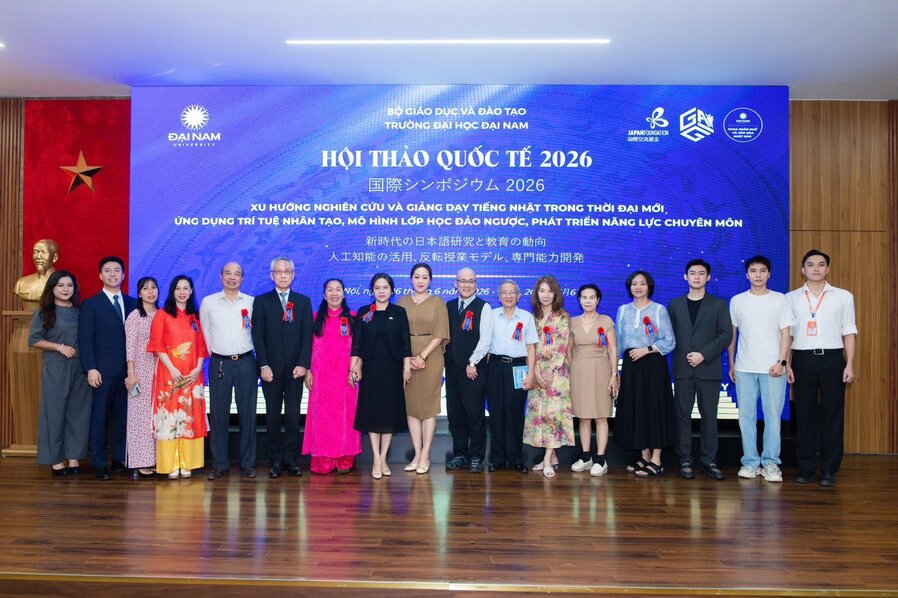
From the academic exchanges at Dai Nam University today, many new ideas, new training models, and new opportunities for cooperation have been opened up. Beyond being just an annual scientific event, the conference has contributed to building a space for substantive academic dialogue between Vietnam and Japan, thereby contributing to the process of higher education reform and the training of high-quality human resources in the AI era.
BTT



Register for admission consultation 2026
scholarships and tuition support worth up to 55 billion VND

scholarships and tuition support worth up to 55 billion VND

