 English
 Tiếng Việt
What can DNU students achieve after studying Fine Arts and Design for two years?


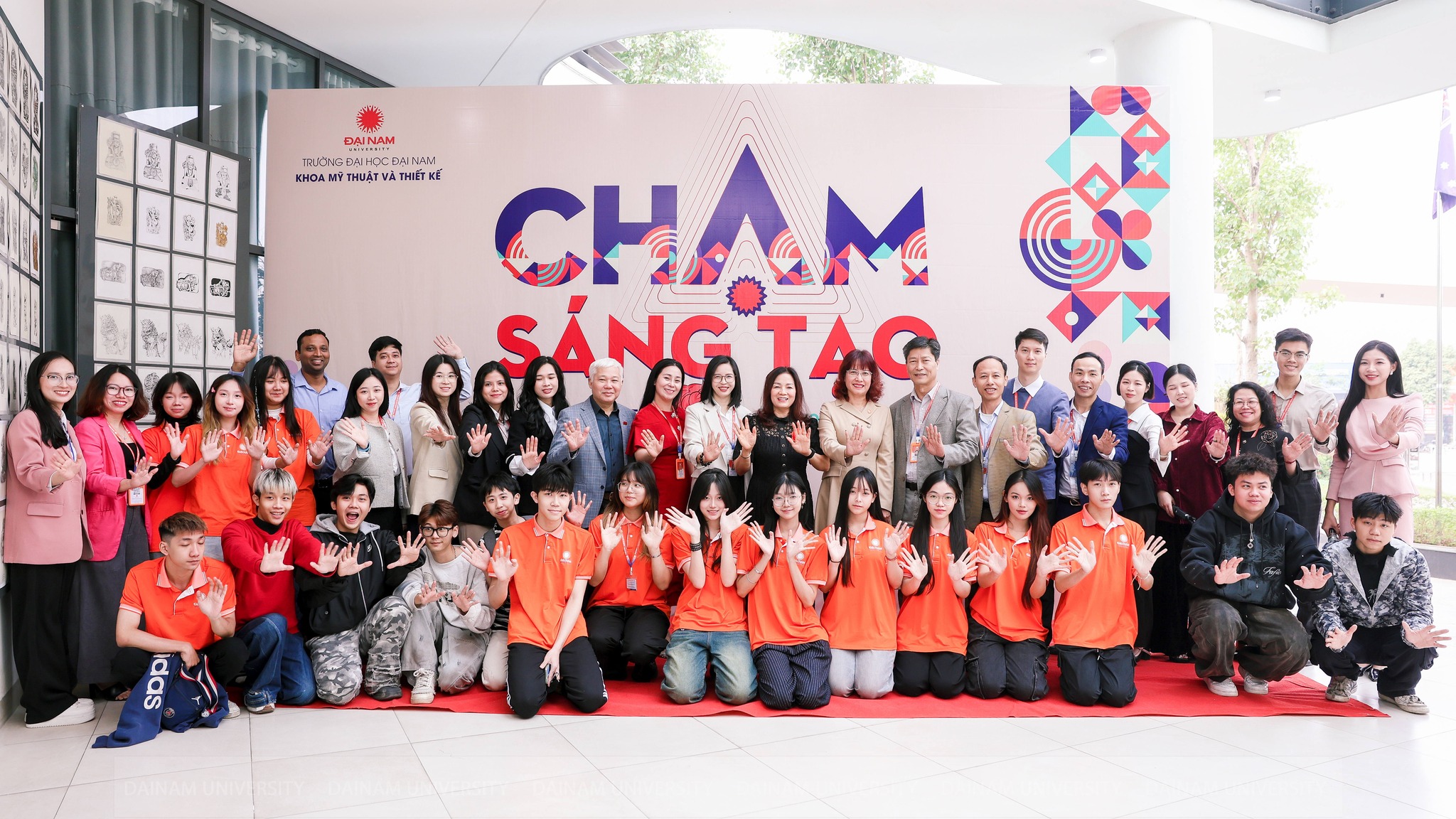
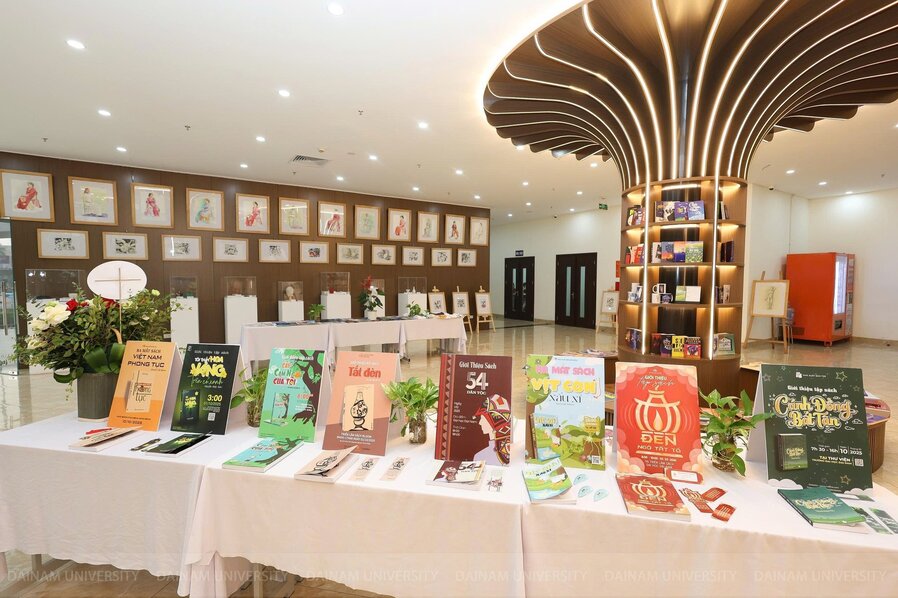
In an era where an image can be created in seconds, knowing how to use tools is no longer enough to make a creative person. More important is understanding what you are doing, why you are doing it, and being able to transform what you have learned into your own product. The KHỞI 2026 exhibition – “Origin – Flourishing – Radiant” by the Faculty of Fine Arts and Design, Dai Nam University, shows a part of that process through products created by first-year and second-year students.
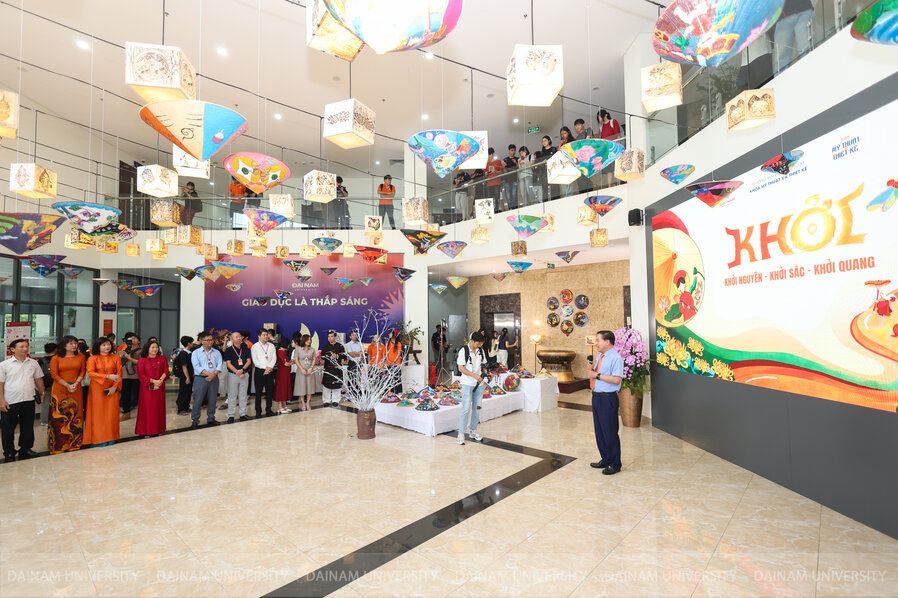
Each product at the KHỞI 2026 exhibition is the result of a process from research and idea formation to practice and refinement by students of the Faculty of Fine Arts and Design, Dai Nam University.
Before creating a product, you must understand where it comes from.
Students don't start with the question: How can I make this product beautiful?
You should start with more challenging questions: What does this symbol mean? Where did this pattern come from? How does a color, image, or story exist in cultural life? And if you were to retell it in the language of today's youth, how would you do it?
By exploring the origins, studying symbols, and identifying values, students select, interpret, and transform these materials into products.
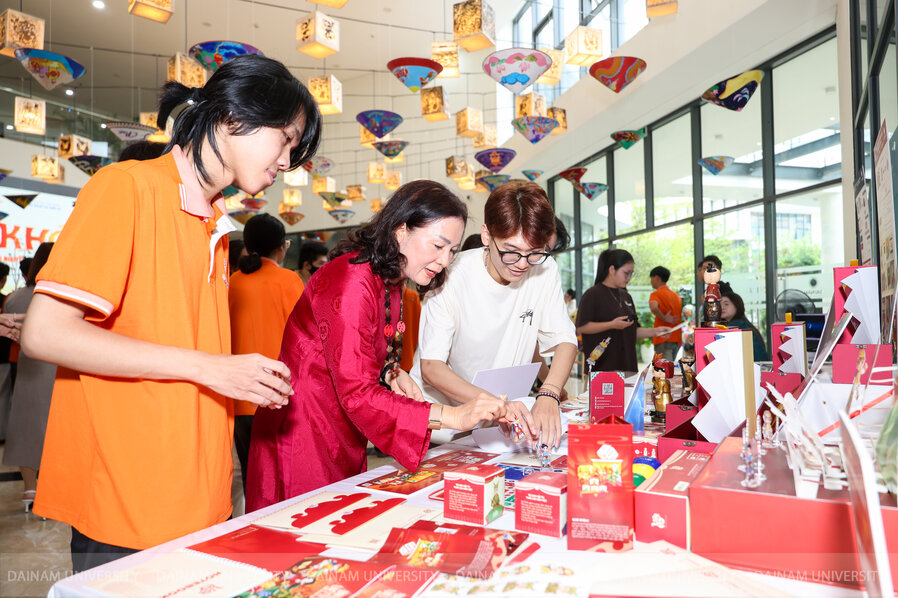
Using familiar cultural elements, students seek to interpret and transform them into the design language of their generation.
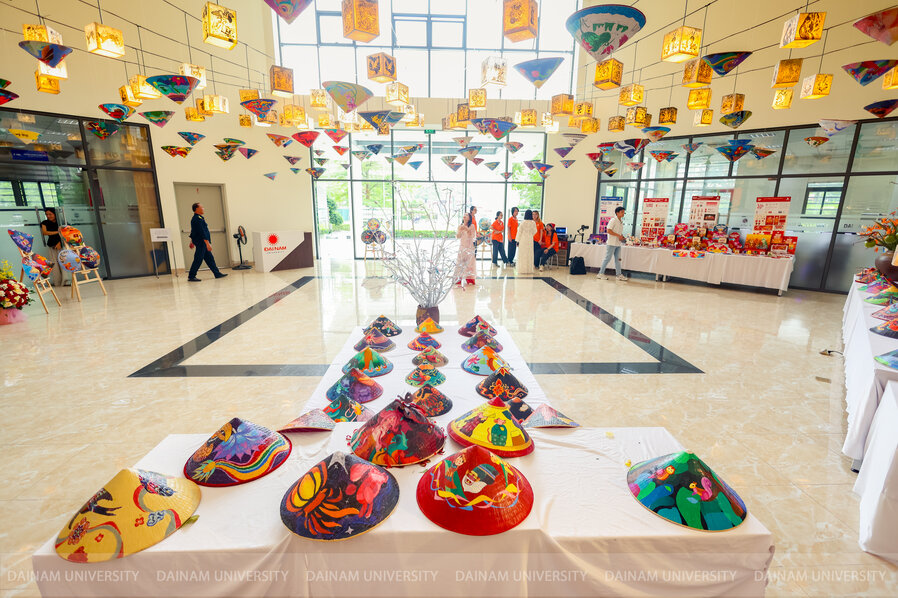
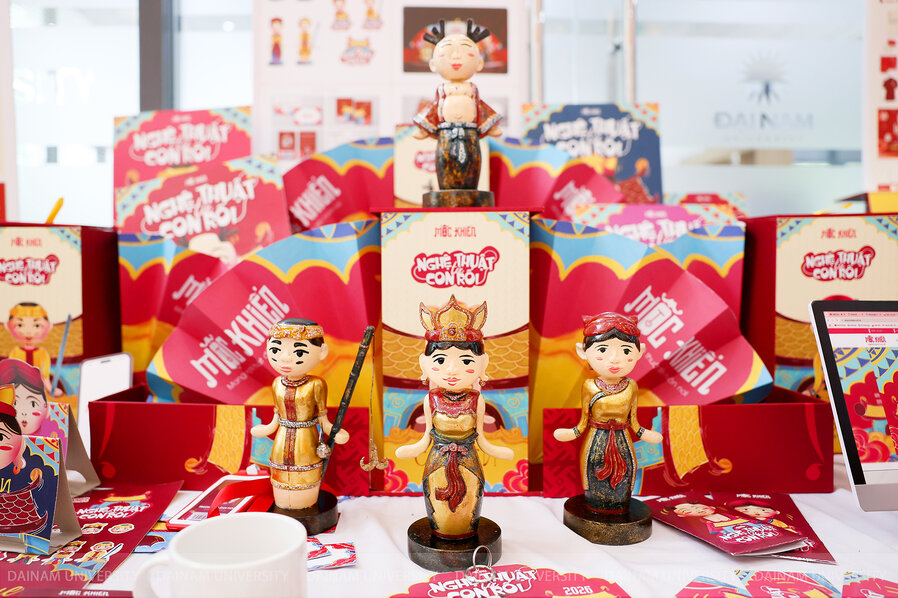
Culture, therefore, is not a motif "attached" to a design for aesthetic purposes. It becomes the material for learners to think and create.
That is also the spirit of "Origin - Flourishing - Radiant": understanding what already exists, finding a new perspective, and incorporating it into today's products.
"This is a training approach that is not easy to implement."
According to Associate Professor Pham Trong Toan, former Vice Rector of the Central University of Arts, incorporating cultural depth into the training process helps students go beyond simply learning technical skills.
"When students are exposed to culture during their studies and creative process, they not only learn technical skills but also develop critical thinking, depth, and identity. This is a challenging approach, and not many schools have implemented it systematically."
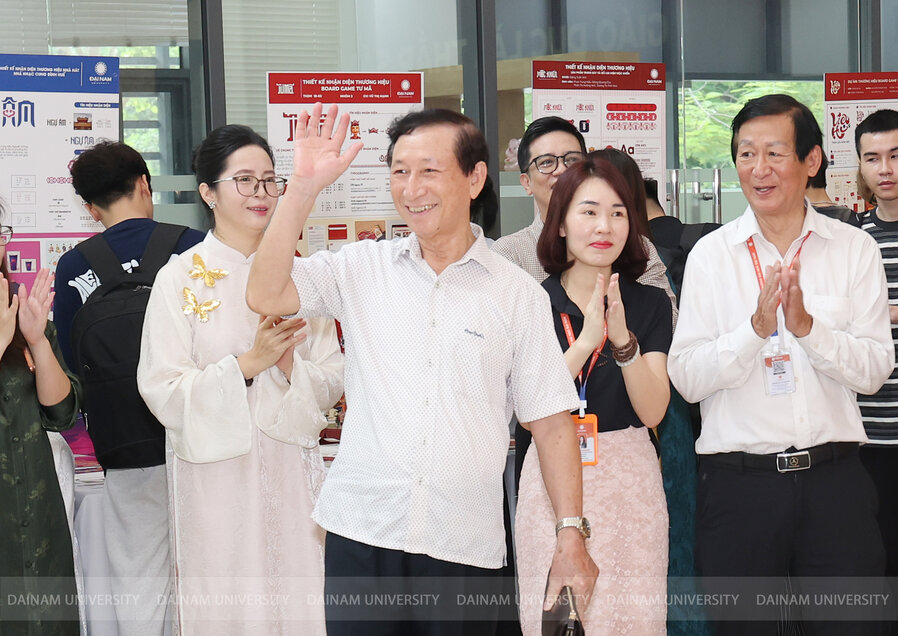
Associate Professor Pham Trong Toan – former Vice Rector of the Central University of Arts – attended the exhibition.
This is especially significant given how rapidly technology and AI are transforming the creative industry.
Tools can help someone create images faster. But tools cannot replace the learner in answering the questions: What do I want to say? Why choose this way of expressing myself? What values do I want to retain and what do I want to innovate?
Don't copy culture – learn to tell it in your own language.
Impressed with the products of first-year and second-year students, Master's student Dinh Hong Cuong – a researcher in Culture, History, and Ancient Costumes – noted that it is remarkable that young people have proactively chosen culture as a starting point for their creativity.
"When young people proactively explore and interpret traditional values in their own language, the resulting products will possess a national spirit while still reflecting the spirit of the times."
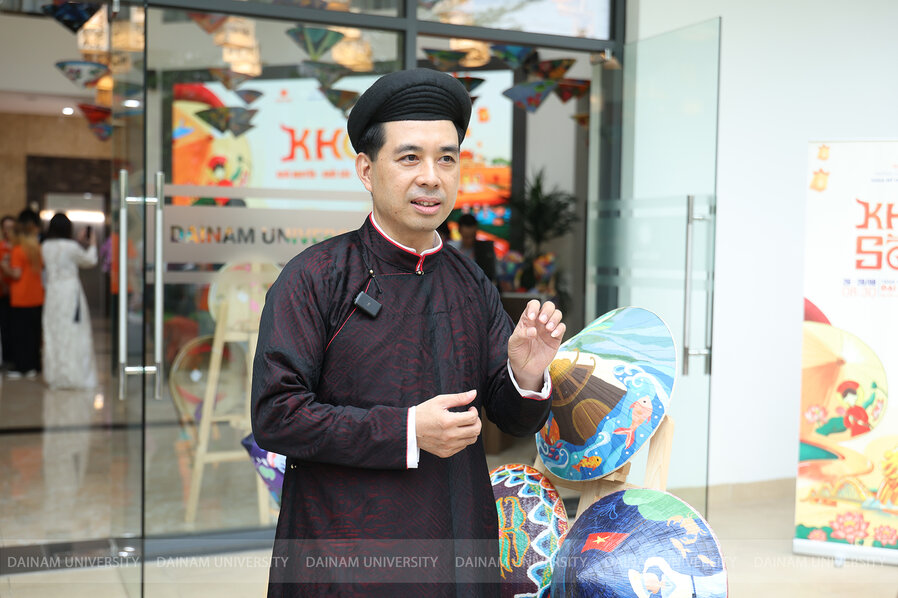
MSc. Dinh Hong Cuong - a researcher of Culture, History and Ancient Costumes - shared his insights at the exhibition.
The key here is to continue the story but not to copy it.
To incorporate traditional values into a product, students must understand the story behind it, then choose what to preserve, what can be modernized, and find ways to express it through their design thinking. And that process is the crucial part of learning.
Behind every product lies a whole chain of capabilities.
If you only walk around the exhibition, you'll see finished products. But behind each product is a process: observation – research – questioning – ideation – testing – refinement – completion.
Students must be able to explain the origin of their product, what values it inherits, what innovations it introduces, and why they chose that particular style of expression.
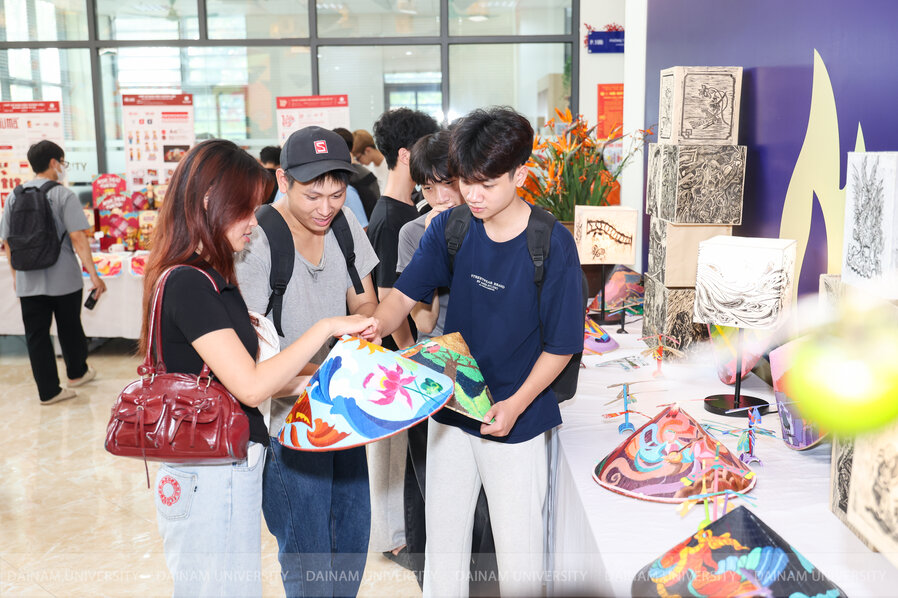
Students should not only be concerned with whether the product is aesthetically pleasing, but also be able to explain the idea, value, and story behind it.
Through each practice session, learners gradually develop the skills necessary for a creative profession: research, analysis, ideation, problem-solving, practical application, and defending their choices.
Therefore, the value of the exhibition lies not only in what is hung or placed on the display stand. It lies in the fact that, after a period of study, students have something to demonstrate what they are capable of.
"Studying design means creating products."
From an educational perspective, Dr. Le Dac Son – Chairman of the University Council of Dai Nam University – emphasized that what matters is not how beautiful the first products are, but whether students have begun to transform what they have learned and understood into concrete products.
“Studying design means creating products. Theory must lead to practice; what you observe and learn must be transformed into a product of your own. The first products may be simple, because no one becomes a designer or artist from their very first work. You will grow through each attempt, revision, and refinement.”
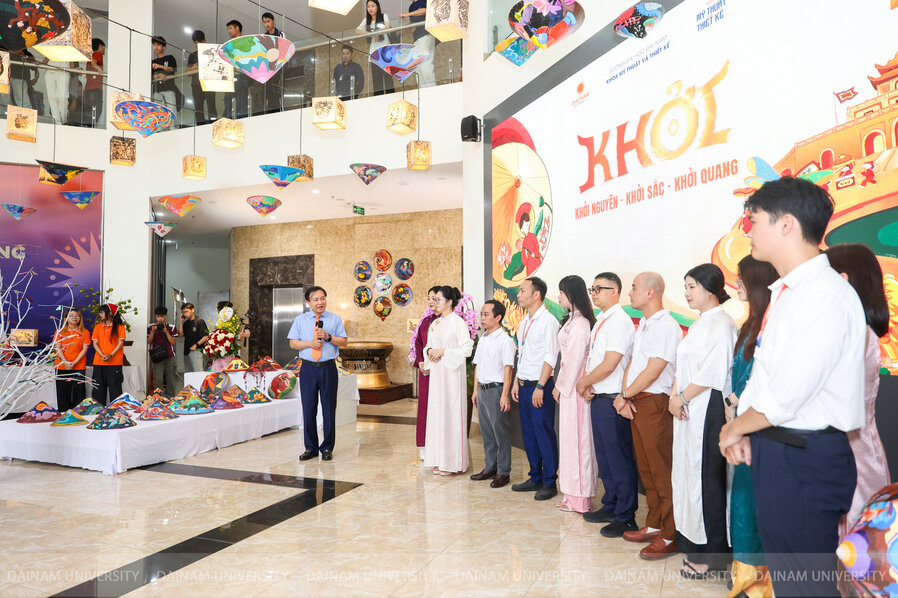
Dr. Le Dac Son – Chairman of the University Council of Dai Nam University, delivered a speech at the ceremony.
He also particularly emphasized the students' choice of Vietnamese cultural values as creative material: “Tell the story of Vietnamese culture in the language of your generation – modern, fresh, but still preserving its identity. Perhaps in 3-5 years, when you look back at today's products, you will see how far you have come. Therefore, for me, this exhibition is first and foremost a beginning.”
Ultimately, the product has to speak for itself.
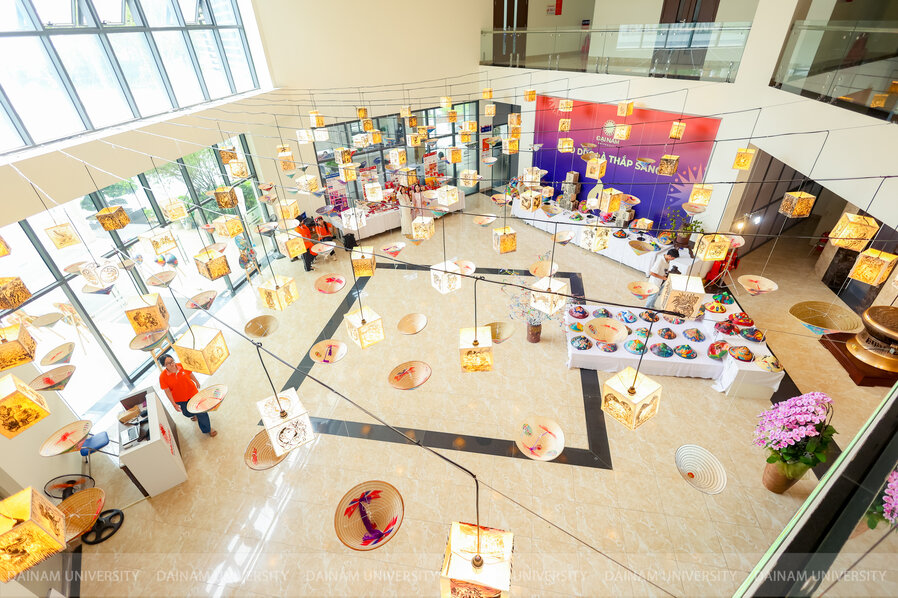
The KHỞI 2026 exhibition opens a space for students' first products to be showcased, engage in dialogue, and continue to develop.
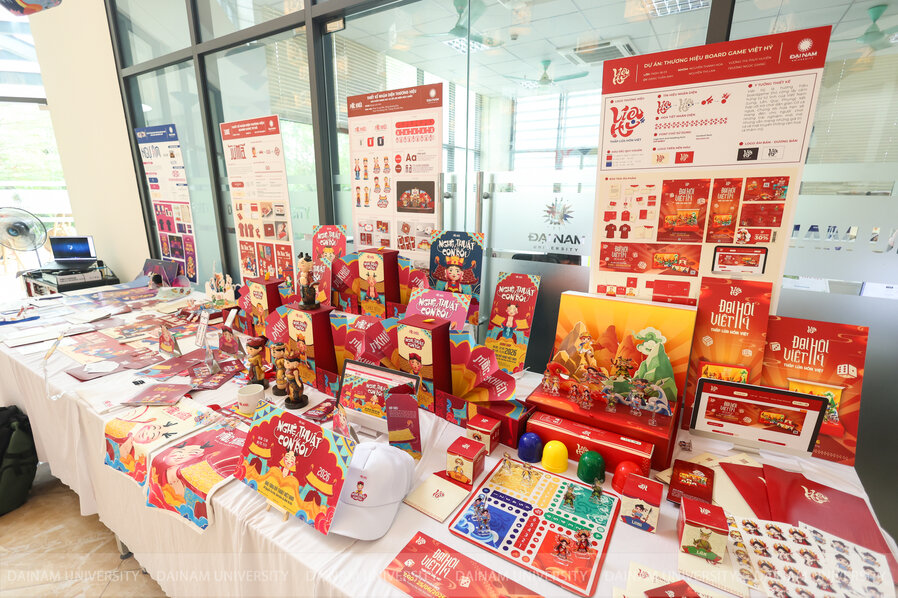
Instead of simply copying traditional values, students choose to retell the culture from their own creative perspectives and language.
In an industry where AI is increasingly capable of performing many technical tasks much faster, the advantage of young people cannot simply lie in mastering a software program. It must be the ability to understand, think, act, and create something that bears their own unique mark.
Therefore, the 2026 START program not only shows what students have accomplished after their first years of university. More importantly, it shows a way of learning: from theory to practice, from understanding a value to creating a product, from the first products to the gradually formed professional competencies.
Because studying design, ultimately, isn't about saying "I know design." Let the product speak for itself.
BTT




Register for admission consultation 2026
scholarships and tuition support worth up to 55 billion VND

scholarships and tuition support worth up to 55 billion VND

