 English
 Tiếng Việt
Training is not just about graduating, but about making businesses want to hire you.


Over 200 students from the K18 Logistics program at Dai Nam University recently completed a two-day field trip to ports, logistics centers, and businesses in Bac Ninh and Hai Phong. These trips not only help students understand the profession but also highlight the need for lecturers and the university to understand business requirements, constantly update their knowledge and technology, and innovate training methods to ensure students possess the necessary skills for the job market.
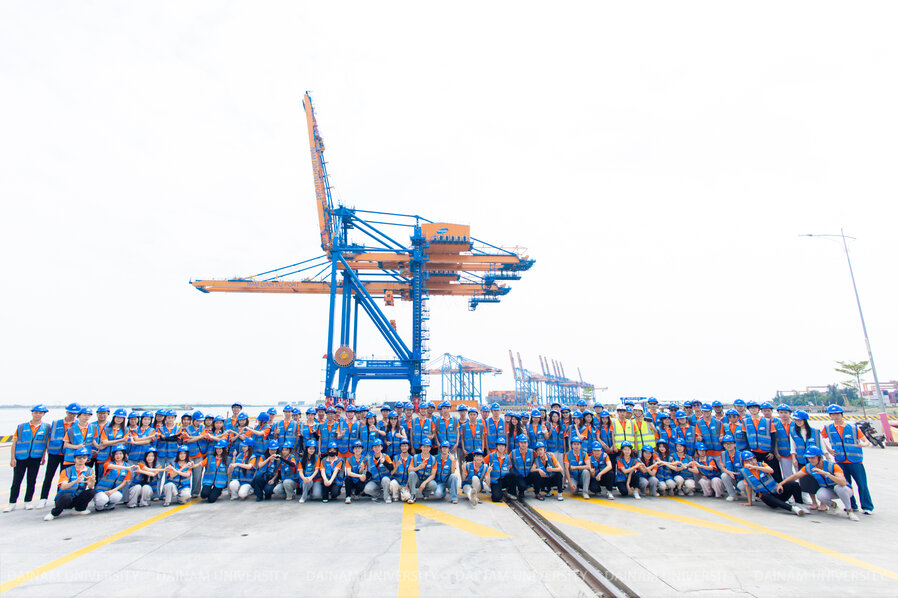
Students from the K18 Logistics program at Dai Nam University are learning about operational activities at Nam Dinh Vu Port.
STUDYING LOGISTICS IS NOT JUST ABOUT KNOWING THE PROCESS, BUT ALSO ABOUT UNDERSTANDING HOW IT WORKS.
On October 8-9, 2026, the Faculty of Logistics and International Business, Dai Nam University, organized a practical learning program for over 200 K18 students at Nam Dinh Vu Port, Tan Cang Que Vo ICD, Nippon Express, and other logistics businesses.
At Nam Dinh Vu Port (Hai Phong), students observed container port operations, berth systems, container yards, and vehicle coordination. At Tan Cang Que Vo ICD (Bac Ninh), they learned about the process of receiving, storing, and delivering containers, and the coordination between departments in the operational chain.
The knowledge learned from the curriculum is now concretely applied in daily work. Students understand that ensuring a shipment arrives at the right place, on time, and at a reasonable cost requires a closely coordinated system involving people, processes, and technology.
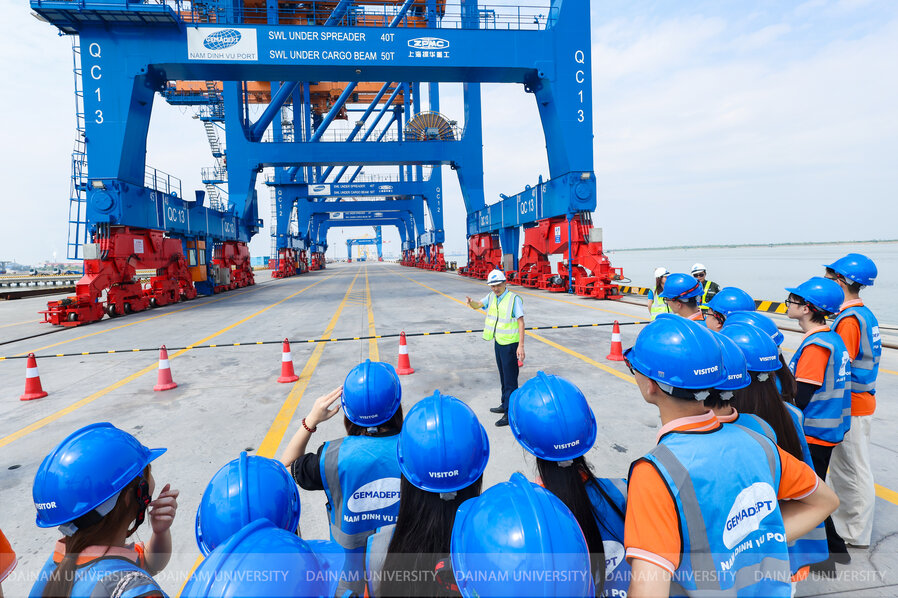
Representatives from Nam Dinh Vu Port introduced the operational procedures and practical requirements of the logistics industry to DNU students.
According to Ms. Bui Thi Thu Phuong, representative of Nam Dinh Vu Port, an effective logistics process is not only about correctly performing each stage but also about the ability to connect these stages into a unified system.
She argued that students need to cultivate systems thinking, problem-solving skills, foreign language proficiency, and technological skills. Especially as AI is increasingly applied in analysis, forecasting, and operational optimization, workers must be able to evaluate information and proactively make decisions.
Therefore, studying Logistics is not just about knowing the process, but also about understanding how it operates, identifying problems, and finding solutions.
WHAT DO STUDENTS GAIN FROM THESE TRIPS?
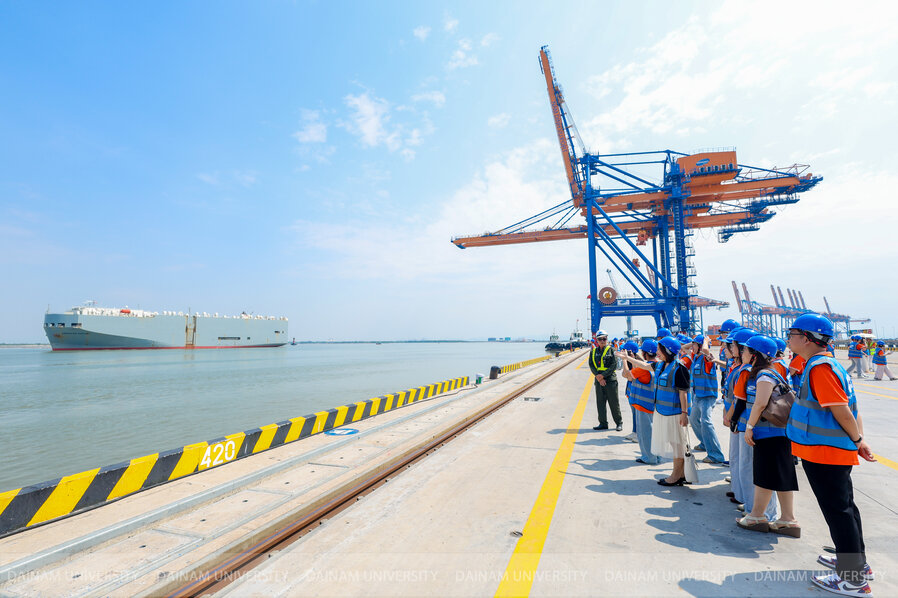
From the docks to the container yards, students directly observe how the various stages of port operations coordinate with each other.
The value of a field trip doesn't lie in how many businesses students visit, but more importantly, in what they learn about the profession and what they still lack.
Nguyen Quang Huy, a student from Logistics class 18-02, shared: “Through this trip, I realized that I still lack practical experience and don't deeply understand how different departments in a business coordinate to operate a complete logistics process.”
From then on, Huy realized he needed to improve his specialized English, problem-solving skills, and learn about AI tools applied in logistics. In the same class as Huy, Nguyen Luong Chinh recognized the importance of communication, networking, and teamwork skills.
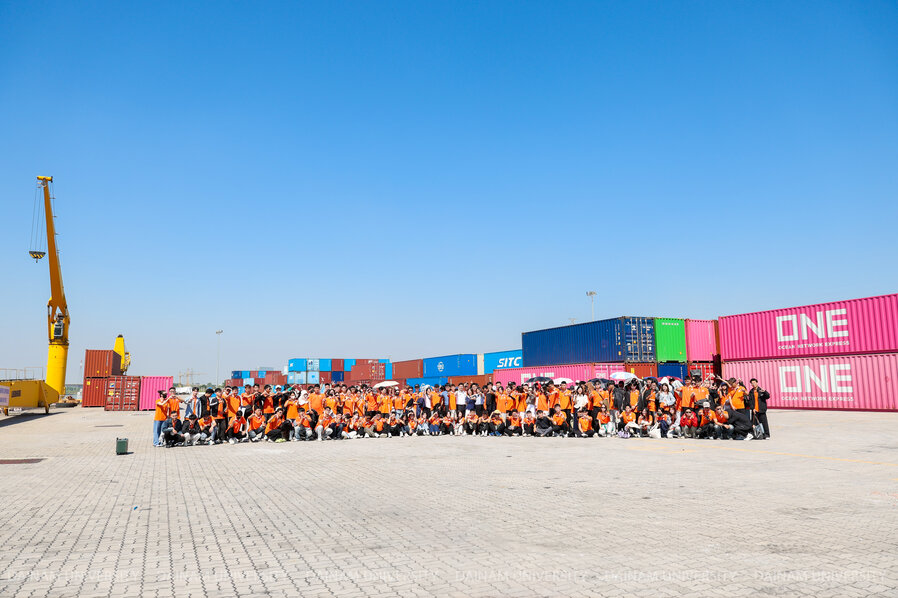
DNU students learn about the receiving, storage, and delivery of containers at Tan Cang Que Vo Inland Container Depot (ICD).
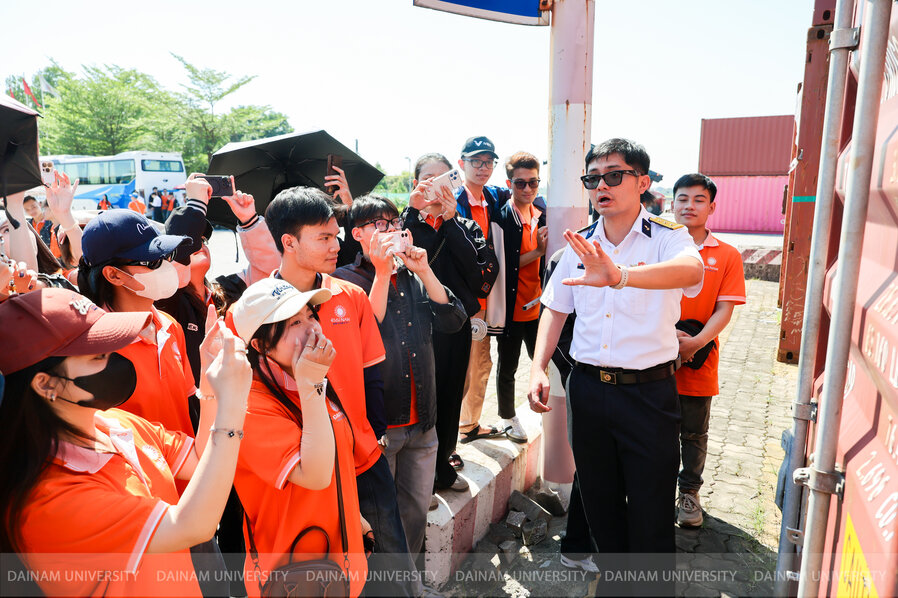
Mr. Pham Vu Hai, Deputy Director of ICD Tan Cang Que Vo, shared his practical experience, helping students better understand the job requirements in the logistics industry.
At the Tan Cang Que Vo ICD, Mr. Pham Vu Hai, Deputy Director of the ICD, highly appreciated the serious, proactive spirit and learning attitude of the students from Dai Nam University. Their questions showed a genuine interest in the operational processes, technology, and human resource requirements of the industry.
Knowing what you're lacking and proactively learning more about it is already a meaningful outcome of the learning process.
Because businesses need not only people with knowledge, but also people who know how to work, are responsible, know how to collaborate, and can adapt to change.
TO HAVE HIGH-QUALITY STUDENTS, LECTURERS MUST UNDERSTAND THEIR PROFESSION.
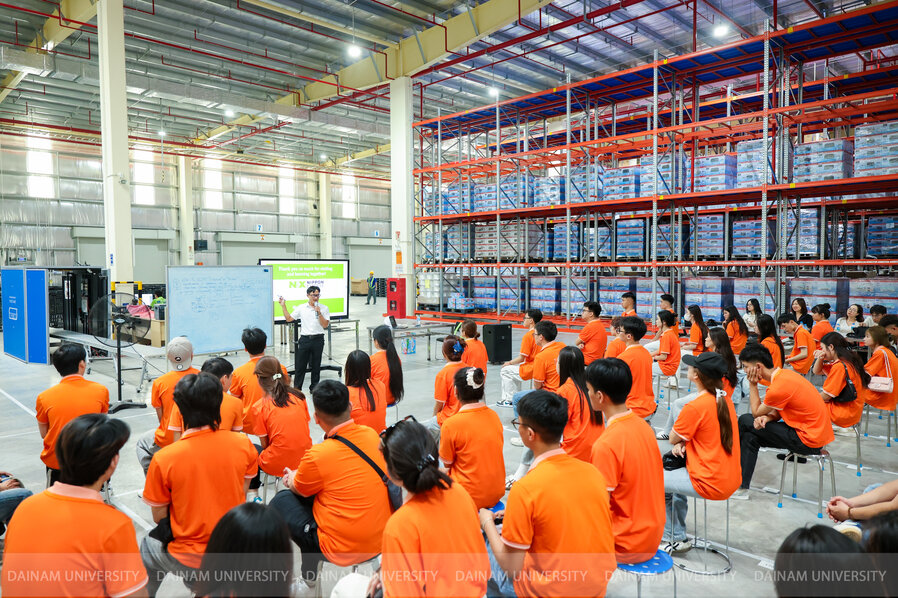
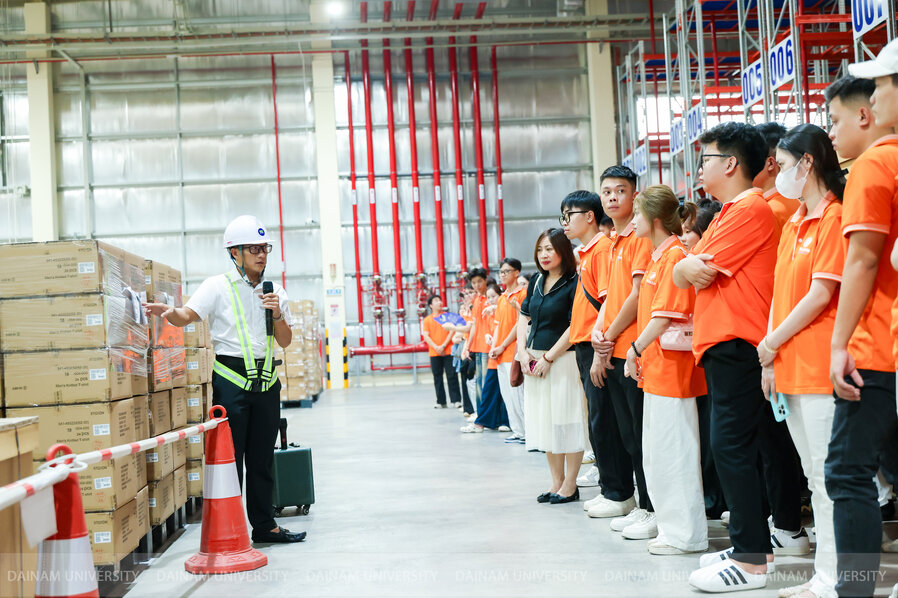
Students from the K18 Logistics program at Dai Nam University learn about the operational process at the Hai Phong Logistics Center - Nippon Express.
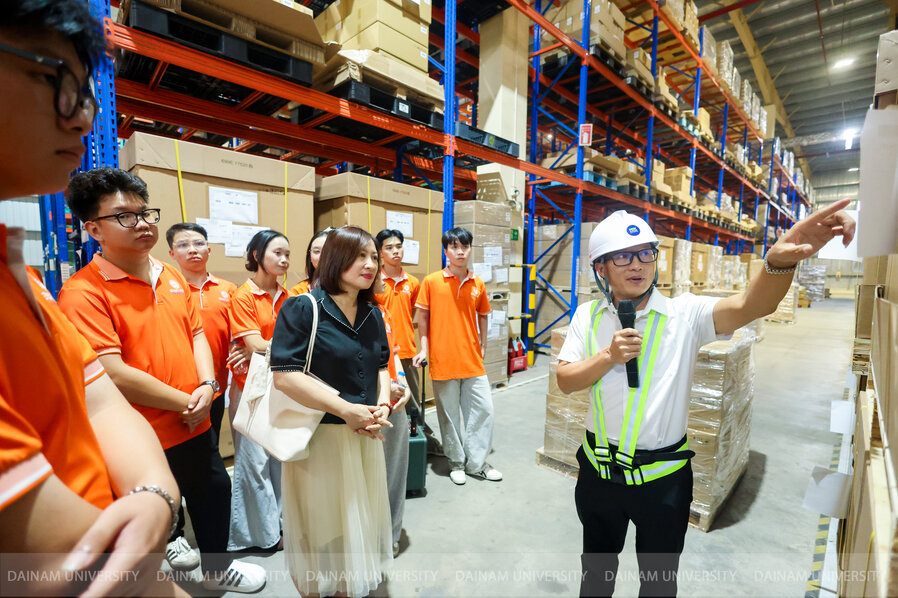
Study trips to businesses are not only meaningful for students but also provide an opportunity for lecturers to update their practical knowledge.
In the context of rapidly changing technology and production and business practices, teaching knowledge must also be constantly updated. For students to meet career demands, teachers themselves must understand how businesses operate, what technologies they use, and what skills are needed in their workforce.
More importantly, instructors must know how to translate what they learn from real-world experience into teaching content.
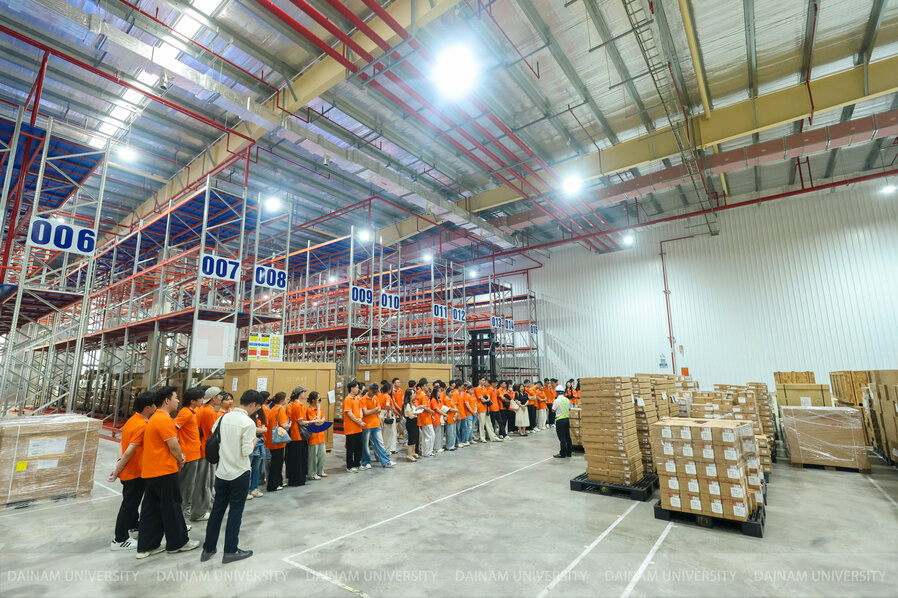
The experience at Nippon Express helps DNU students gain practical experience in warehousing and logistics operations, and better understand the requirements of the logistics industry.
For example, drawing from port operations, instructors can create a scenario where a shipment is delayed, requiring students to analyze the causes, assess the resulting costs, and propose solutions.
Thus, students not only memorize knowledge but also learn how to apply it, analyze, and solve problems.
Sending students to businesses is a training activity; transforming those experiences into new professional skills is the true value of that activity.
TRAINING IS NOT JUST FOR GRADUATION, BUT TO MAKE COMPANIES WANT TO HIRE YOU.
Dr. Le Thi My Ngoc, Head of the Department of Logistics and International Business, said that the Department focuses on integrating businesses into the training process, helping students access the working environment even while still in school.
However, corporate involvement needs to go beyond mere visits, internships, or practical training. Businesses need to gradually participate in providing feedback on training programs, sharing experiences, guiding practical exercises, and providing feedback on learners' abilities.
From the school's perspective, the responsibility is to create conditions for lecturers to update their knowledge, innovate teaching methods, and incorporate the practical requirements of businesses into the training process.
This is also how Dai Nam University concretizes its orientation: "OPEN LECTURE HALLS - PARTNERSHIPS WITH BUSINESSES - ACCELERATED TECHNOLOGY".
The classroom provides a foundation of knowledge and critical thinking. Businesses help students understand their chosen profession and apply their knowledge to real-world situations. Technology enables both teachers and students to proactively adapt to changes in the labor market.
These three elements must be interconnected and work together towards the goal of improving the quality of training.
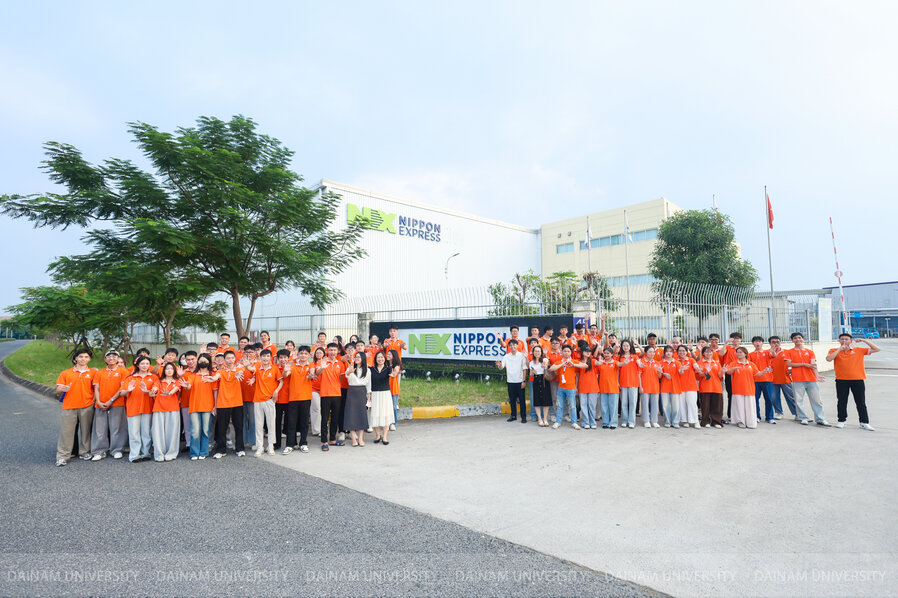
From the lecture hall to the Hai Phong Logistics Center - Nippon Express, DNU students have the opportunity to observe work processes and gain practical experience.
Because the quality of a university is not only reflected in what the school teaches, but also in what its students can do after graduation.
The goal is not just a university degree, but young people with knowledge, skills, professional attitudes, and adaptability. So that when they leave the university gates, students of Dai Nam University will have the competence to be trusted, selected, and welcomed by businesses.
BTT




Register for admission consultation 2026
scholarships and tuition support worth up to 55 billion VND

scholarships and tuition support worth up to 55 billion VND

