 English
 Tiếng Việt
What do students gain by choosing Dai Nam University besides a degree?


A student facing difficulties has someone to listen; a lesson has someone to guide; a practical session has someone to prepare; a career choice has someone to provide direction; a job opportunity has a partner company to support. Behind every step of a student's growth at Dai Nam University (DNU) is an entire system of people – from janitors and security guards, homeroom teachers, academic advisors, lecturers, faculty leaders, departmental staff to the Board of Directors, the University Council, the student community, alumni, and a network of partner businesses and hospitals. Each person has a role, but all work towards one goal: putting the learner at the center and transforming the spirit of "Dedicated to the learner" into concrete actions every day.
The journey of Dai Nam University students begins with very ordinary touches. The security team ensures safety, security, and property. The cleaning staff meticulously maintain the green spaces, keeping them clean; lecture halls, corridors, and common areas are prepared thoroughly before each school day. These are also the people who interact with students most frequently, ready to guide and support them when needed.
What's truly admirable is that the janitors and security guards at Dai Nam are loved by generations of students not only for their work on campus, but also for truly living alongside the students. A simple greeting, a helpful gesture, a reminder when a student is in difficulty… these simple interactions create a unique sense of closeness within the Dai Nam environment.
For many students, they are not just security guards, cleaners, or operators, but have become familiar faces in campus life.
A safe, green, clean, and well-organized environment doesn't happen naturally. Behind it are people who arrive early, stay late, and are ready to assist students whenever they need it.
Entering university marks a transition to a more independent stage. Students must learn independently, make their own choices, and take responsibility for their decisions. But at Dai Nam University, students don't have to fend for themselves.
Homeroom teachers and academic advisors have long been a unique feature, a "specialty" in the student experience at Dai Nam University. Beyond monitoring academic performance, this team understands students' thoughts and feelings, supports them in overcoming difficulties, provides academic guidance, and accompanies them when they face important choices.
Some problems can be solved with counseling. Some difficulties require multiple conversations. And sometimes, support begins with a very simple question: "Are you okay?"
It's important that students know that when they need someone to ask questions, to talk to, or to find direction, they have someone to turn to.
Classes may officially end, but students' learning doesn't always conclude with the bell.
At Dai Nam University, many lecturers are willing to allocate extra time for classes, tutoring, and answering questions when students don't understand the material or need more in-depth guidance. This could be an extra lesson, an hour of problem-solving, a follow-up session on practical exercises, or simply dedicating extra time to help students understand things they haven't grasped yet.
The value of a teacher, therefore, lies not only in the amount of knowledge imparted within a single lesson, but also in their willingness to go the extra mile when students need it.
In each field of study, this support is manifested in different ways: medical students are guided in professional skills and clinical thinking; IT students are presented with technological problems; engineering students practice with equipment and systems; and foreign language students hone their language skills in real-world contexts.
The ultimate goal remains to help students understand, perform, and develop professional skills.
Students see the curriculum and specific courses; behind that is the work of the faculty leaders, the professional staff, and the training management officers.
The demand for human resources, technology, and job requirements is constantly changing. Therefore, training programs also need to be updated so that learners not only meet current requirements but are also able to adapt to changes in the labor market.
Departments play a crucial role in connecting programs, faculty, and students with professional practice; they also collaborate with businesses and hospitals to bridge the gap between classroom knowledge and the demands of real-world jobs.
A streamlined procedure, a successful exam, a processed learning account, or a successful internship opportunity all require coordination among multiple departments.
Training, Student Affairs, Examinations, Finance, Library, Information Technology, Communications, Business Relations, and other functional departments each have their own responsibilities, together forming a system to support learners.
That is also an important principle of university governance: putting the learner at the center must be the responsibility of the entire system, not just a slogan of a single unit.
New training programs, practice facilities, scholarship policies, international opportunities, or business networking programs all require decisions at the management level.
The Board of Directors and the School Council play a key role in setting direction, formulating strategies, and providing resources to translate those directions into concrete values for learners.
One question that should be asked before every decision is: what additional value does this decision create for the students?
When that question became the overarching principle, "For the dedicated learners" was transformed from a message into a standard in the school's governance and operation.
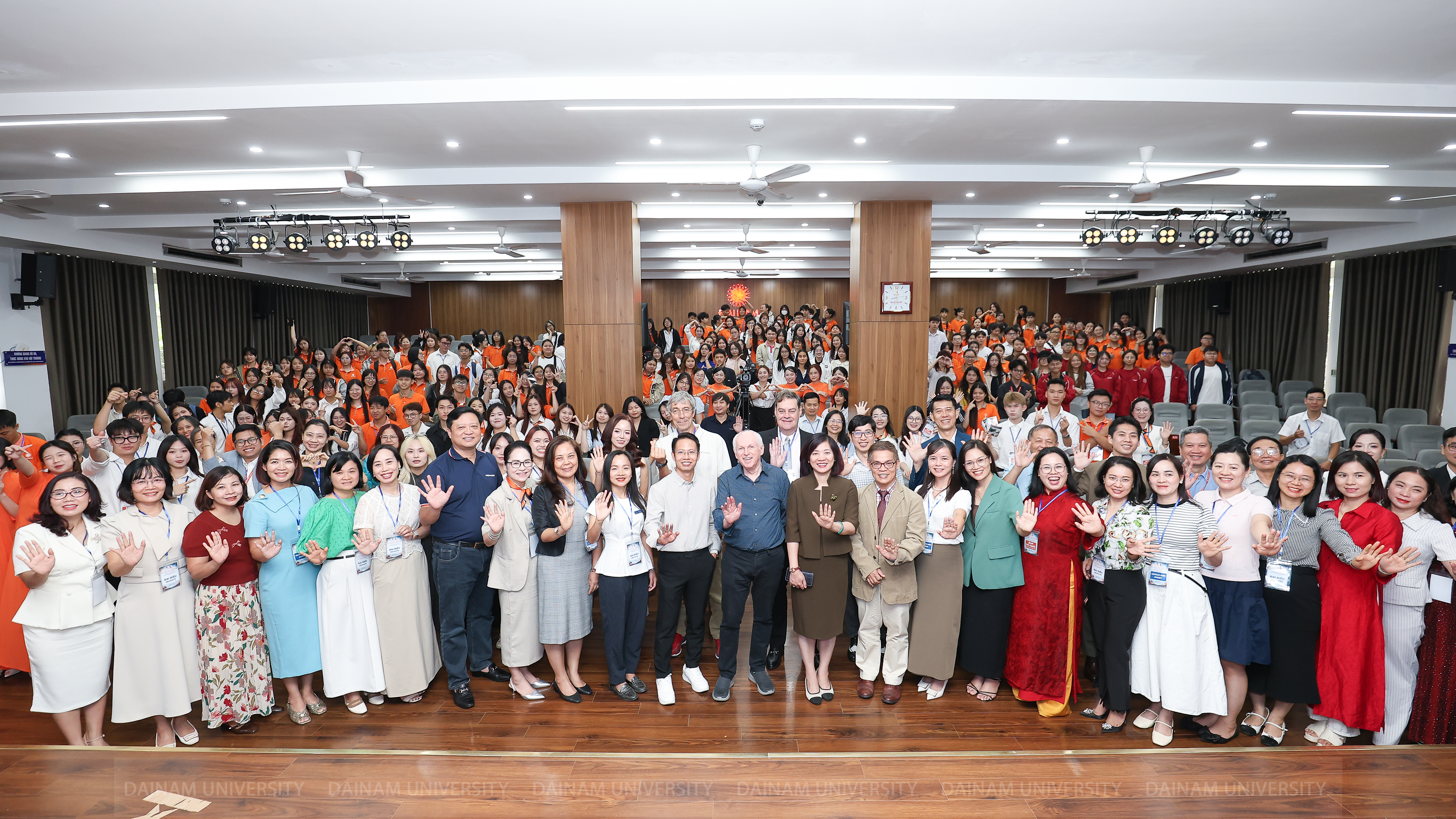
Students also grow within their own community. A senior student shares their experiences; a friend provides academic support; an alumnus returns to the school to share their work experiences; and a senior connects them with internship and job opportunities.
The student and alumni community is therefore not only a part of Dai Nam's life, but also a network of values that is passed down through generations. Learners receive value from the community today and can become those who pass on value to future generations.
Sharing her vision for supporting students, Associate Professor Dr. Dao Thi Thu Giang, Rector of Dai Nam University, said: “Every student who comes to Dai Nam carries a dream and an expectation for the future. The responsibility of the university is to create an environment where they can turn those dreams into real capabilities. To achieve this, we cannot rely solely on one teacher or one department; we need the entire system working together, from those working silently behind the scenes to those directly teaching and guiding. When everyone does their part well for the benefit of the students, we will create a truly dedicated Dai Nam.”
From a management perspective, this means that "Dedicated to the learner" is not the sole responsibility of one department, but a guiding principle throughout the way the school organizes its training, operations, and services to its learners.
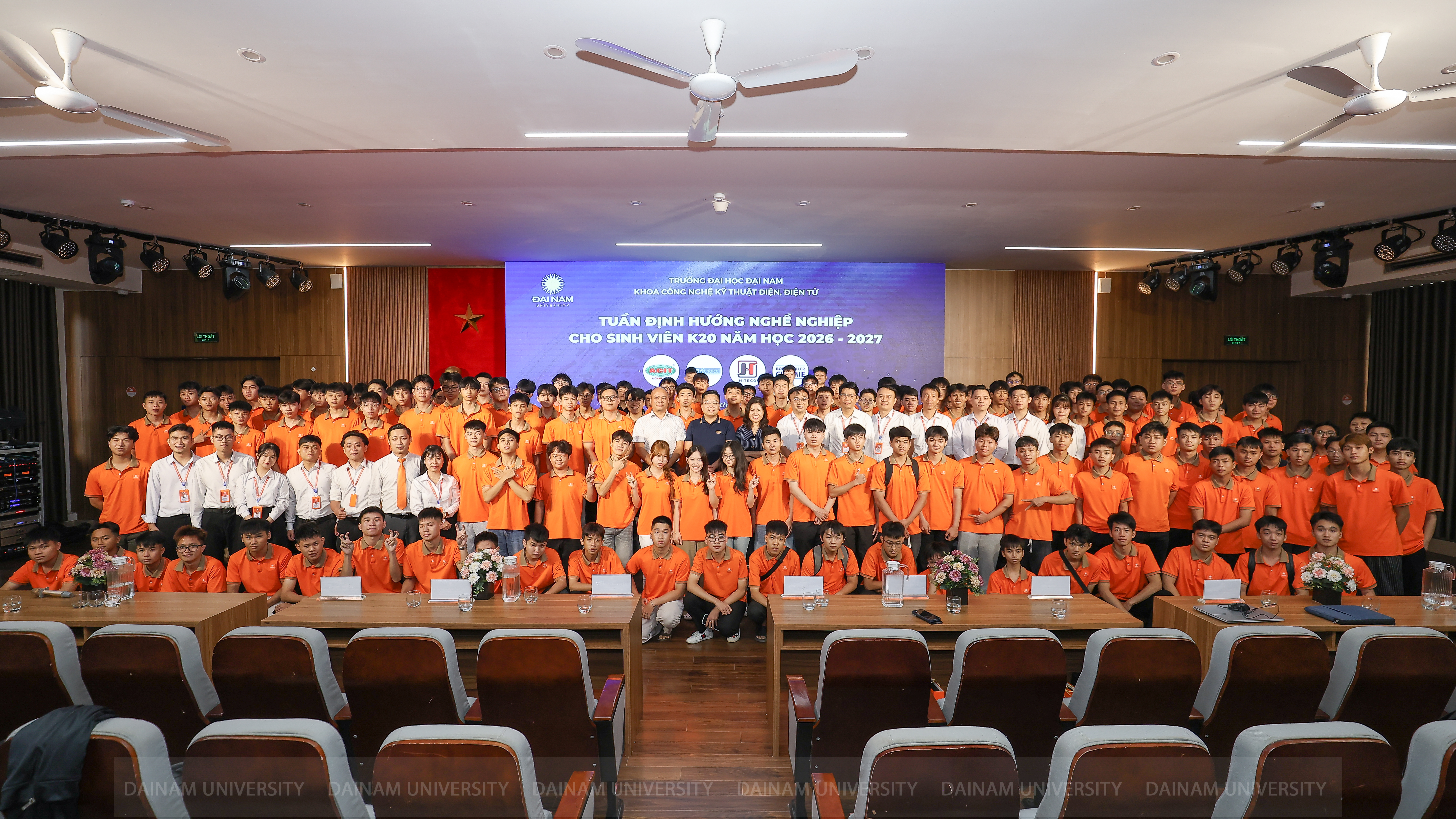
University education cannot be separated from practice. Therefore, businesses, hospitals, and partners are an important part of the training journey.
Medical students need to practice in a hospital environment; IT students approach technological problems; economics students experience business operations; engineering students observe and practice with real-world machinery, production lines, and systems.
Through field trips, projects, internships, seminars, and job placements, students have the opportunity to compare the knowledge they have learned with the demands of the profession.
Businesses and hospitals are not just destinations after graduation, but an integral part of the process that helps students understand and prepare for their chosen profession.
A student might remember an inspiring teacher, a mentor who helped them overcome difficulties, or the first company that offered them an internship. But behind that journey is a whole system of interconnected people. Each person has a different role and task, but all are focused on the learner. "Dedicated to the learner" is therefore not just a message, but is demonstrated through thousands of concrete actions every day.
BTT






Register for admission consultation 2026
scholarships and tuition support worth up to 55 billion VND

scholarships and tuition support worth up to 55 billion VND

