 English
 Tiếng Việt
The station-based exam helps nursing students at Dai Nam University hone their professional skills from their first year.


Beyond simply testing practical skills, the station-based examination for nursing students at Dai Nam University is a comprehensive assessment of clinical thinking, communication skills, situational analysis, and patient care planning. This is one of the activities that clearly demonstrates the university's commitment to practical training, helping students develop professional competencies from their early years of university.
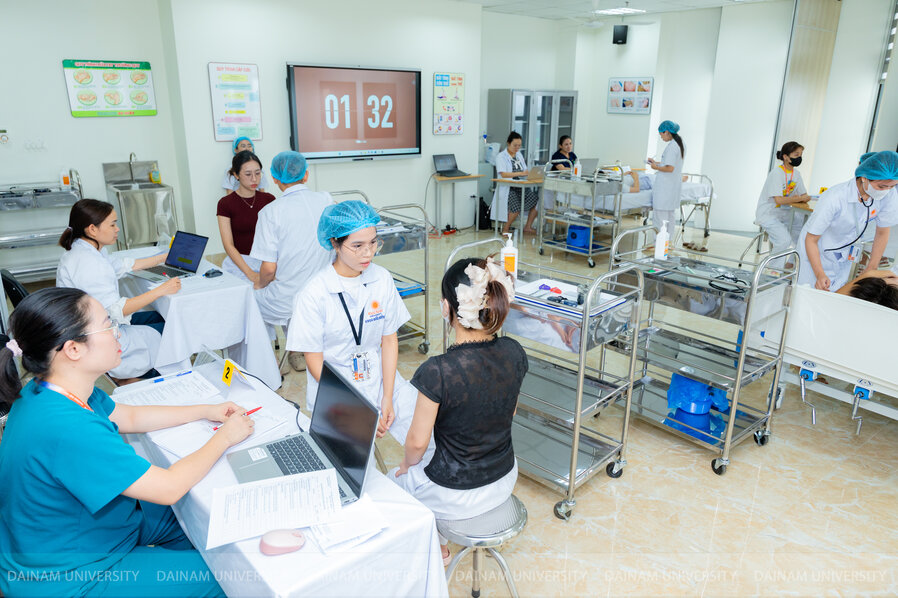
Students from the Faculty of Nursing at Dai Nam University participated in a station-based competition with simulated clinical scenarios.
The OSCE (Operations of the Hospital Environment) simulation exam comprehensively assesses learners' competencies.
The Nursing Skills Practice modules 1, 2, and 3 are also organized in a station-based exam format, but the stations mainly focus on basic nursing techniques such as injections, infusions, wound dressing, and vital signs measurement. Meanwhile, the Nursing Skills Practice module 4 of the Faculty of Nursing at Dai Nam University puts students through a station-based exam with simulated clinical scenarios.
Within the allotted time, each student must approach the patient, gather information, assess their health status, identify priority issues to develop a care plan, and complete the nursing record according to professional procedures.
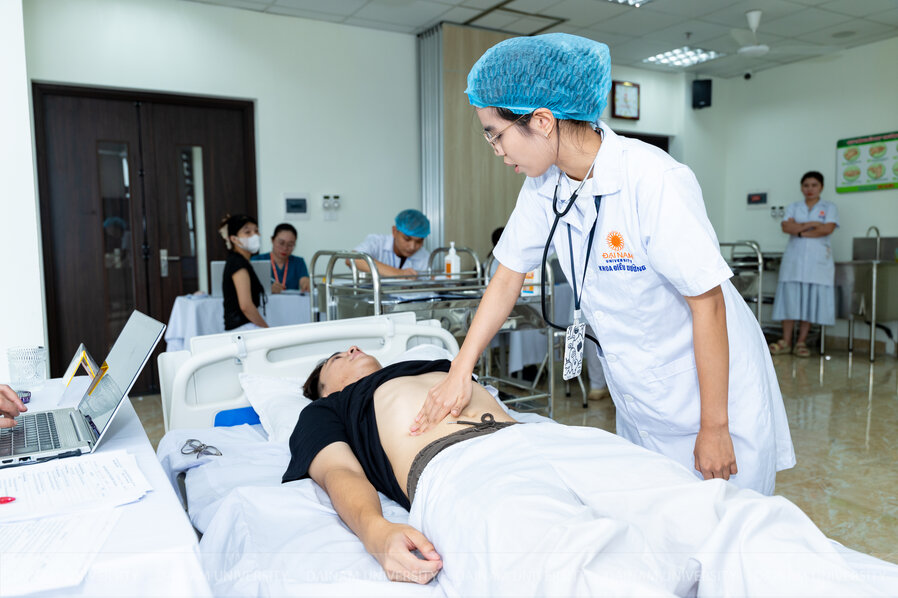
Each examination station requires students to simultaneously apply their knowledge, communication skills, and clinical thinking to develop a patient care plan.
This form of assessment requires learners not only to perform the techniques correctly but also to be able to observe, analyze, make decisions, and explain the professional basis for each step of the care.
Therefore, each examination station creates pressure similar to a hospital environment, helping students gradually familiarize themselves with the professional requirements before entering clinical practice.
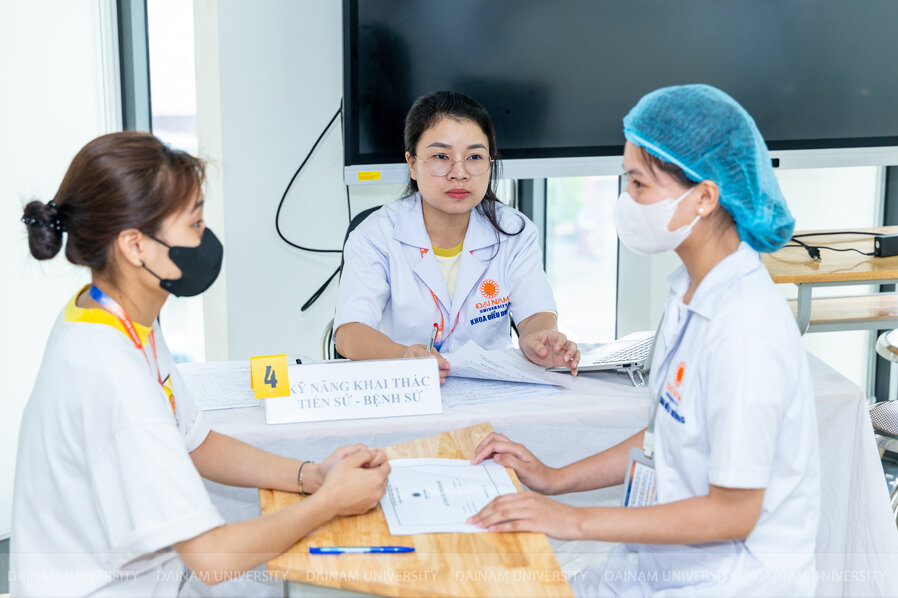
Faculty members in the Nursing Department monitor and evaluate each student's performance using checklists and standardized criteria.
According to Ms. Doan Thi Nga, Deputy Head of the Nursing Department, implementing the station-based training program from the early years of the university program is entirely consistent with the competency-based training orientation for nurses.
After acquiring foundational knowledge and skills, students need to be exposed to real-world situations to develop clinical thinking, professional conduct, and problem-solving abilities. Nursing is a profession directly related to the health and safety of patients, so the earlier students are trained, the more confident and well-prepared they will be when entering the real working environment.
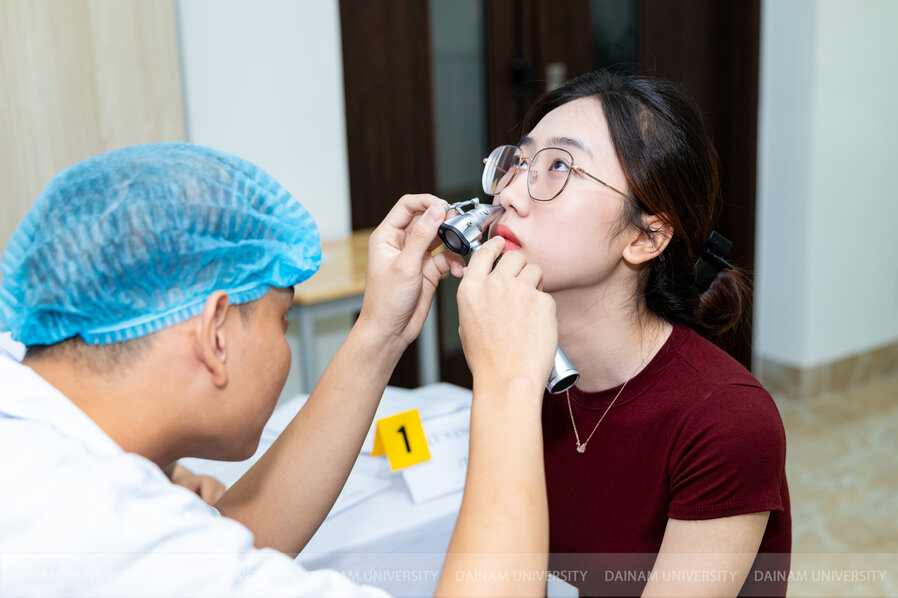
The station-based exam helps students familiarize themselves with time pressure and workflow in a hospital environment.
Ms. Doan Thi Nga stated that the quality of the exam lies not in the score but in its ability to accurately reflect the students' professional competence. At each station, instructors can simultaneously assess professional knowledge, communication skills, clinical thinking, ability to make judgments, care planning skills, and professional attitude.
The results of the recent exams show that the majority of students have made significant progress, and also help lecturers identify areas that need further adjustment in the teaching process to improve the quality of education.
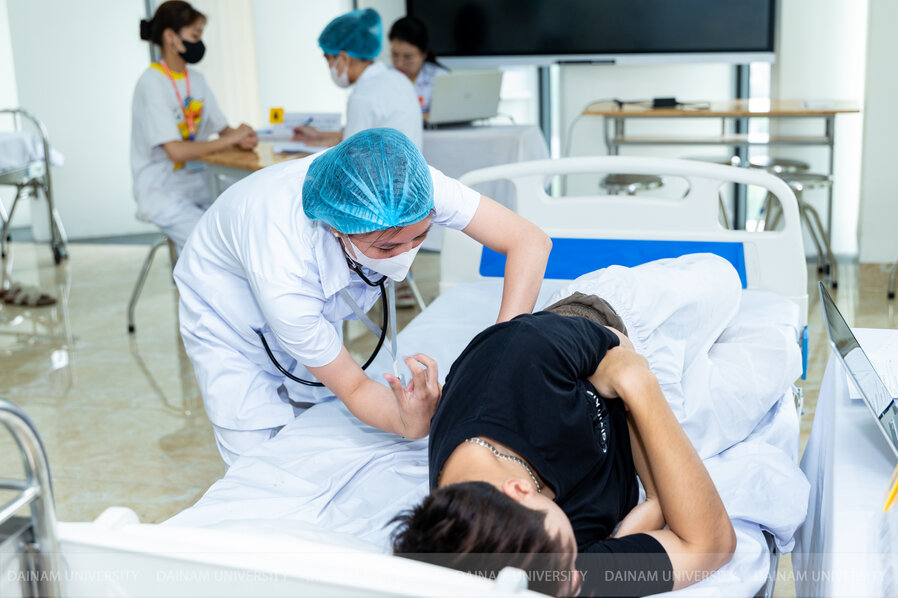
The station-based exam helps students familiarize themselves with time pressure and workflow in a hospital environment.
For student Nguyen Thi Lan Anh, class Nursing 18-03, the exam provided a completely different perspective on the nursing profession. Previously, she thought that assessing patients and keeping records were primarily the responsibility of doctors, but after this module, she understands that this is also an important responsibility of nurses.
The process of observing, gathering information, detecting anomalies, and meticulously documenting everything within a short period of time created immense pressure, but it also helped me mature significantly in my professional thinking.
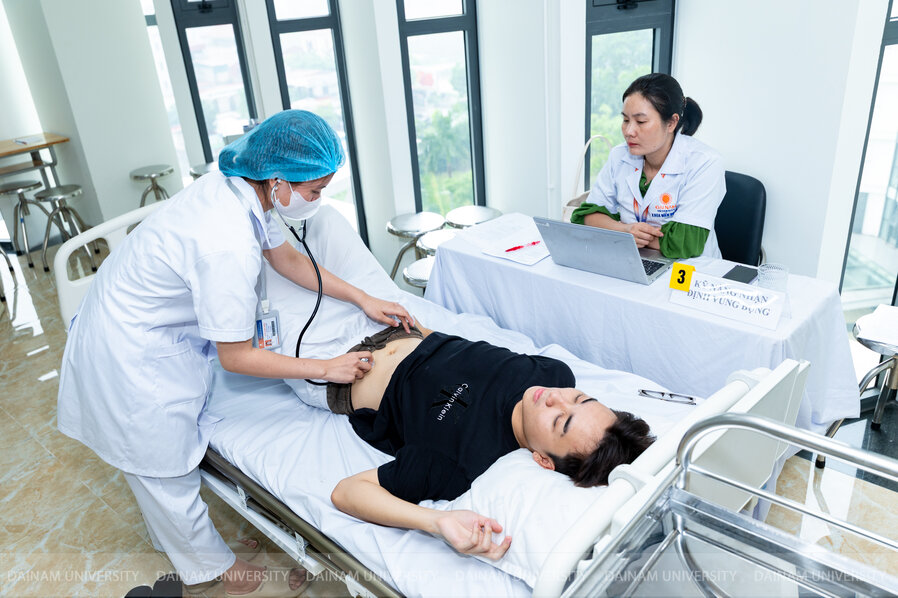
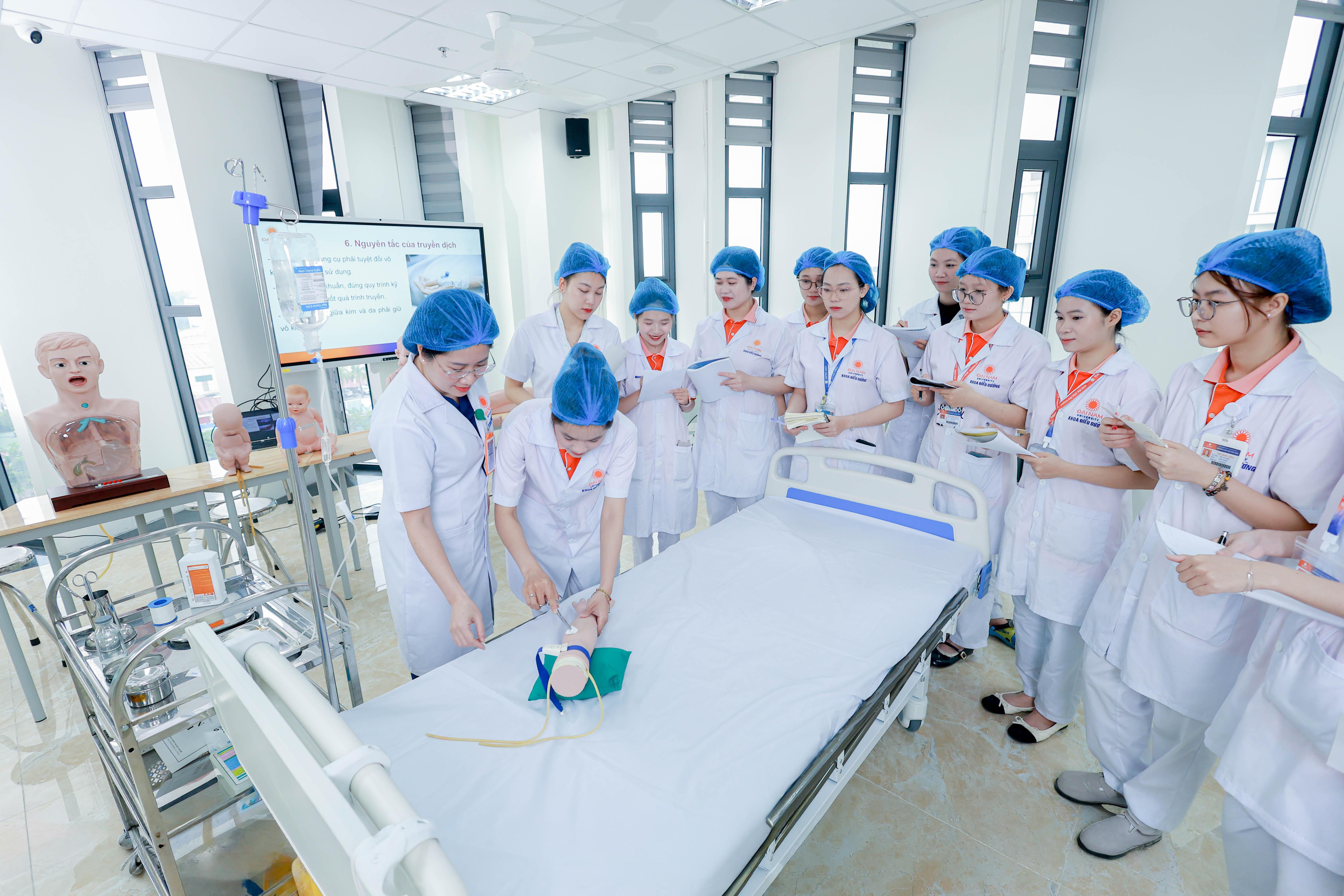
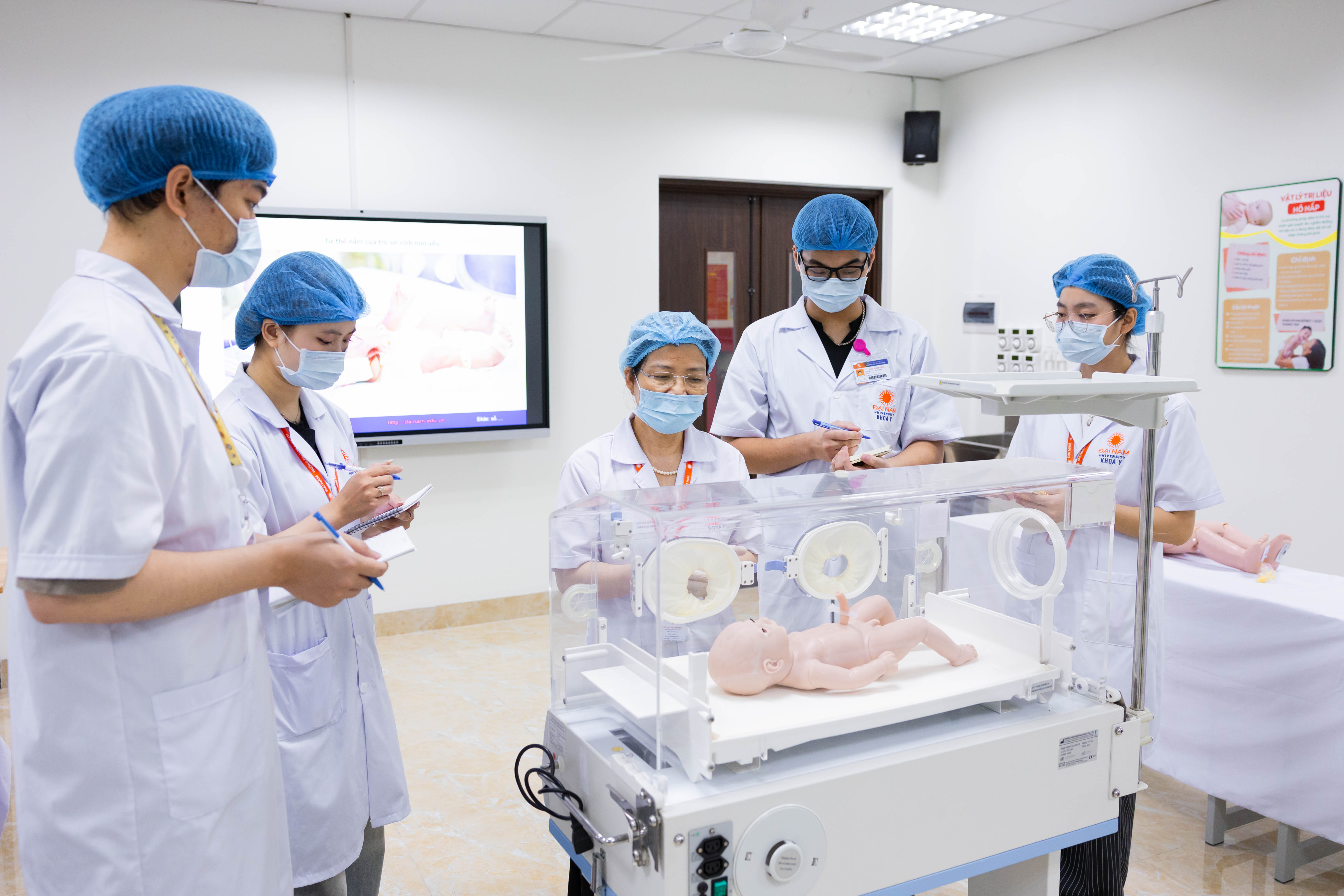
The modern practice rooms provide an ideal environment for nursing students at Dai Nam University to hone their skills before undertaking clinical internships.
Pham Thi Huong, a student from Nursing Class 18-02, who also achieved good results in the exam, shared that the biggest challenge was not performing the techniques but knowing how to select important information, connect data and assessments with the care problem to build a suitable plan.
Through this experience, I realized that a professional nurse not only needs to be proficient in skills but also must be able to analyze, accurately record, and take responsibility for every piece of information related to the patient.
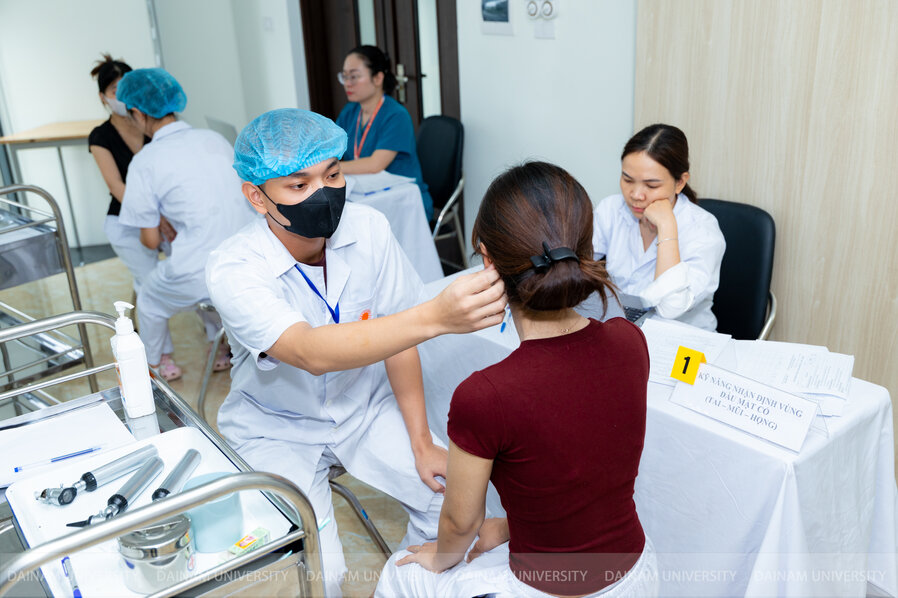
Practical training, preparing students with a solid foundation.
The station-based examination is one of many activities demonstrating the "learning by doing" training philosophy of the Faculty of Nursing at Dai Nam University. The university has invested in a modern practice room system with complete models, equipment, and a simulated hospital environment so that students can practice regularly before entering the clinical environment.
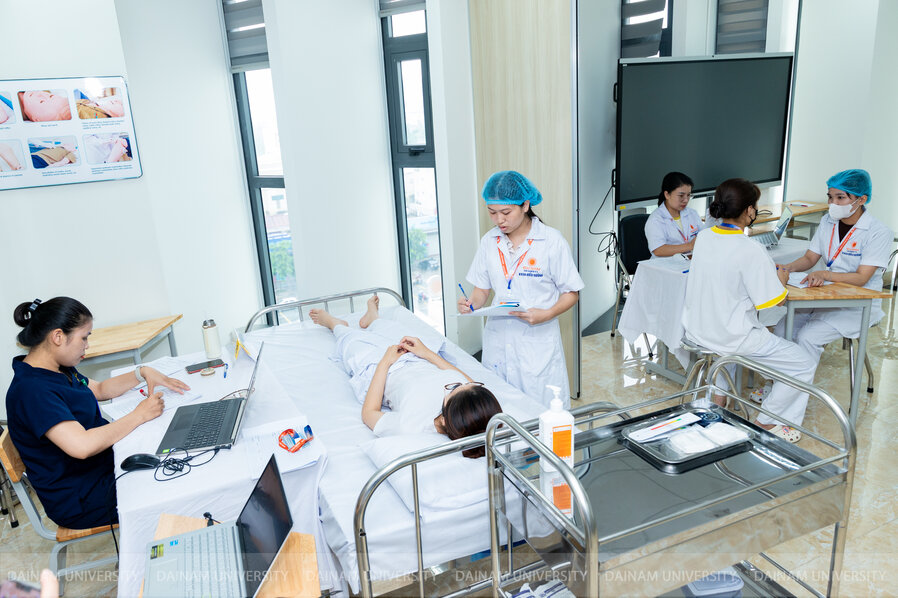
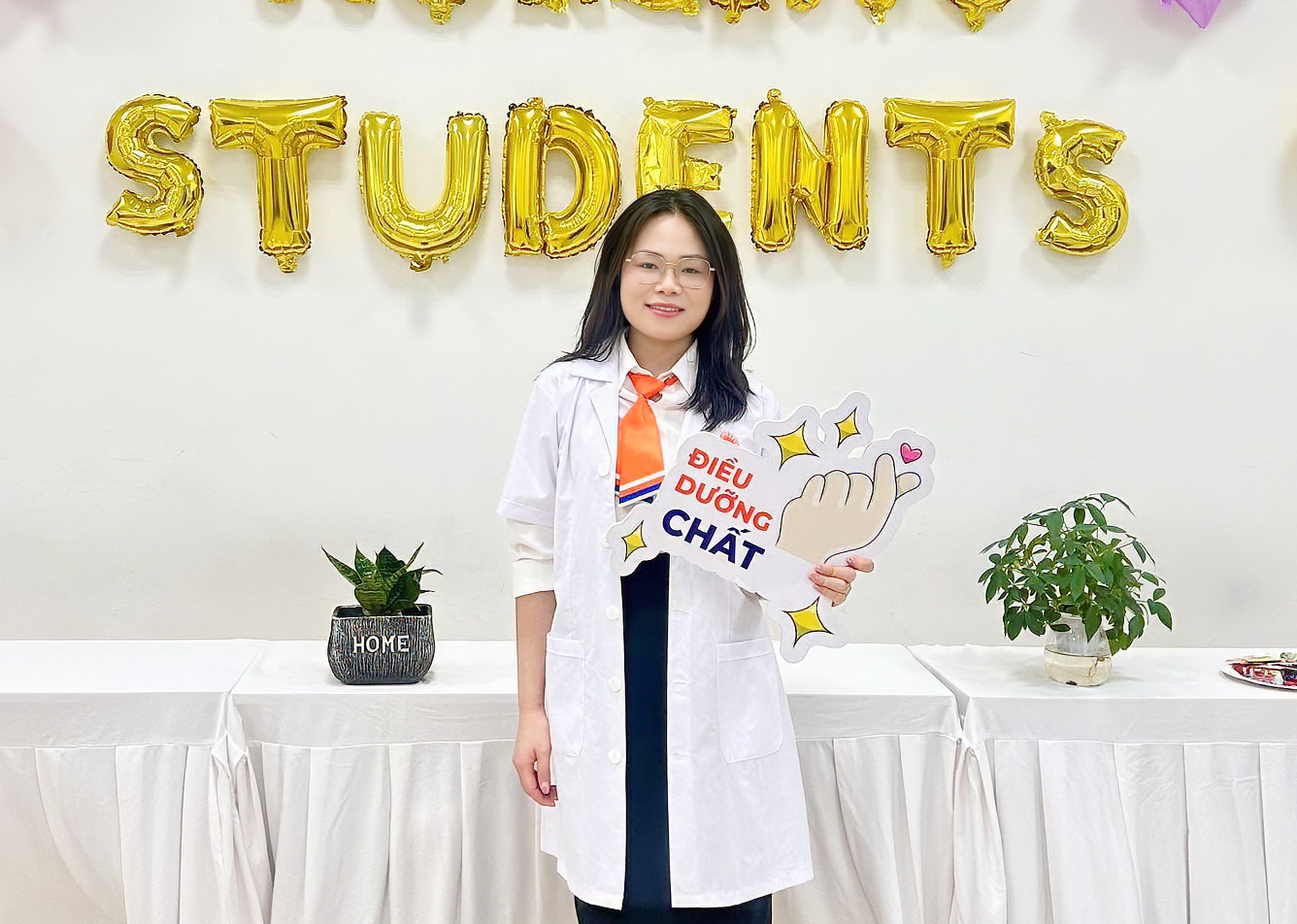
Students confidently apply their professional knowledge to simulated situations, gradually developing a professional mindset.
The training program is designed to develop competencies, closely integrating specialized knowledge, practical skills, and soft skills. In addition to classroom learning and preclinical practice, students have numerous opportunities to intern at partner hospitals and healthcare facilities, thereby familiarizing themselves with the real-world work environment, developing professional conduct, and accumulating professional experience during their studies.
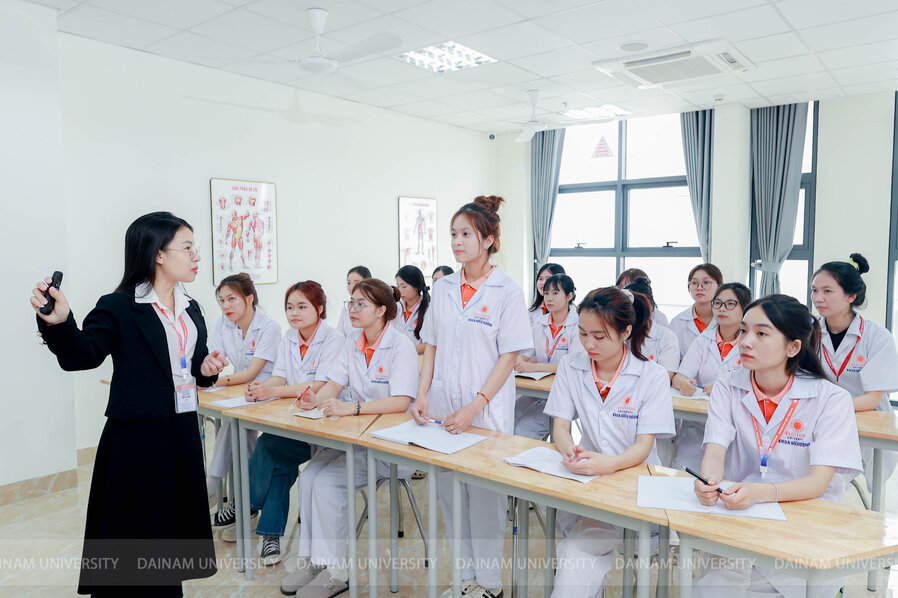
Accompanying the students is a team of instructors with extensive practical experience, who closely monitor each practical session, provide guidance, evaluation, and feedback to help learners continuously improve their skills.
The application of simulation-based testing methods such as station-based exercises also helps students gain more confidence when entering the hospital environment, meeting the increasingly high demands of the healthcare industry.
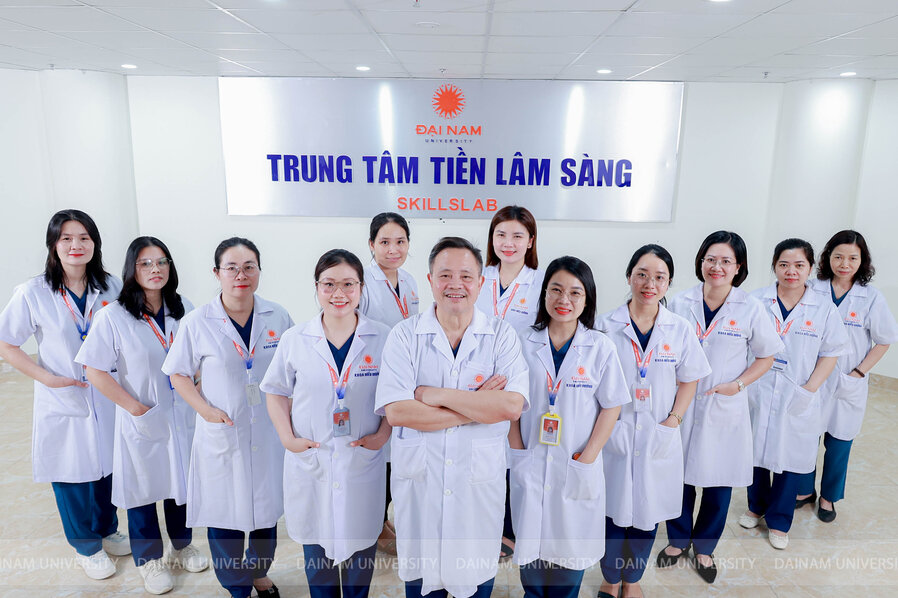
Practical training is one of the highlights of the Faculty of Nursing at Dai Nam University, helping students to be ready to meet the requirements of the healthcare industry.
With a student-centered training approach, linking theory with practice and using professional competence as a measure, Dai Nam University is gradually training a team of nurses who are not only proficient in their profession and skills but also possess clinical thinking, professional responsibility, and the ability to adapt to the modern healthcare environment.
BTT






Register for admission consultation 2026
scholarships and tuition support worth up to 55 billion VND

scholarships and tuition support worth up to 55 billion VND

