 English
 Tiếng Việt
CafeF - Businessman Le Dac Lam recounts his experiences studying at Harvard and Johns Hopkins and his decision to invest 2 trillion VND to create a leading institution for his "family legacy" school.


Having decided to step down from his direct operational role at VnTrip but retaining his position as Chairman, Le Dac Lam is reshaping his career path by pursuing academic studies at leading universities worldwide and concurrently serving as Vice Chairman of the Board of Directors of Dai Nam University.
In late March, businessman Le Dac Lam shared a letter of over 4,000 words addressed to VnTrip investors, reflecting on his 10-year successful entrepreneurial journey with many candid insights.
Through a process of "repeatedly getting punched in the face, getting up, correcting mistakes, making mistakes again, and correcting them again," he gradually realized that success doesn't lie in chasing ever-changing trends, but in finding principles strong enough to build a system that can operate long-term, creating economic value without depending on a single individual.
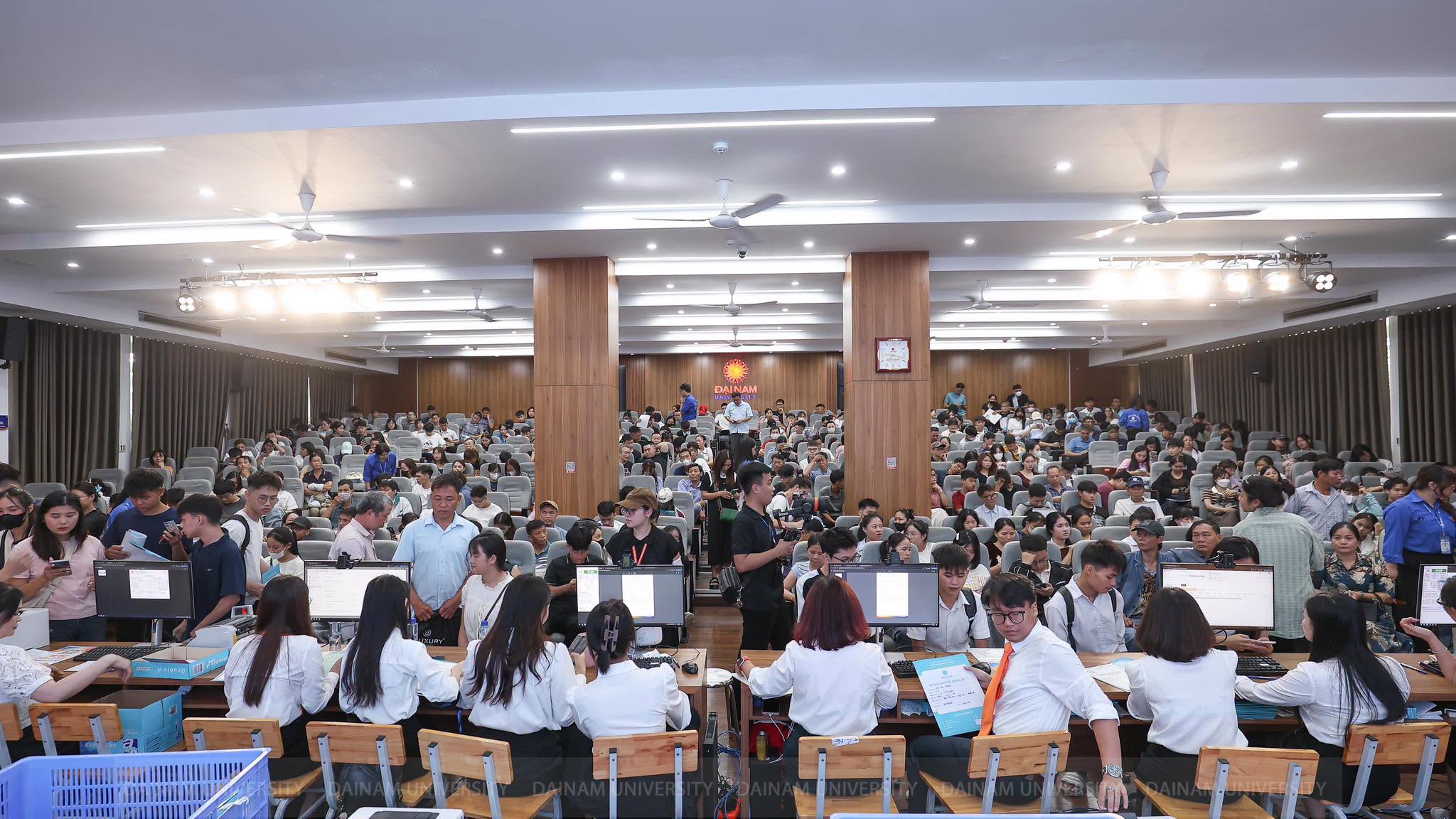
In his role as an educational administrator at Dai Nam University, which has 25,000 students, he is also pursuing a similar goal, but on a larger scale: building systems that can create human beings. That is also why this entrepreneur chose to continue his academic path with a PhD in Educational Management at Johns Hopkins University – one of the leading universities in the United States and the world.
For Le Dac Lam, this was not an unexpected turning point, but an inevitable transition in his journey from a direct operator to a creator.

He just received notification of his scholarship for a PhD program in Educational Management at Johns Hopkins University. How was the application process more challenging than when he applied for a Master's degree at Harvard University previously?
Previously, I earned a Bachelor's degree in Business Administration, specializing in Finance, from the University of Washington and have completed a Master's program in Management from Harvard University. However, if I were to work in an educational environment, I believe pursuing a PhD is necessary. And among the options, the PhD program in Educational Management at Johns Hopkins is perhaps the best fit for me.
In terms of admissions, the Master's program I took at Harvard Extension School had much easier entry requirements, but the graduation rate was quite low because it was designed for working professionals.
Meanwhile, the PhD program at Johns Hopkins University requires taking the GRE (a standardized test assessing the aptitude of applicants for graduate programs in the US), developing a research proposal, and having reputable letters of recommendation, making the competition much higher, especially when applying for scholarships.
The scholarship I received is currently $10,000 per year (over 260 million VND). I didn't actively apply for the scholarship, so I was quite surprised that it's from the Bloomberg Foundation. Perhaps awarding scholarships is a way for the school to attract people who are a good fit for their program, and I have no financial difficulties.
How have the knowledge and experiences gained during your studies in the US, from undergraduate to the present, influenced your management of VnTrip and your involvement in the administration of Dai Nam University?
During my studies in the US, the most important thing I learned was a change in mindset and how to ask questions. When working with Americans, you can see that they ask a lot of questions, and they ask them very directly, sometimes quite bluntly, but effectively – this helps the decision-making process to be faster and clearer.
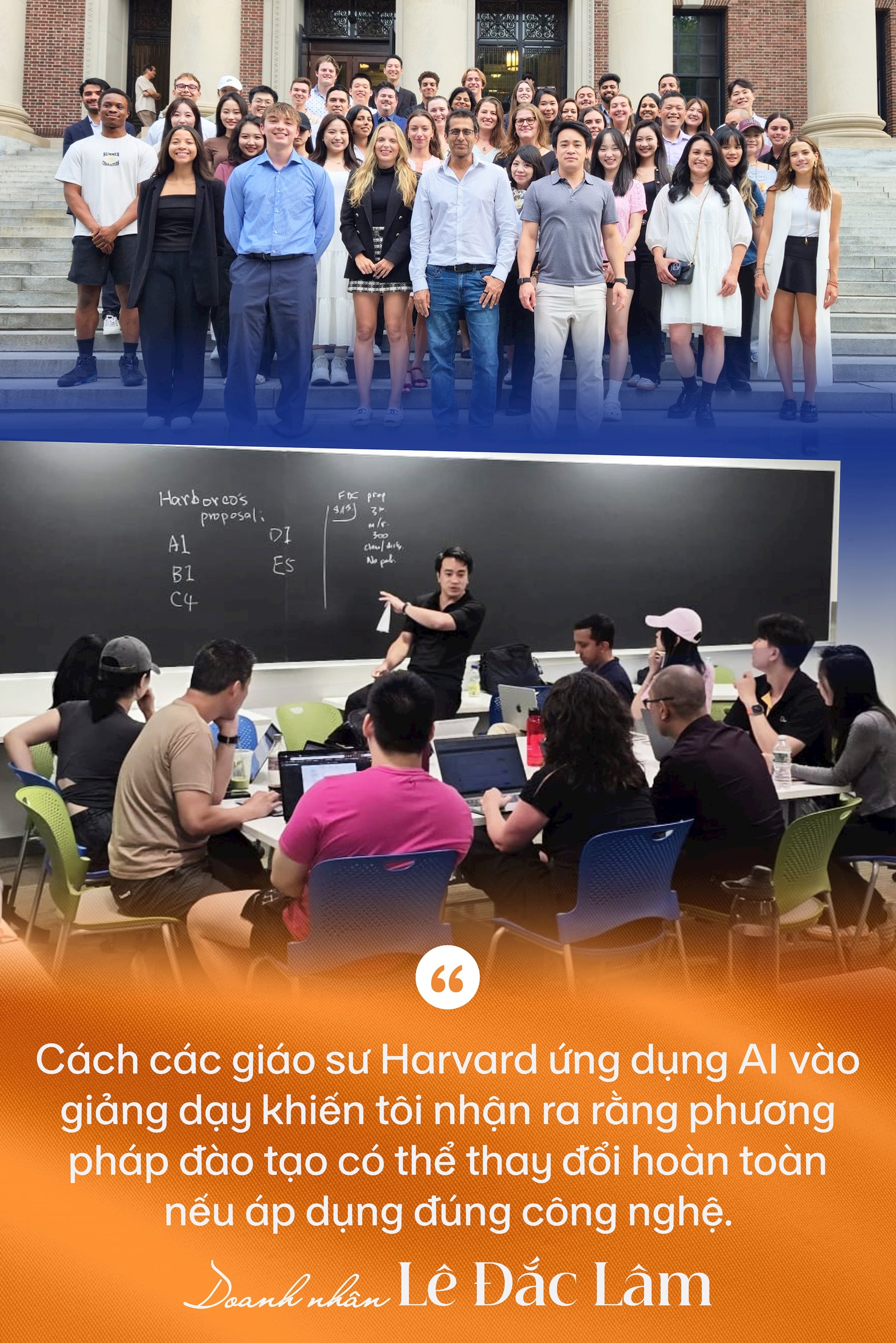
At Harvard, I had an unforgettable experience studying the application of artificial intelligence simulation in negotiation strategies. The software not only simulated scenarios but also suggested tactics in real time and analyzed the entire process after each negotiation, pointing out areas for improvement.
Each session lasts approximately three hours, during which students both negotiate with AI and use AI as a consulting tool to prepare for face-to-face negotiations with each other, creating a highly realistic competitive environment. This platform was developed by Professor Niraj Kumar's company specifically for Harvard and MIT and is considered one of Harvard's most pioneering courses. Thanks to this, the professor has invited many leading experts in the field of negotiation, including those who have worked with the FBI, to teach.
The way Harvard professors applied AI made me realize that training methods can be completely transformed if the right technology is used. Afterward, I invited the professor who taught this course to collaborate on building a similar Mini MBA program at Dai Nam University.
What specific problems in the roles he is pursuing does he expect the program at Johns Hopkins University to help him solve?
I already have a background in technology and finance, so pursuing education isn't about replacing what I already have, but rather about upgrading myself and expanding my knowledge in a new field. In the future, as I manage both my business and university, a deeper understanding of education will be essential for me to excel in my role.
Beyond the value of knowledge and research experience, a unique aspect of the program is its cohorts – small groups bringing together people working in diverse positions around the world. This environment will allow me to access a wide range of perspectives and build a very valuable network.

Having started your own business with VnTrip and pursued your own path, what led you to choose to partner with your father, Dr. Le Dac Son, in the field of education?
I believe what my parents have built in the field of education is of great value to society. It represents their dedication and hard work over many years, so I consider it a family legacy. Therefore, one way to show my gratitude is to continue preserving and developing that legacy. Furthermore, as I become more deeply involved, I realize this field is very interesting, I can create even more value, and there are still many opportunities for growth.

What are the pressures of taking over a family business compared to building a company from scratch?
The most stressful aspect of starting a business is the uncertainty of what needs to be done. The hardest part of a startup is finding product-market fit (PMF) and then building an efficient operational system – essentially solving the problem of going from zero to one.
Meanwhile, taking over an existing organization is a 1 to N problem. If done well, N will continue to grow; if not, N may shrink. The most important thing is to prevent N from returning to 0 due to wrong decisions. To me, the 1 to N problem isn't as difficult as the 0 to 1 problem, so I find it quite interesting.
Perhaps the biggest difference lies in the organizational structure. A business typically operates within a fairly clear chain of management, while a university has two branches: administrative and academic – both independent and interconnected. However, regardless of the model, the principle of governance must always aim for clarity and professionalism.
Currently, he is deeply involved in admissions, finance, and technology. In those roles, which area has left the most significant personal mark?
Initially, I was heavily involved in the recruitment aspect because it had many similarities to the marketing activities in VnTrip's early stages. Once I had transferred the experience, I gradually withdrew from this part.
Finance is my background, so joining shouldn't be too complicated. Perhaps the most significant impact will be in the technology sector. I believe that Dai Nam's technology team is currently one of the strongest in the private school sector, and in the next 12 months, that will be clearly demonstrated through concrete products.

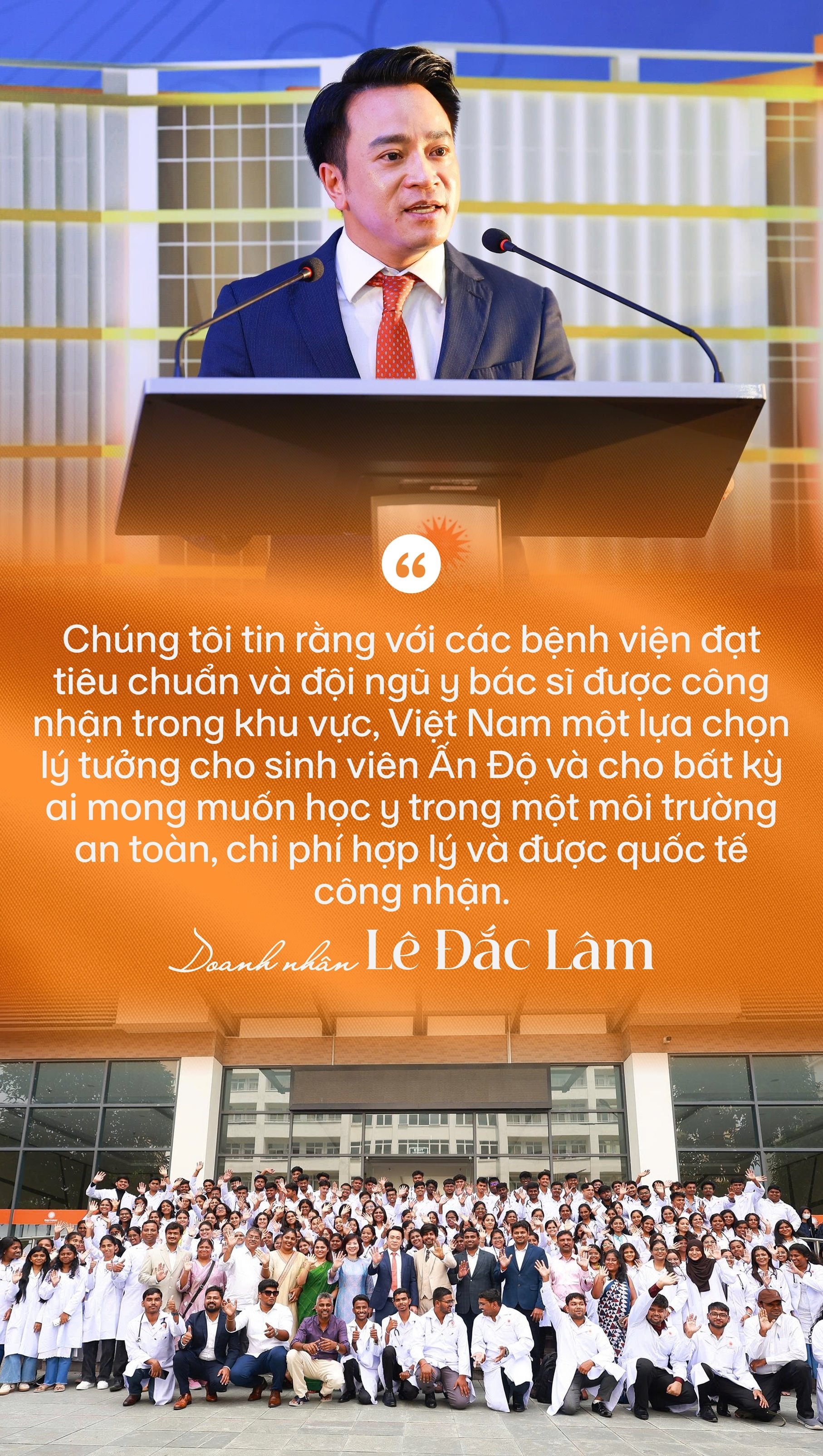
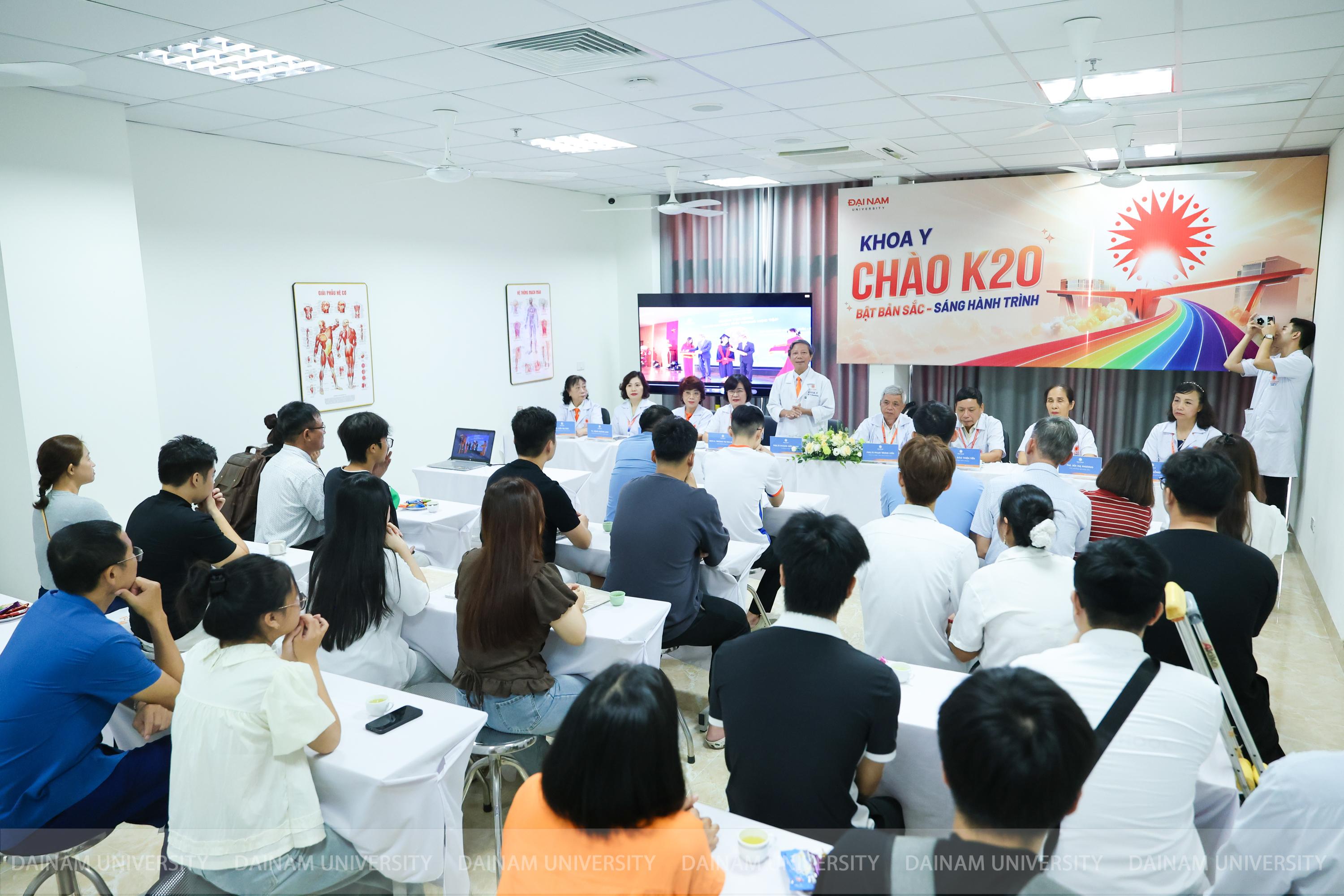
In October 2025, Dai Nam University officially launched its international medical doctor training program, welcoming over 200 Indian students. What prompted you and Dai Nam to decide to "bet" on such a pioneering program?
My father had actually been pursuing this idea for a long time, because it's a program that can help the university affirm the quality of its medical training and enhance the reputation of Dai Nam University. Therefore, when I took on the project, I considered it almost a new "mini-startup".
From start to finish, it only took us about 9 months, and Dai Nam was the first school in the North to implement this model. During that process, the school built a teaching staff including both Indian and Vietnamese lecturers with expertise, and invested in a modern laboratory system and dormitories.
We believe that with its high-standard hospitals and regionally recognized medical staff, Vietnam is an ideal choice for Indian students and anyone wishing to study medicine in a safe, affordable, and internationally recognized environment.
And to convince Indian students to choose Vietnam instead of familiar destinations like Ukraine or the Philippines, I believe a large part of the credit goes to our partner – the organization that directly works with and connects with young people in this market.
Is exporting education a strategic experiment or a long-term move that creates a competitive advantage for Dai Nam?
Exporting education is a crucial program in Dai Nam University's 20-year strategic plan. In 10 years, Vietnam's population will no longer be as favorable for education as it is today, and student recruitment and educational practices may change significantly due to the impact of AI. Therefore, establishing an International Medical Training Institute will be a key focus for our future.
Initially, Dai Nam University chose to attract students from India due to the high demand in that market. In addition, the university also approached students from Bhutan and plans to expand to other potential markets such as the Middle East and several African countries. Simultaneously, several new training programs are being researched to attract more international students to study in Vietnam.
In early March, we awarded medical scholarships totaling US$150,000 to outstanding students from the Kingdom of Bhutan. This event is part of our internationalization strategy for education, creating a multicultural learning environment at Dai Nam. In addition, the scholarship fund for domestic students in 2025 is projected to reach 55 billion VND.
Is investing heavily in the medical field the way for the university to position itself as a leading institution in this area?
The medical field requires significant investment. This year, Dai Nam University plans to allocate approximately 2 trillion VND for the construction of new facilities and the development of a multi-specialty clinic. Specifically, the university will simultaneously begin construction on three buildings with a total floor area of over 150,000 m², including lecture halls to accommodate approximately 25,000 students, international standard dormitories, and a multi-specialty clinic.
However, this is only phase 2 of the development plan, as many items still need further investment if the institution wants to expand in the future. Therefore, the financial and tuition fee calculations must be very careful to ensure both the quality of education is maintained and the fees are affordable for students.
Currently, medicine is identified as a key sector of Dai Nam University, and for the next 10 years, it will remain a priority area for resource allocation. However, in the long term, the university aims for comprehensive development, gradually building other academic disciplines with equivalent standing and competitiveness.

During the start-up phase, he once said his biggest fear was failure. So, in the field of education, what is his biggest "fear" now? Does the pressure come from having to continue the family's success?
At this stage, my primary concern is no longer growth, but rather risk control and ensuring the long-term stability of the system. What I least want are unexpected incidents beyond my control.
Having gone through many ups and downs, how does Le Dac Lam's definition of success at his current age differ from that of the young man who returned to Vietnam to start his career years ago?
Previously, when I was just starting out, I thought success meant building a large company with revenue and market share. Back then, I looked at things quite directly: how much we could make, how much we could grow, and how much capital we could raise.
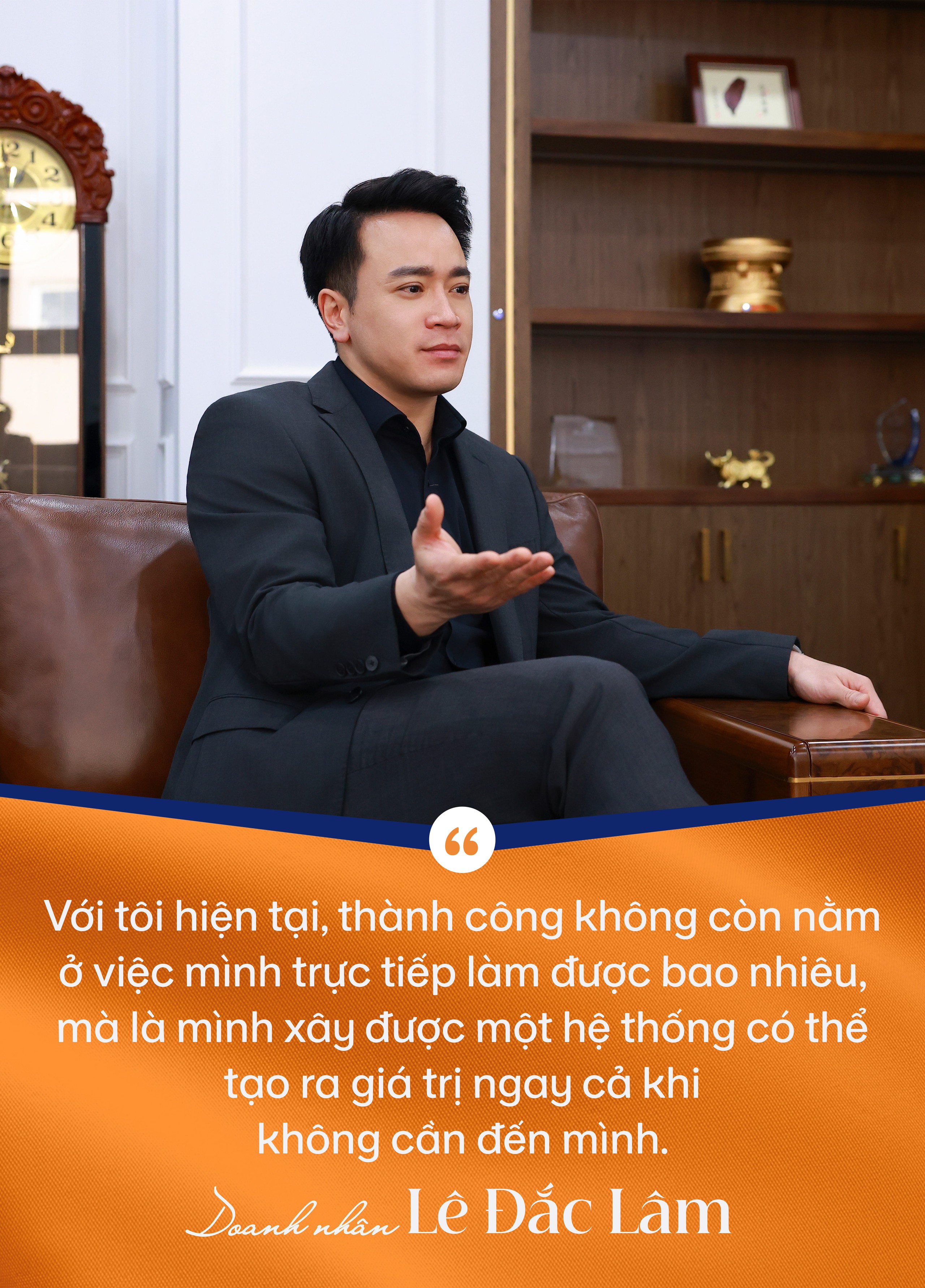
But after a while, I realized those things were just the result of a whole process. More importantly, it's about whether you can build a system that can operate stably and sustainably. If an organization only functions well when you're present, it's essentially still operating at an individual level. Conversely, when the team can operate independently, make their own decisions, and continue to grow without depending on you, then that organization truly has a solid foundation.
Looking back on his entire career, how would he like to be remembered as Le Dac Lam: as a pioneering tech entrepreneur who revolutionized the online travel industry, or as a dedicated educator with the aspiration to elevate Vietnamese universities to international standards?
I don't think those two roles are separate. When building a business, you're creating a system that generates economic value. In education, you're also building a system, but that system creates people. From an operational perspective, the essence isn't much different: it's still about selecting people, building a team, designing mechanisms, and maintaining discipline.
To put it briefly, I want to be someone who can build efficient, self-sustaining organizations that are independent and self-sufficient, not dependent on a single individual. Whether it's a business or a university, if those organizations continue to thrive even after I'm no longer directly involved, that's already a success. The scale of that success, however, also depends, to some extent, on luck.
At this stage, I'm not aiming to achieve anything too big in the short term. What's more important is building the right foundation and maintaining discipline for a sufficiently long period. Once the foundation is solid, the results will follow.
Thank you for sharing this!
Theo CafeF







Register for admission consultation 2026
scholarships and tuition support worth up to 55 billion VND

scholarships and tuition support worth up to 55 billion VND

