 English
 Tiếng Việt
Bringing the courtroom into the lecture hall: Law students at Dai Nam University learn the ropes from real-life cases.


From a seemingly familiar conflict in the school environment, a series of legal questions were raised at the 2026 mock trial organized by the Faculty of Law, Dai Nam University. Does that behavior constitute a crime? How are offenders under 18 years old handled? How is liability for damages determined?
But the most valuable aspect of the trial wasn't the verdict. What resonated with the students was how they saw the legal consequences behind a seemingly impulsive act; understanding that every choice comes with responsibility and that every action can have long-lasting repercussions for themselves and those involved.

Tears after a moment of impulsiveness.
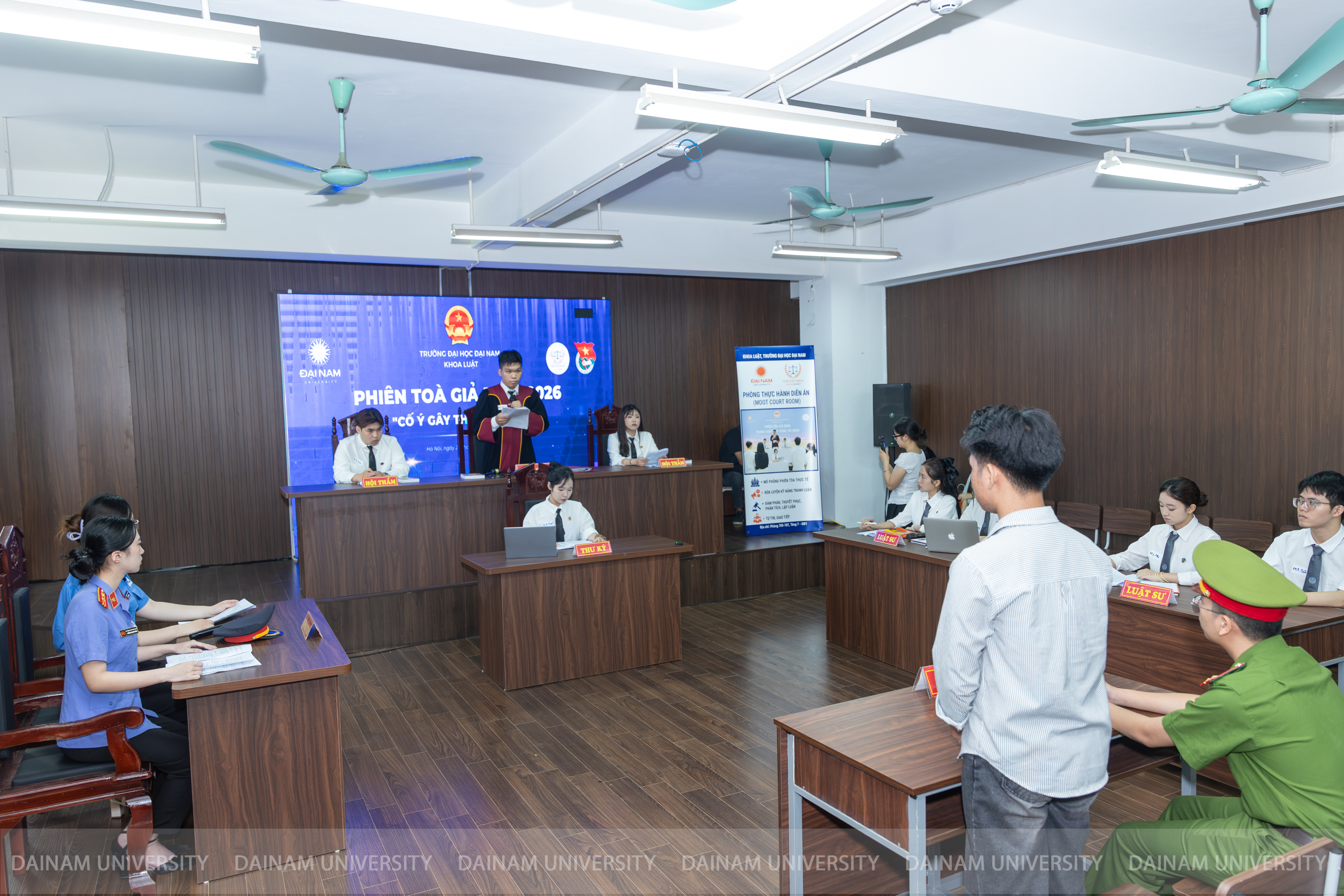
Based on a case file of "intentional infliction of injury," the mock trial fully recreated the process of a public first-instance criminal trial. In the solemn space of the Law Practice Room of the Faculty of Law, the wooden gavel of the presiding judge echoed, marking the beginning of the trial. The case told the heartbreaking story of two minors. Because of a moment of youthful recklessness, one suffered injury, the other faced imprisonment, and both families were deeply affected.
Under the expert guidance of faculty, lawyers, and legal specialists, students directly role-play as members of the judging panel, prosecutors, lawyers, court clerks, defendants, victims, and other participants in the proceedings. Before entering the courtroom, they must study the case file, analyze evidence, build arguments for accusation or defense, and prepare questioning and argumentation content just like real professionals.

The sharp arguments, realistic case studies, and emotionally charged developments captivated a large audience of students, lawyers, and legal experts in attendance. In her role as a lawyer defending the legal rights and interests of the victim, student Hoang Lan Nhi presented her viewpoint with remarkable confidence and professional competence, demonstrating her ability to apply legal knowledge to practice even while still a student.

Lawyer Mai Bich Ngan shared: “I have attended many real and mock trials for students at several universities, but with this trial, I was truly convinced and captivated by the students' debating skills. This was not only a practice session for students but also a wake-up call for parents and students about the consequences of school violence.”
Through mock trials, legal regulations are visualized through real-life situations, helping learners better understand the consequences of violating the law, while also raising awareness of personal responsibility, respect for the rule of law, and the value of justice.

When laws move beyond the curriculum
What makes the mock trial valuable is not only the reenactment of a case, but also the way the Faculty of Law brings professional practice into the classroom. Here, laws are no longer just textbooks. Students have direct access to case files, analyze legal details, research evidence, build arguments, and experience the operation of the law in practice.
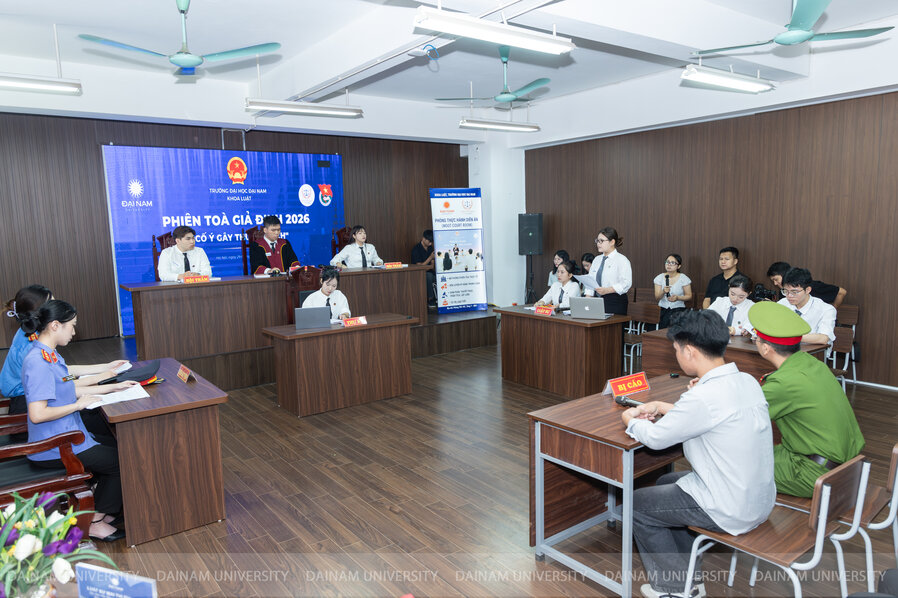
The gap between theory and practice is eliminated, and students are trained in critical thinking, litigation skills, case research skills, communication skills, and the ability to handle professional situations. Each mock trial becomes a "special class," where professional knowledge is tested through real-world experience and professional competence is developed through action.
This is also the training philosophy that the Faculty of Law at Dai Nam University has pursued for many years: training linked to practice, centered on professional experience, helping students not only master legal knowledge but also possess the professional competence and social responsibility of future legal professionals.
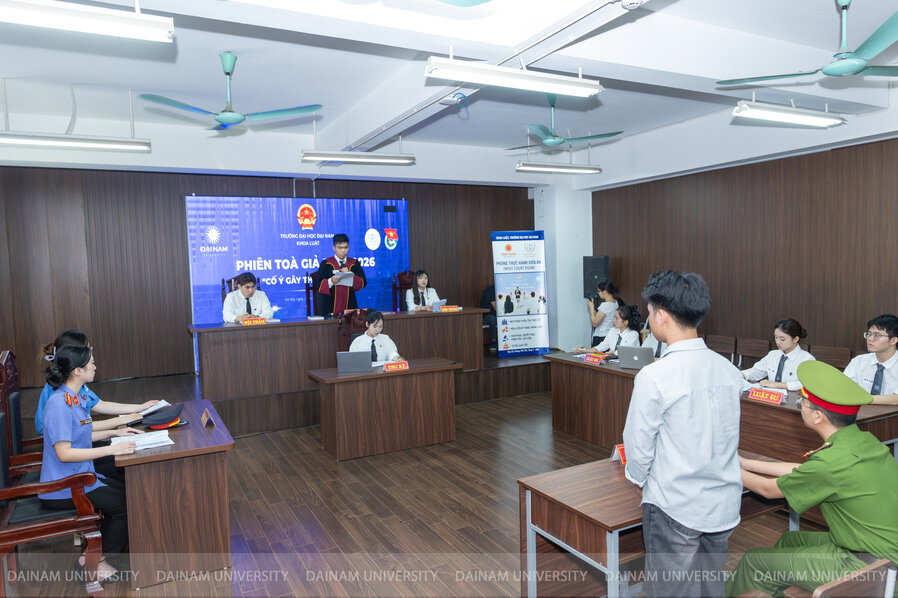
The combination of digital technology, AI, and practical training at the Faculty of Law, Dai Nam University.
While professional practice helps students understand the law through experience, digital technology and artificial intelligence (AI) are opening up a completely new approach to learning law.
The combination of digital technology, AI, and practical training models at the Faculty of Law, Dai Nam University, is gradually transforming laws, once considered dry and uninteresting, into a vibrant, engaging, and highly interactive academic ecosystem. Case files, simulated trials, real-world legal scenarios, and digital learning platforms help students access knowledge in a more intuitive, understandable, and applicable way.
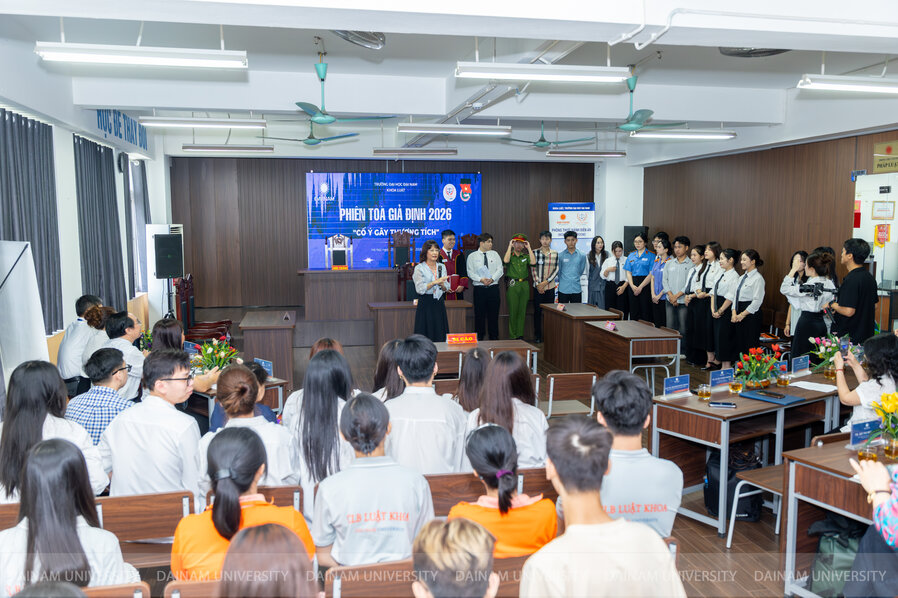
Sharing her vision for applying technology in education, Dr. Le Thi Thanh Huong, Vice Rector of Dai Nam University, stated: "The university identifies digital technology and AI as strategic tools to innovate the approach to knowledge acquisition. Integrating AI into teaching helps students develop multi-dimensional analytical thinking, optimize research time, enhance self-learning abilities, and quickly adapt to a digitized work environment..."
Beyond just training, the "digitalization of law" also contributes to innovating the forms of legal dissemination and education, enhancing the effectiveness of policy and legal education, and building a legal workforce that meets the demands of the digital transformation era.
Training legal professionals for the digital age.
As one of the application-oriented training institutions, the Faculty of Law at Dai Nam University has boldly reformed its training programs, shortening the study time for Law and Economic Law majors to 3 years with 9 semesters, helping students save time and costs and access the labor market sooner. In particular, the University's Law program has been accredited according to the regulations of the Ministry of Education and Training.
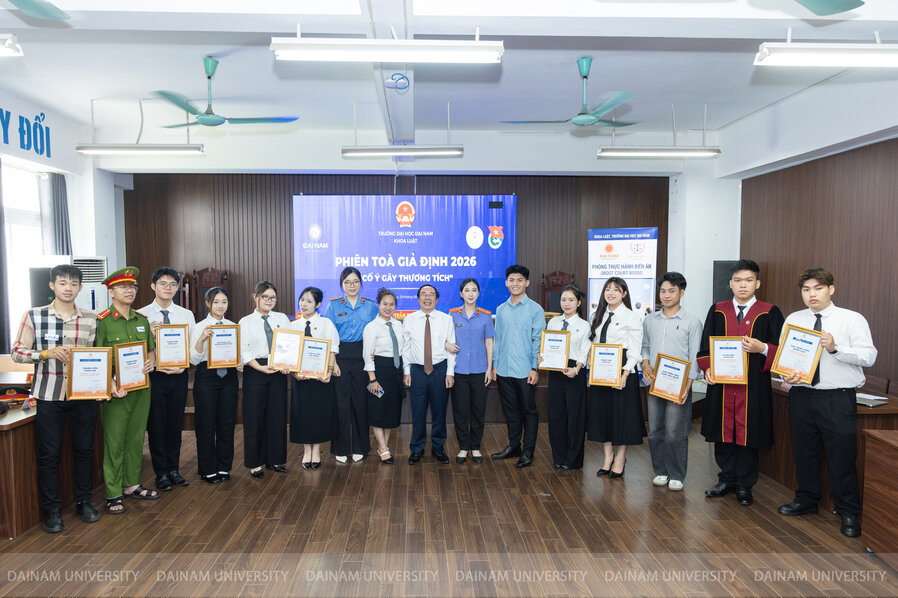
With over 12 years of development and a student body of thousands, the Faculty of Law at Dai Nam University remains steadfast in its educational philosophy of "Real Learning - Real Experience - Real Value". From the Law Practice Room and mock trials to the application of digital technology and AI in learning, students are comprehensively prepared to become law graduates with specialized knowledge, professional skills, and the ability to adapt to the ever-changing modern society.
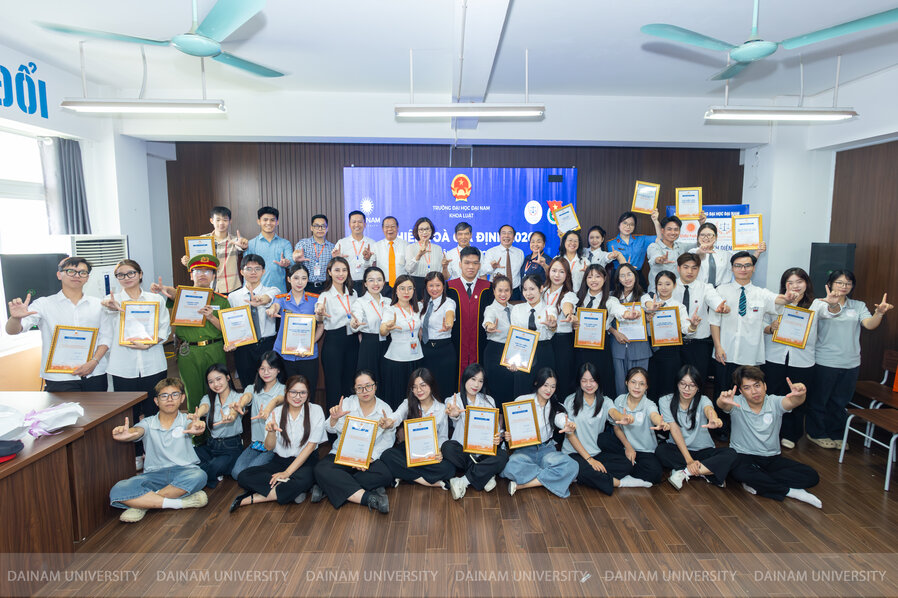
Each mock trial concludes with a verdict, but what remains is a lesson about responsibility, the supremacy of law, and the value of justice. Because the legal profession not only demands a thorough understanding of the law, but also the courage to defend what is right, fair, and empathetic towards people.
And that journey begins with the valuable practical training sessions at Dai Nam University - where students learn their profession through real-life situations and experiences, preparing them to enter a professional environment in the digital age.
BTT







Register for admission consultation 2026
scholarships and tuition support worth up to 55 billion VND

scholarships and tuition support worth up to 55 billion VND

