 English
 Tiếng Việt
Scientific seminar for the Language Studies field: From language proficiency to global competence, shaping educational thinking in the age of AI.


In the context of artificial intelligence (AI), digital transformation, and globalization dramatically changing the labor market, language training is also facing a shift: should we train learners to know the language, or train individuals with the ability to work using the language in a global environment? This was the central issue raised at the Scientific Seminar of the Language Studies Department at Dai Nam University, held on the morning of May 27th, with the participation of Dr. Le Dac Son - Chairman of the University Council, Assoc. Prof. Dr. Dao Thi Thu Giang - Rector of the University, along with leaders and lecturers from training units belonging to the Language Studies Department.
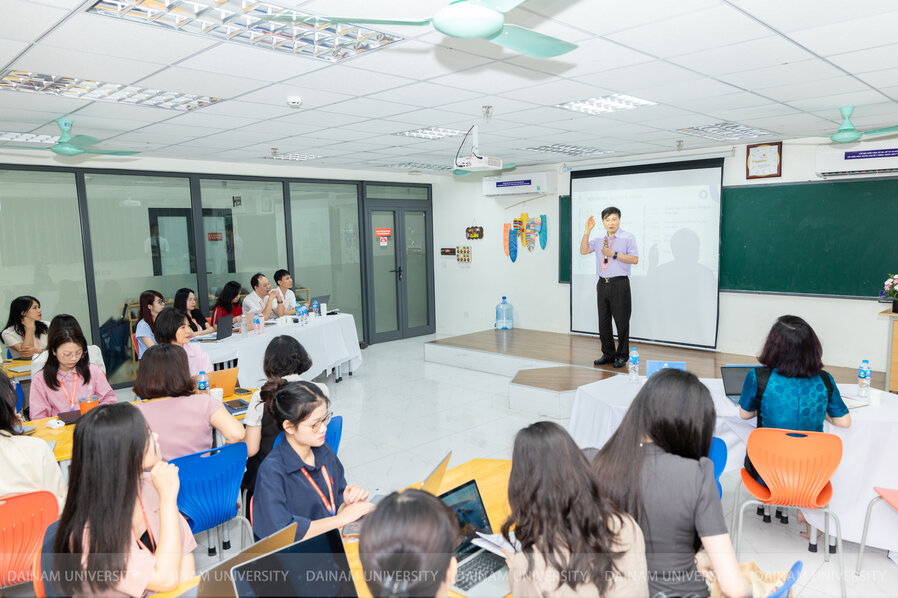
Dr. Le Dac Son - Chairman of the School Board, delivered a keynote address at the seminar.
The seminar brought together training units including: the Department of Basic English, the Department of English Language, the Department of Chinese Language and Culture, the Department of Japanese Language and Culture, and the Department of Korean Language and Culture, with 5 in-depth presentations reflecting the shifting trends in modern language training: from equipping students with language knowledge to developing work skills, adapting to technology, and integrating globally.
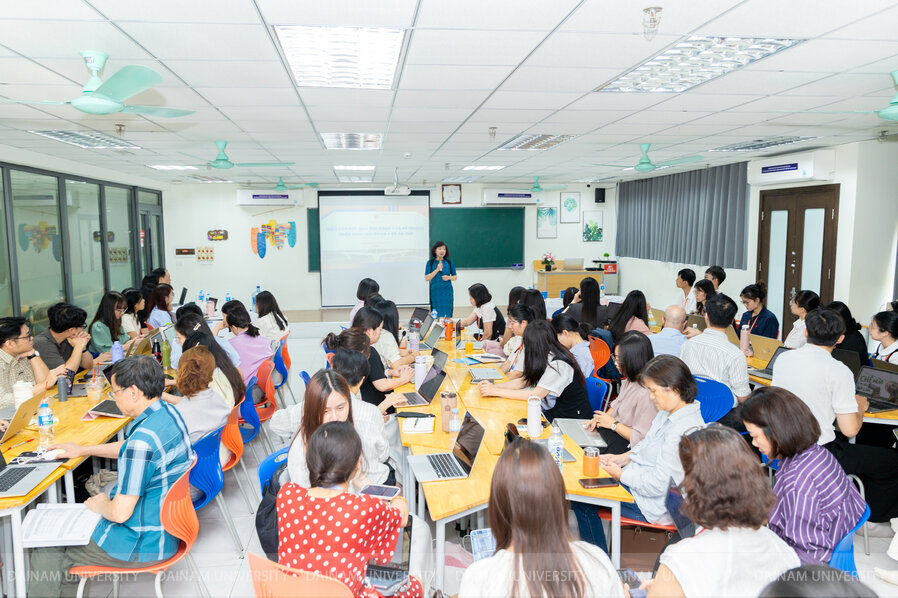
Associate Professor Dr. Dao Thi Thu Giang – Rector of Dai Nam University – highly appreciated the quality and academic depth of the presentations; and expressed confidence that the exchanges at the seminar would create momentum for the Language Studies field to continue innovating its training thinking, improving quality, and better adapting to the current educational context.
Speaking at the seminar, the school's leadership emphasized the need for innovative thinking in training in the context of higher education being strongly impacted by AI and the constantly changing labor market. Accordingly, the value of foreign language training lies not only in the ability to use the language, but also in professional competence, adaptability, and the ability to work effectively in an international environment.
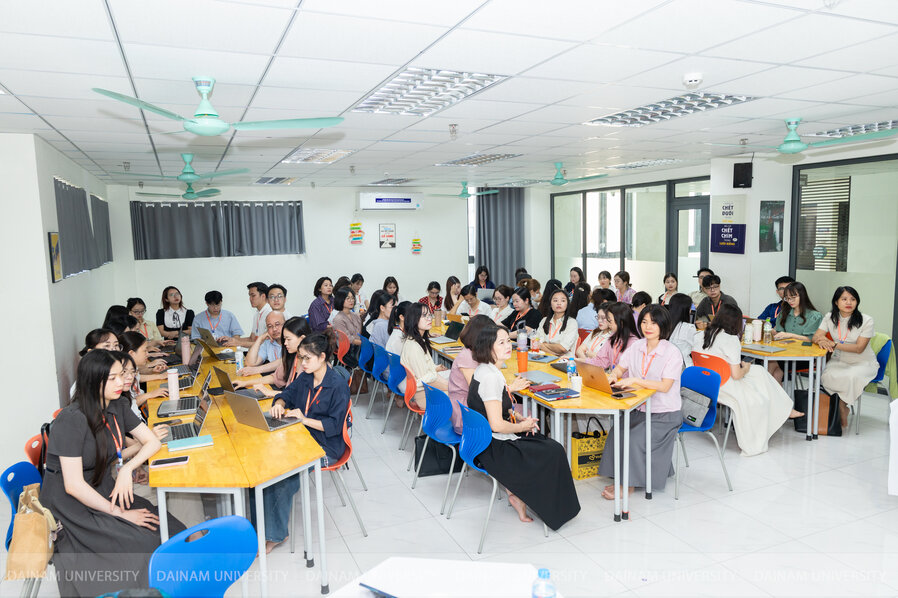
The scientific seminar on linguistics, titled "From Language Proficiency to Global Competence, Shaping Educational Thinking in the Age of AI," attracted a large number of leaders and lecturers from the linguistics field.
From various perspectives, many thought-provoking issues have been raised: how can English become a fundamental competency in learning and career; how should language training adapt to the impact of AI; what competencies will students use to compete when technology increasingly replaces basic language skills; and how should training programs be adjusted to meet the needs of commerce, logistics, tourism, international businesses, and the digital workplace.
In each specialized field, the presentations opened up many new perspectives:
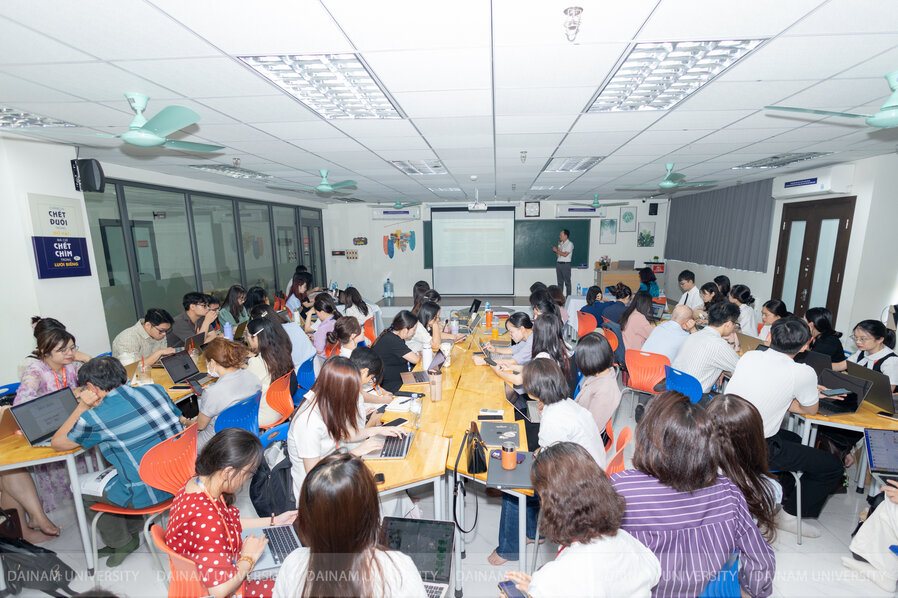
MSc. Pham Thanh Viet - Deputy Head of the Department of Basic English, presented a paper at the seminar.
- The Department of English proposes building an English-speaking ecosystem throughout the university, making English a fundamental competency for learning, research, and career development, rather than just an independent course.
- The Faculty of English Language is addressing the issue of repositioning its training programs in the context of rapidly developing AI and interdisciplinary fields, shifting the focus from English proficiency to the ability to work globally in English.
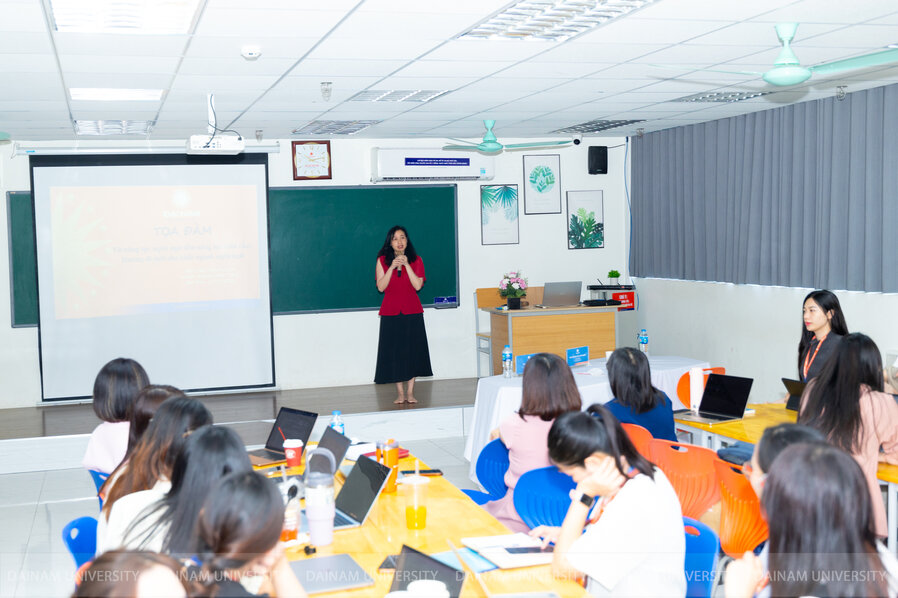
Dr. Vu Thuy Nga - Head of the Department of Japanese Language and Culture - presented her paper at the seminar.
- The Department of Japanese Language and Culture emphasizes the need for competitiveness based on practical communication skills, problem-solving abilities, intercultural thinking, and adaptability to technology in the age of AI.
- The Department of Chinese Language and Culture proposes strengthening language application skills in commerce, logistics, tourism, and the digital workplace, linked to professional specifics and learning outcomes.
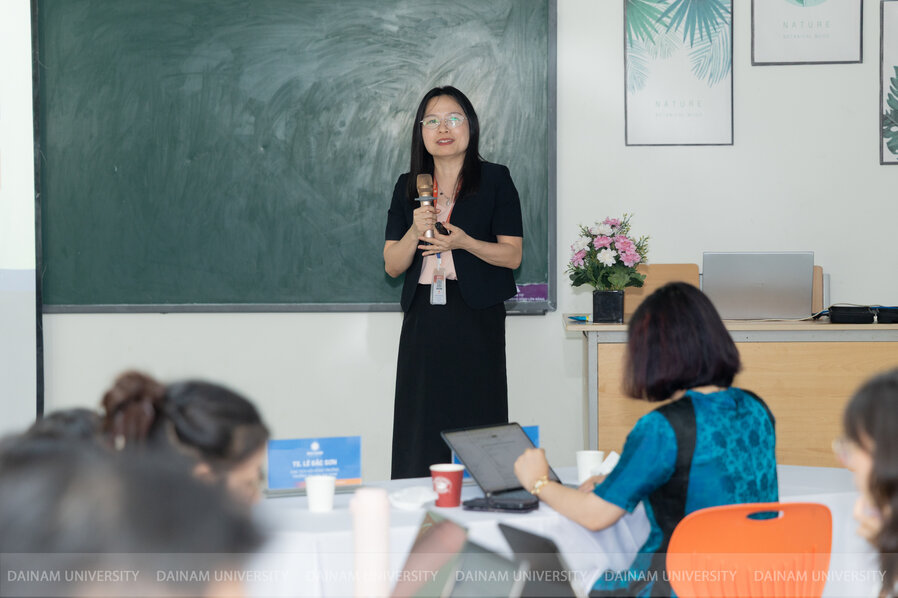
Dr. Vo Thi Minh Ha, Head of the Department of Chinese Language and Culture, shared her perspective at the seminar.
- The Department of Korean Language and Culture focuses on training human resources capable of working in Korean, meeting the needs of international cooperation and the corporate labor market.
Despite approaching the topic from different linguistic perspectives (English, Chinese, Japanese, Korean), the presentations all shared a common point: training should not stop at the goal of creating learners who "know a foreign language," but aim to develop learners who "have the competence to work using a foreign language" in professional and global environments.
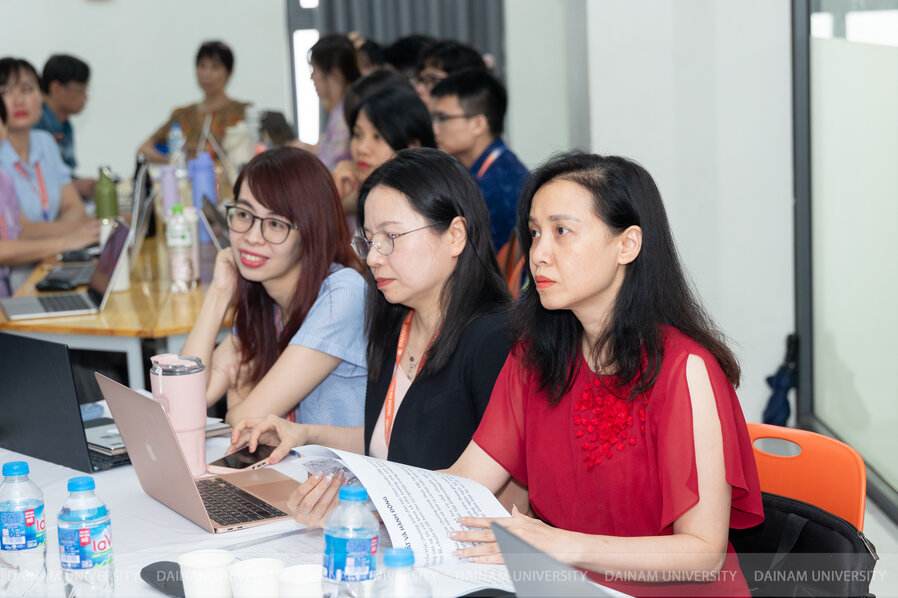
The most striking commonality among the presentations was the shift in educational thinking: from the question "What will students learn?" to "What can students do after graduation?" This is also the core spirit of the Outcome-Based Education (OBE) model that Dai Nam University is implementing in its curriculum development, learning outcomes, and training activities.
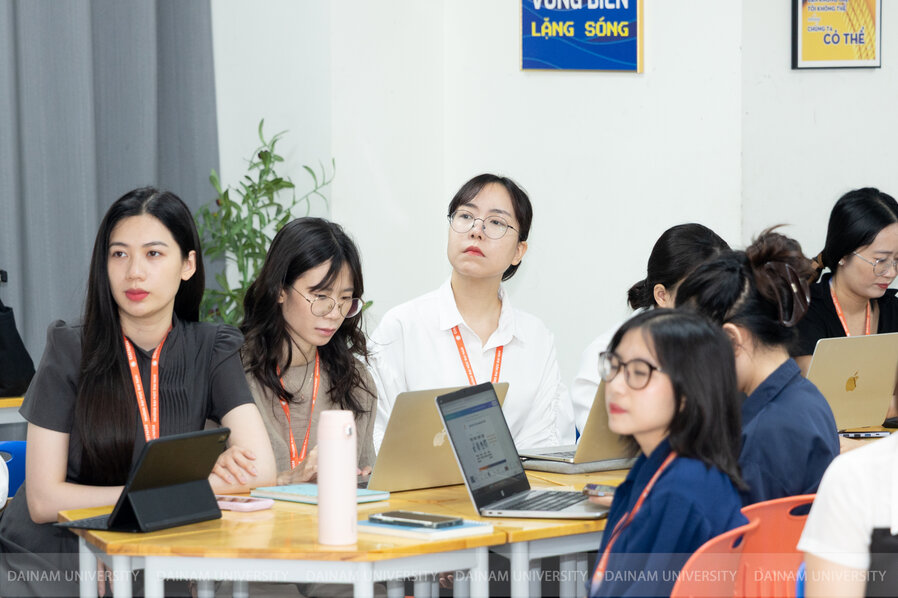
Beyond being a forum for academic exchange, the seminar reflects the efforts to innovate the training mindset of the Language Studies sector in the face of changing times; it also affirms the direction of developing language human resources towards professional proficiency, technological adaptability, intercultural understanding, and global competitiveness.
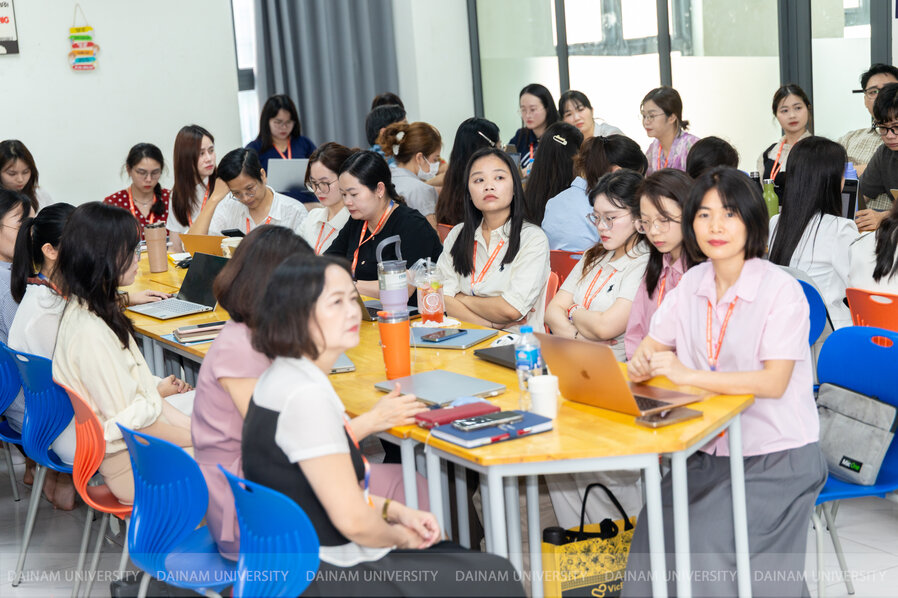

From language proficiency to global competence – this is not just the topic of a seminar, but is becoming an essential requirement for language training in the new era. At the same time, this is also the direction that Dai Nam University is pursuing: training students who are not only proficient in languages, but also possess the competence to work, adapt, and thrive in a rapidly changing international environment.
BTT

Register for admission consultation 2026
scholarships and tuition support worth up to 55 billion VND

scholarships and tuition support worth up to 55 billion VND

