 English
 Tiếng Việt
Medical program at Dai Nam University: Learning from the classroom to the hospital


In the context of the rapid development of modern medicine, supported by technology and artificial intelligence (AI), medical training is no longer simply a process of knowledge transmission. Today's medical students must be fully prepared with clinical competence, professional integrity, and medical ethics to practice safely, effectively, and responsibly towards the community. This is also the overarching direction of medical training at Dai Nam University (DNU).
Linking training with reputable hospital practice systems.
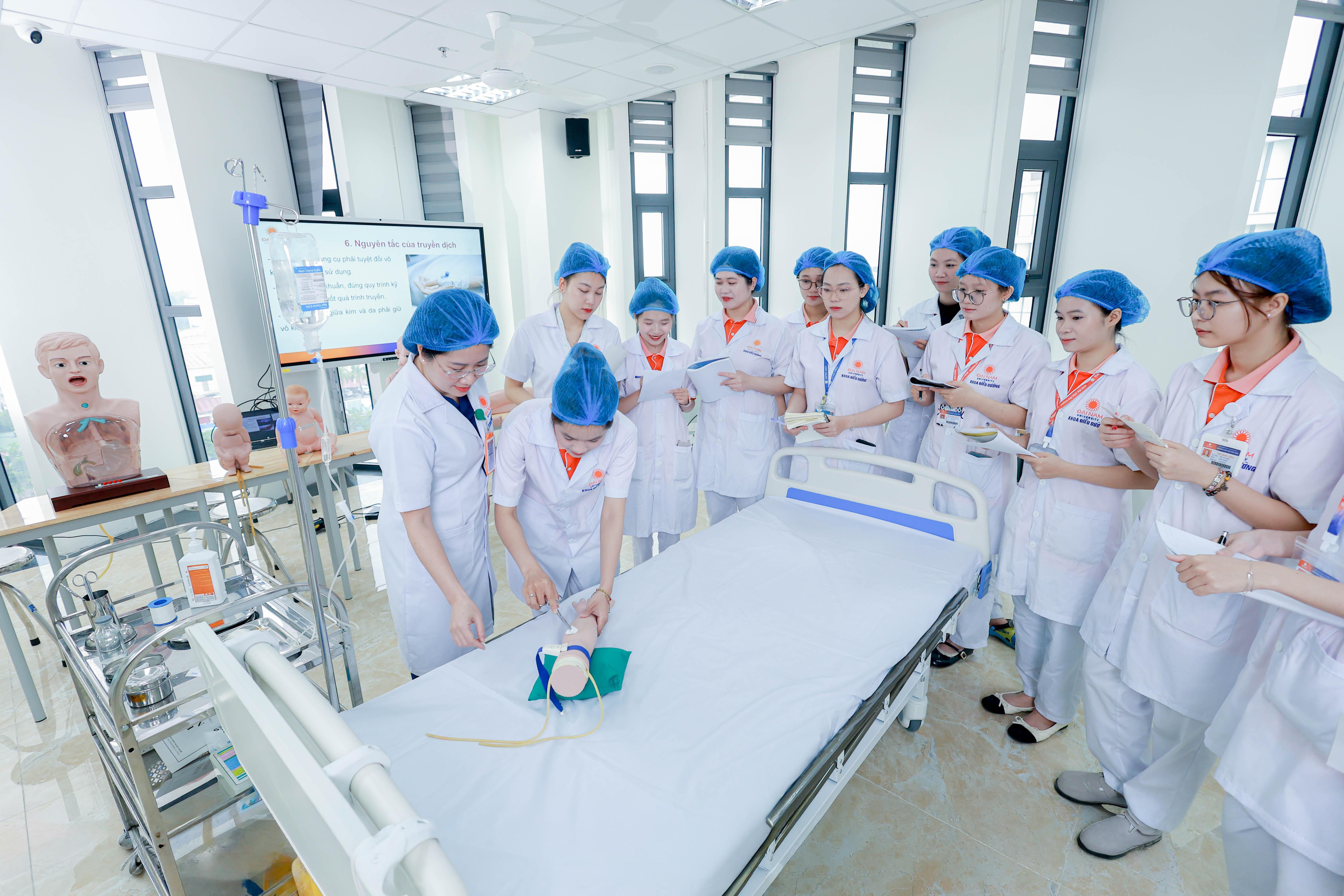
One of the strengths of the medical training program at Dai Nam University is the well-structured learning pathway, starting with preclinical practice in a modern simulation environment right at the university, before students enter the internship phase at hospitals.
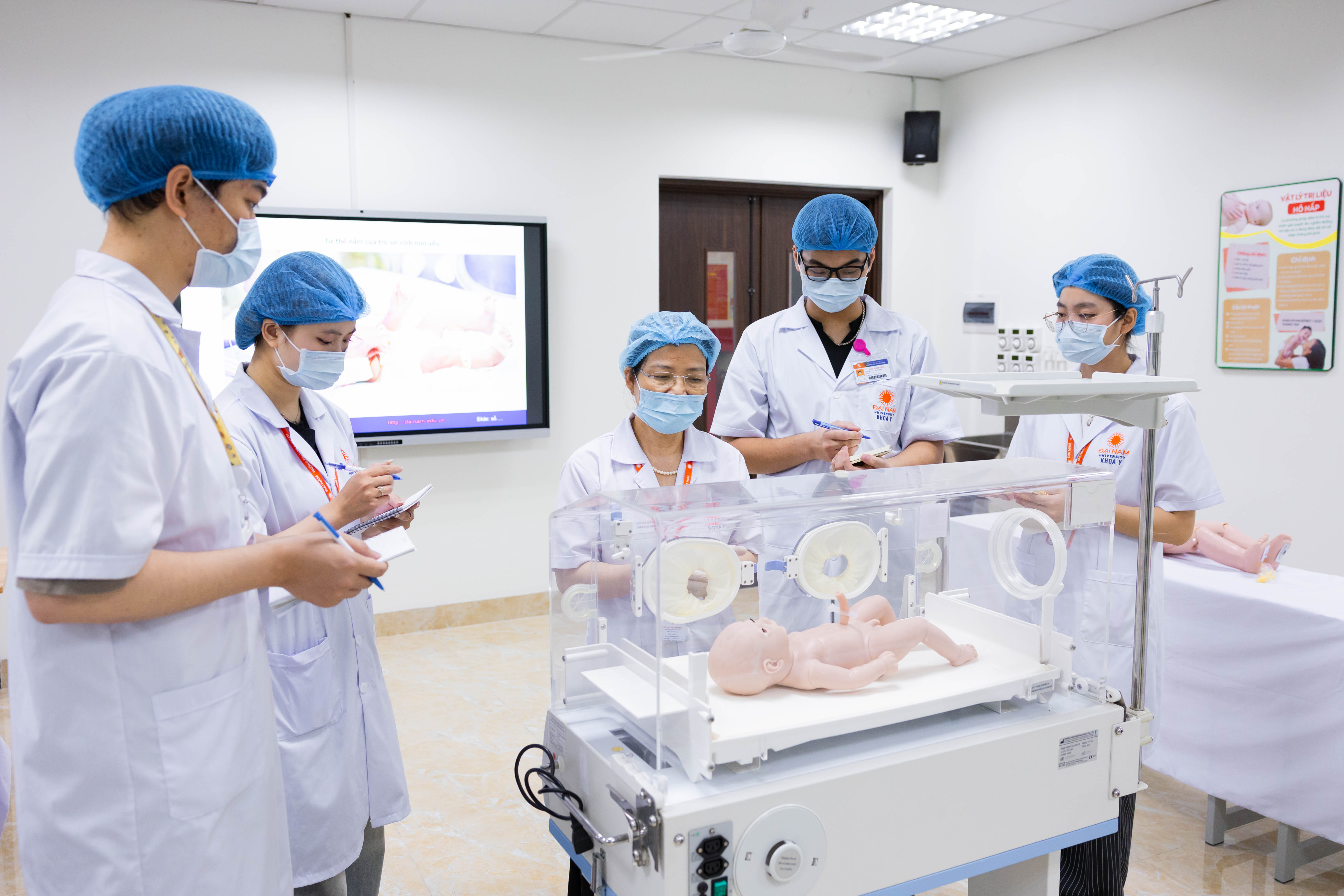
The school has invested in a modern preclinical center to help students practice on standard medical models and equipment. Here, students are trained in basic professional skills in internal medicine, surgery, obstetrics, pediatrics, etc., such as examination, procedure manipulation, and clinical situation management under the direct guidance of lecturers. Repeated practice in a simulated environment helps students master skills, develop professional conduct, and build confidence before interacting with real patients.
Following the preclinical phase, students continue their studies and practical training at the system of teaching hospitals, which include central hospitals, first-class hospitals, and large medical facilities that have signed training cooperation agreements with the school.
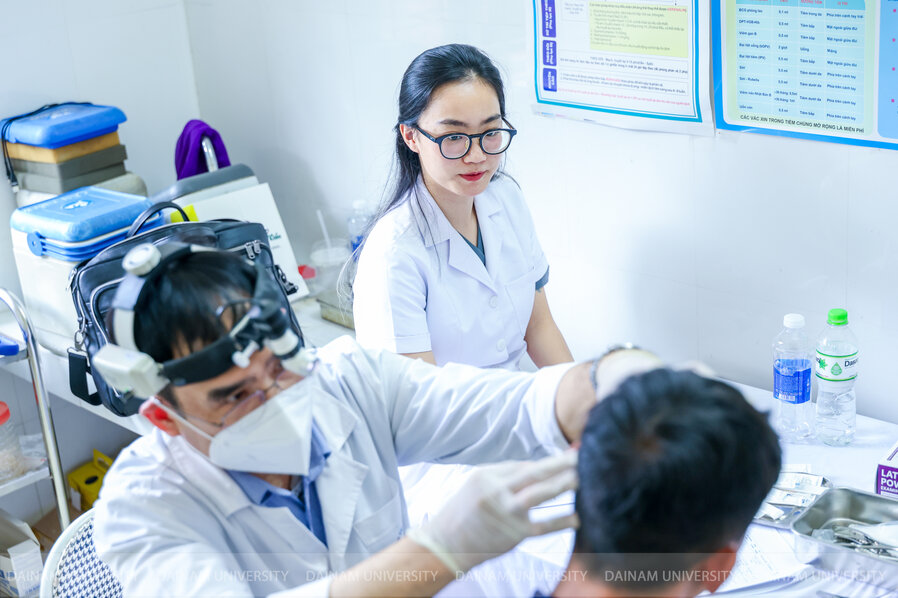
Here, students participate in structured clinical practice under the direct guidance of lecturers and experienced doctors. In particular, during their graduation internship, Dai Nam Medical students receive one-on-one training (1 student – 1 supervising doctor).
With the 1:1 internship model, medical students at Dai Nam University are placed at the center of the clinical training process:
- Each student receives direct guidance and close monitoring from a doctor for each case.
- Not just observing, but directly practicing, receiving regular feedback and evaluation.
- Develop clinical skills alongside professional conduct, discipline, and medical ethics.
This model is particularly effective for specialties requiring high precision and responsibility, such as Internal Medicine, Surgery, Obstetrics, and Pediatrics, where every action is linked to the safety and life of the patient.
Thanks to thorough preparation from the preclinical stage, students are not overwhelmed when entering the hospital environment, and they gradually accumulate professional skills during their studies.
The innovative training program (module) closely follows the competency standards for doctors.
The Medical program at DNU is structured in a modular fashion, closely adhering to the competency standards for physicians and the practical needs of the healthcare system. The curriculum is designed with a clear learning path:
- Basic medicine
- Preclinical
- Clinical practice by specialty
Each stage has specific competency goals, helping students understand why they are learning, what standards they need to achieve, and how to apply their knowledge in practice. This is a crucial foundation for learners to continue updating their knowledge and adapt to the rapid development of modern medicine.
Superior investment in medical English and international integration.
Recognizing the crucial role of foreign languages in the medical profession, Dai Nam University invests significantly more in English language training for its medical students compared to many other training programs.
Students receive enhanced training:
- Specialized medical English
- Skills in reading and understanding international medical literature.
- A platform for professional communication in the healthcare environment.
This is a significant advantage that helps students access global medical knowledge, engage in lifelong learning, and expand their future career opportunities.
The teaching staff consists of doctors - teachers - and career guides.
The medical faculty at DNU consists of professors, associate professors, doctors of philosophy, and specialists with many years of experience working at major hospitals.
Lecturers not only impart knowledge but also act as career mentors, helping students to:
- Developing clinical thinking and medical decision-making skills.
- Cultivate caution and respect for human life.
- Instilling medical ethics and social responsibility
In the context of AI strongly supporting diagnosis and treatment, DNU clearly defines that technology is a tool, but doctors are ultimately responsible to the patient.
Study in a modern, integrated training complex.
Medical students study in a 10-hectare campus complex, with a system of lecture halls, specialized classrooms, a digital library, and practice areas that meet standards.
In particular, the modern Preclinical Center helps students familiarize themselves with anatomical models and clinical examination, diagnosis, and treatment skills in a simulated environment before entering the hospital. This is an important stepping stone to developing early clinical thinking and increasing confidence when interacting with patients.
Cultivating discipline, skills, and character in medical professionals.
Besides their specialized knowledge, medical students at DNU are given special attention in developing soft skills, medical communication, teamwork, emotional management, and personal discipline. From their first year, students are placed in a rigorous learning environment, because the medical field does not allow for complacency.
Alongside these are academic activities, clubs, and community health volunteer programs, helping students develop comprehensively in both professional skills and a spirit of social service.
Study medicine for a long-term career, not just to graduate.
The medical field is a long journey, requiring strong academic performance, perseverance, and a lifelong learning spirit. At DNU, students are trained to:
- Possesses a mindset of continuous learning.
- Actively update your knowledge of modern medicine.
- Adapt to technology but not become dependent on machines.
This provides a solid foundation for students to confidently enter a professional environment that is both high-pressure and rich in human values.
With a philosophy rooted in practical skills and medical ethics, the Medical program at Dai Nam University aims to train doctors with strong professional expertise, the right attitude, and sufficient professional competence in the technological era.
Studying medicine at DNU is a journey: from the classroom to the hospital, from knowledge to competence, from dreams to a sustainable career.
>>> REGISTER FOR ADMISSION TO MEDICAL PROGRAMS: HERE
BTT





Register for admission consultation 2026
scholarships and tuition support worth up to 55 billion VND

scholarships and tuition support worth up to 55 billion VND

