 English
 Tiếng Việt
Dai Nam University in the 2025-2026 academic year: not just bigger, but better.


The 2025-2026 academic year concluded with many memorable milestones for Dai Nam University: innovation in training according to OBE (Output Bec) standards, gradual application of artificial intelligence, promotion of scientific research linked to practice, expansion of international cooperation, and witnessing the growth of thousands of students. But what is even more noteworthy is not just how much the University has accomplished, but what value these changes have brought to the learners.
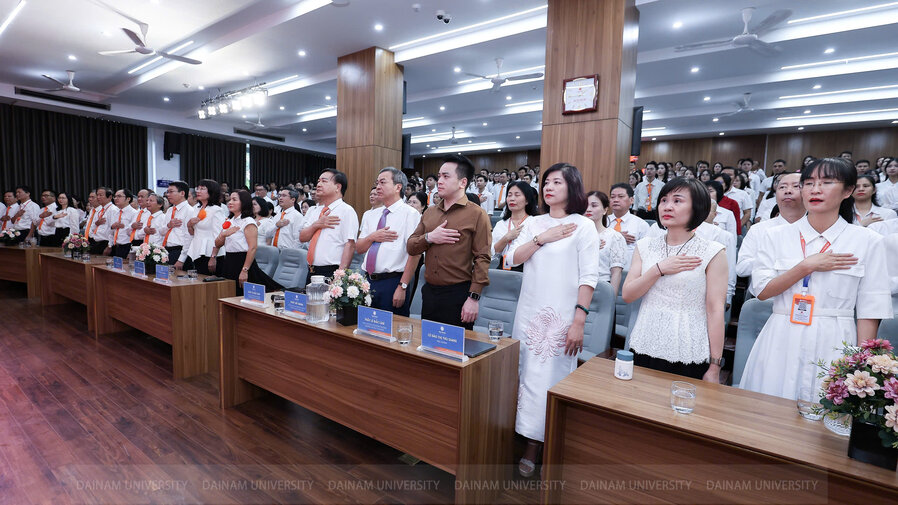
A school year is made up of many ordinary days.
It could be a revamped lecture, an adjusted training program, a tested technology, an improved process, or timely support for a struggling student.
These seemingly small tasks, when carried out with responsibility and dedication by each faculty member, lecturer, and staff member, have contributed to improvements in the quality of education and the learning experience of students.
Looking back at the 2025-2026 academic year, Dai Nam University not only examines the achievements but also asks itself: What has changed? What has improved? And what still needs further improvement so that students can benefit even more?
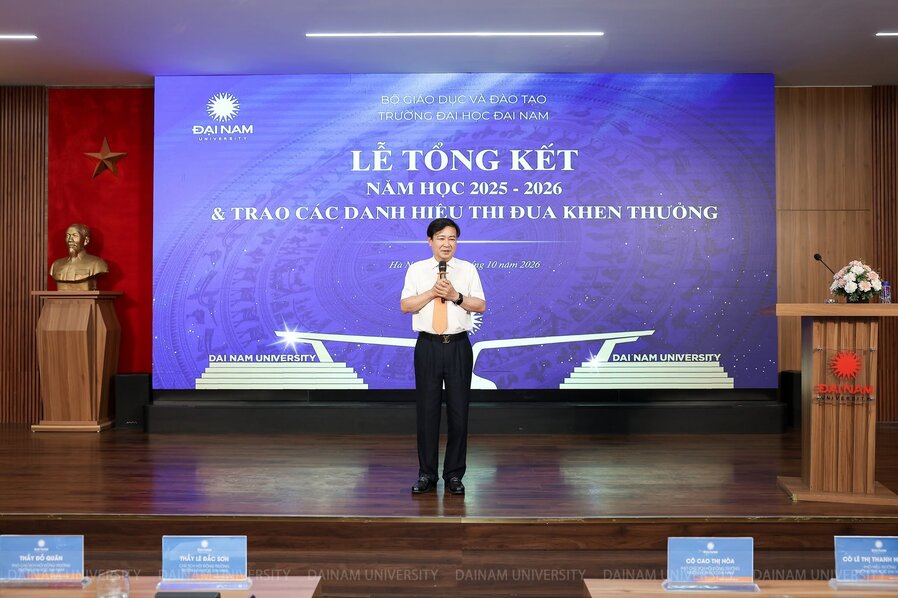
Reforming education: What should graduates be able to do after graduation?
The job market is changing rapidly. Technology, artificial intelligence, and the ever-increasing demands of businesses are presenting higher education with a very real question: What will graduates be able to do?
Knowledge is still important, but it's not enough. Students need to know how to apply their knowledge, solve problems, work with technology, collaborate, and adapt to changes in the professional environment.
Based on this understanding, in the 2025-2026 academic year, Dai Nam University will pilot a training program based on Outcome-Based Education (OBE), gradually shifting the focus from teaching content to the practical competencies that learners need to achieve.
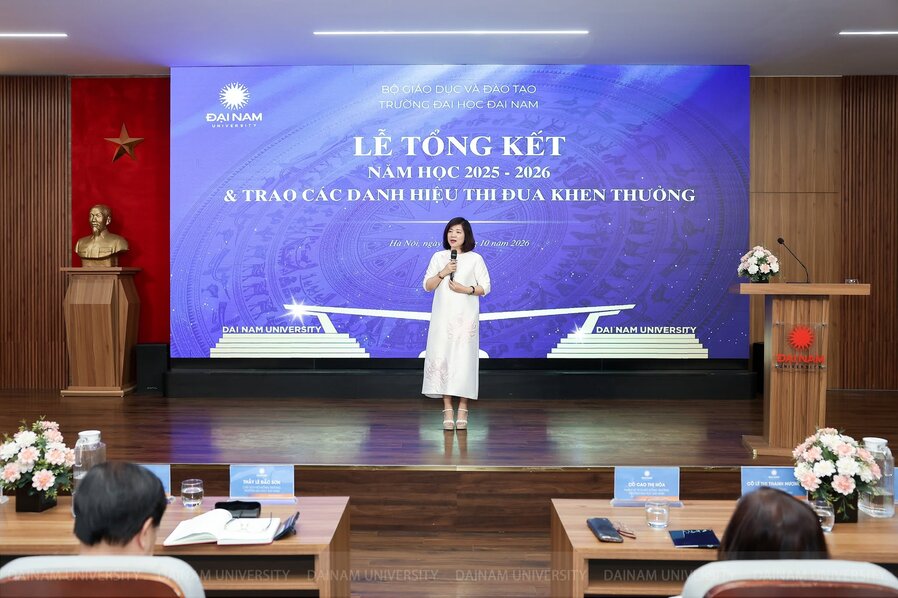
This isn't just about changing the curriculum or assessment methods; first and foremost, it's about changing the mindset of the instructors. If you want students to change their learning style, instructors must change their teaching methods. You can't expect students to be proactive if class time is still primarily about the teacher lecturing and students taking notes. You can't expect students to be creative if every assignment has a ready-made answer. And you can't expect students to be able to apply their knowledge if the knowledge gained in the classroom lacks connection to real-world applications.
OBE is a long journey, requiring perseverance from faculty, proactiveness from students, and continuous adjustments from the university. The goal is not simply to complete the OBE implementation on paper, but to achieve substantial progress in students' abilities.
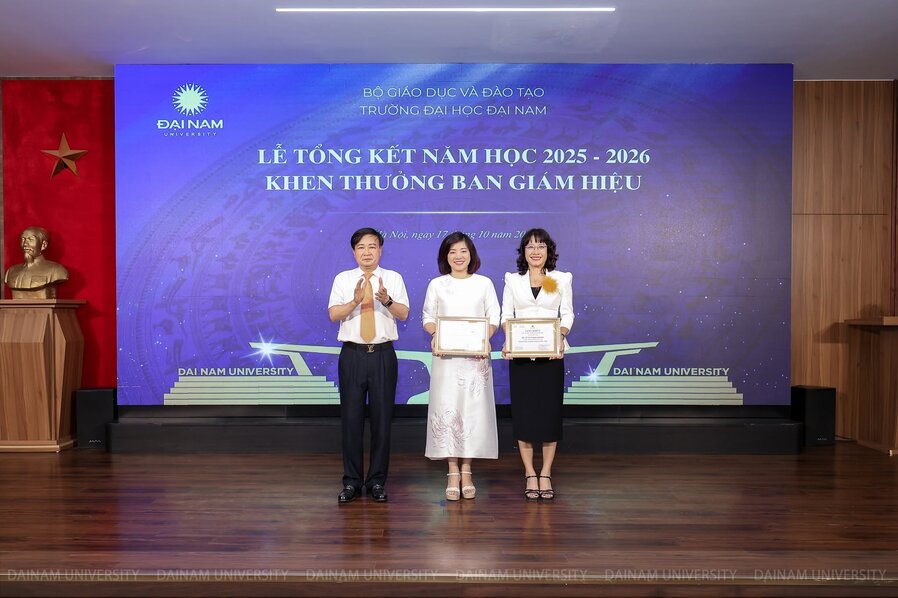
AI applications: It's not just about changing tools, but also about changing mindsets.
When AI can explain knowledge, process information, support research, and perform many tasks in just seconds, the role of the teacher and the methods of organizing learning must also change.
During the past academic year, Dai Nam University proactively implemented training, testing, and gradually applied AI in teaching, learning, management, and operations.
From 46 key leaders whose core competencies were developed with 248 practical projects , the model continued to spread to 27 units with 310 participating staff and lecturers . 27 AI-OBE teams created 270 entries and won 27 awards . Notably, 815 AI products were developed, ranging from academic and administrative tasks to applications solving practical problems.
From assisting in course development and learning materials creation to information processing and process improvement, AI opens up new ways of doing things, saving time and increasing work efficiency. However, using AI does not necessarily mean genuine innovation.
A lecturer using AI to prepare lessons doesn't necessarily mean they've innovated their teaching methods. Similarly, a student using AI to complete assignments doesn't necessarily mean they fully understand and master the material.
The value of AI lies not in the number of tools used, but in how the technology helps people think better, work more efficiently, and produce higher-quality results.
AI does not diminish the role of the teacher. On the contrary, technology requires instructors to continuously update their knowledge, innovate their methods, and develop values that machines cannot replace.
Scientific research: From completing the project to creating value.
A research project is not only meaningful when it is approved or published, but more importantly, it is about what knowledge it generates can contribute to science and what practical problems it can solve. This is the spirit of Research for Impact that Dai Nam University is gradually promoting.
In the 2025-2026 academic year, Dai Nam University implemented 35 scientific research projects by faculty members at all levels, achieving 145.8% of the plan; and 227 student scientific research projects, with 670 students participating. Academic exchange activities were expanded with 19 domestic and international scientific conferences and seminars, along with 530 articles and papers, including 63 ISI/Scopus publications.
Instead of focusing solely on the number of research topics, papers, or conferences, the university is gravitating towards more practical questions: What problem does this research solve? Where can it be applied? What benefits does it bring to businesses, the community, and educational activities?
Similarly, business collaboration should not only be measured by the number of signed agreements, but also by internship opportunities, professional experiences, real-world problems incorporated into the classroom, and job opportunities for students.
Shifting from a task-completion mindset to a value-creating mindset is the change that Dai Nam is pursuing in both scientific research and business collaboration.
International integration: Expanding opportunities for learners.
The 2025-2026 academic year will continue to mark significant progress in the internationalization of the educational environment at Dai Nam University.
Through collaborative programs, students have more opportunities to study, intern, and gain experience abroad, accessing international technology, training methods, and working environments.
These experiences not only help students improve their professional skills and foreign language proficiency but also cultivate independence, adaptability, and self-confidence.
Conversely, Dai Nam is gradually becoming a destination for international students. In particular, welcoming 200 Indian students to study Medicine marks a significant step in the internationalization of its training activities.
The presence of international students both enriches the multicultural learning environment and places higher demands on the quality of teaching, support services, and administrative capacity.
International integration is not only about bringing Dai Nam University students to the world, but also about improving the quality of education so that international students will trust and choose Dai Nam University.
Student maturity - The most important measure
Six years ago, the first 105 students chose to study Medicine at Dai Nam University, at a time when the program had not yet produced a graduating class for them and their families to look to as proof.
Six years later, the first group of students completed their training program, carrying with them the knowledge, skills, and practical experience to continue their careers.
This is not only a milestone for a training program, but also a reminder of the school's responsibility to the trust that students and their families have placed in it.
During the past academic year, nearly 4,000 students across various training programs completed their studies at Dai Nam University.
Each person has their own journey, choices, and plans. But they all carry with them what they have accumulated during their years of study and training.
The success of a university is not only measured by the number of students enrolled, but also by the abilities, maturity, and career paths that students can pursue after graduation.
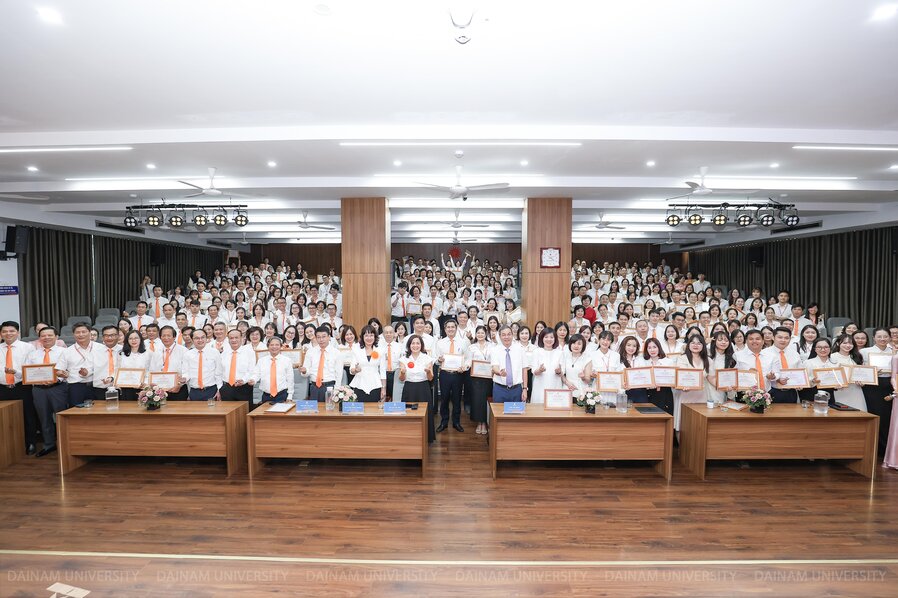
1,498 people share responsibility with the students.
Behind every good lesson lies a lot of work that not everyone sees.
These include people who prepare the labs, create timetables, handle procedures, maintain the grounds, ensure security and cleanliness, or assist students when they encounter difficulties.
There are contributions that are made silently, not appearing on the closing stage. But just one irresponsible step can affect the learner's experience.
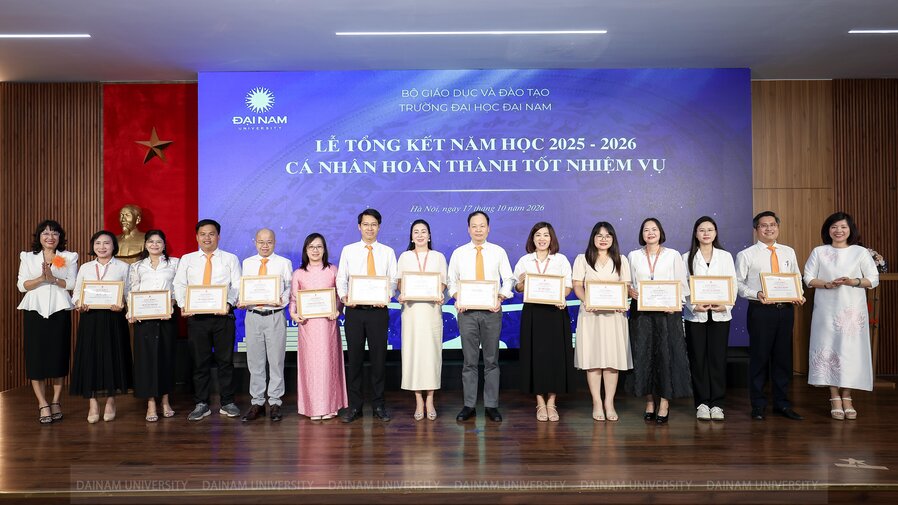
With a team of 1,498 faculty members, lecturers, and staff, Dai Nam University understands that the quality of education is not determined by a few outstanding individuals, but is created from the quality of work of the entire team.
A dedicated lecturer can help students develop a love for the subject. A staff member who handles procedures quickly can ease a student's burden. A thoughtful employee can make students feel cared for by the university in even the smallest ways.
Not everyone gets to stand on a podium and teach directly, but everyone can contribute to improving the quality of education.
That's how the philosophy of "For the sake of dedicated learners" is reflected in our daily work.
Being bigger isn't enough, Dai Nam University has to be better.
Looking back at the 2025-2026 academic year, Dai Nam University has achieved many commendable results. The scale of training continues to expand, the faculty is being supplemented, technology is gradually being integrated into teaching and management activities, and cooperation with businesses and internationally is being broadened.
But growth in scale also means greater responsibility. With a larger student body, better management, care, and support are necessary. A larger team requires higher competence, discipline, and coordination. More investment in technology should yield clearer results.

The school also frankly acknowledges that there are still areas where student experiences are not as expected, processes need improvement, teaching methods need innovation, and the gap between training objectives and the actual abilities of learners needs to be further narrowed.
Acknowledging shortcomings does not diminish the value of achievements. On the contrary, it is essential for Dai Nam's sustainable development.
A university cannot be complacent just because it has impressive numbers. A university only truly improves when the quality of its education is enhanced, its students mature, and each member performs their job better than they did yesterday.
In the new academic year, OBE needs to be implemented more deeply, AI needs to be more substantive, scientific research needs to create more value, and business and international collaborations need to bring more practical opportunities for students.
Most importantly, every faculty member, lecturer, and staff member needs to continue innovating in their own work. Because after all, the meaning of an academic year lies not only in what the university has achieved, but also in the values students receive, the growth of the staff, and the foundations built for the future.
That is also the reason why Dai Nam University continues to persevere on its chosen path: FOR DEDICATED STUDENTS. REAL COMPETENCE - A SOLID LIFE.
BTT








Register for admission consultation 2026
scholarships and tuition support worth up to 55 billion VND

scholarships and tuition support worth up to 55 billion VND

